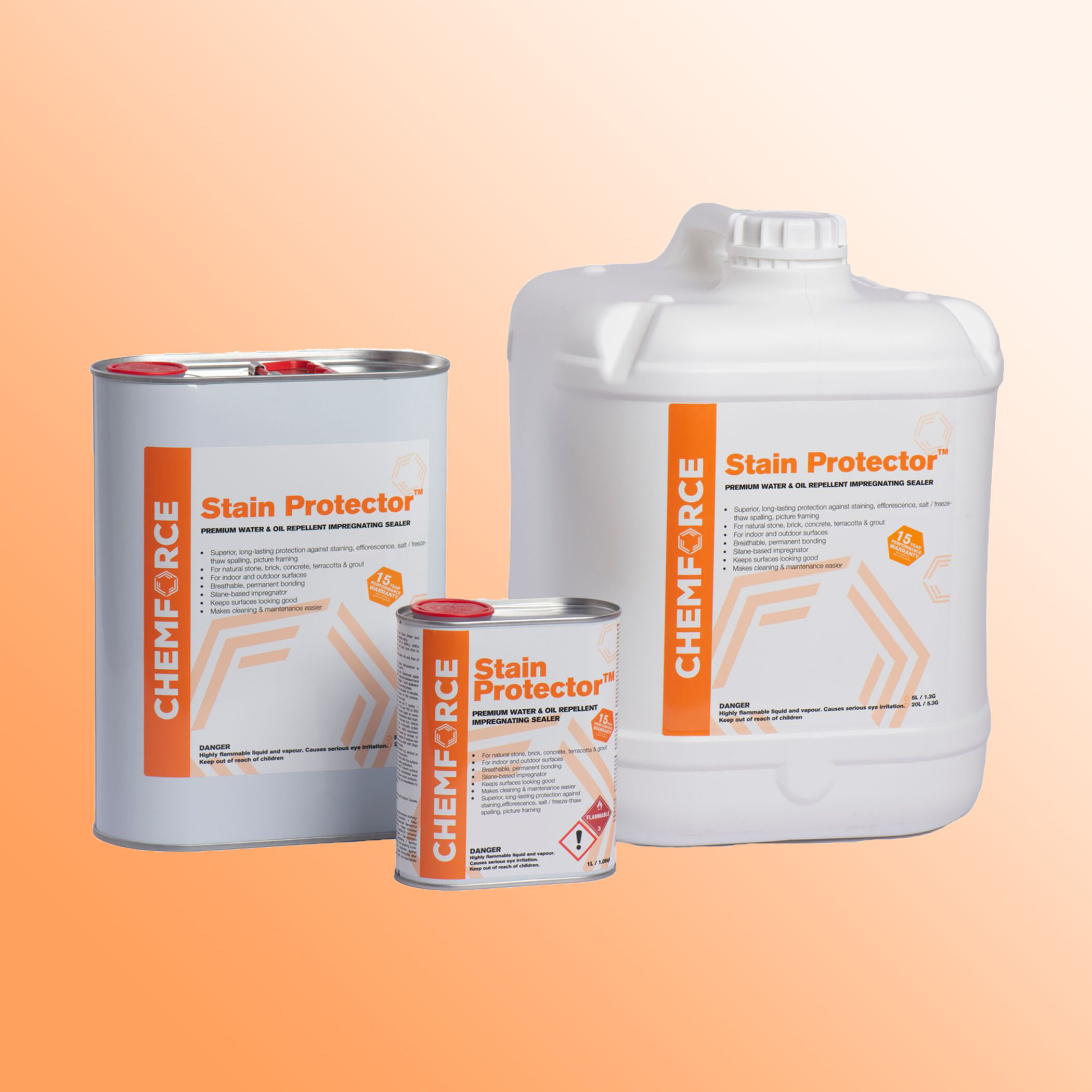
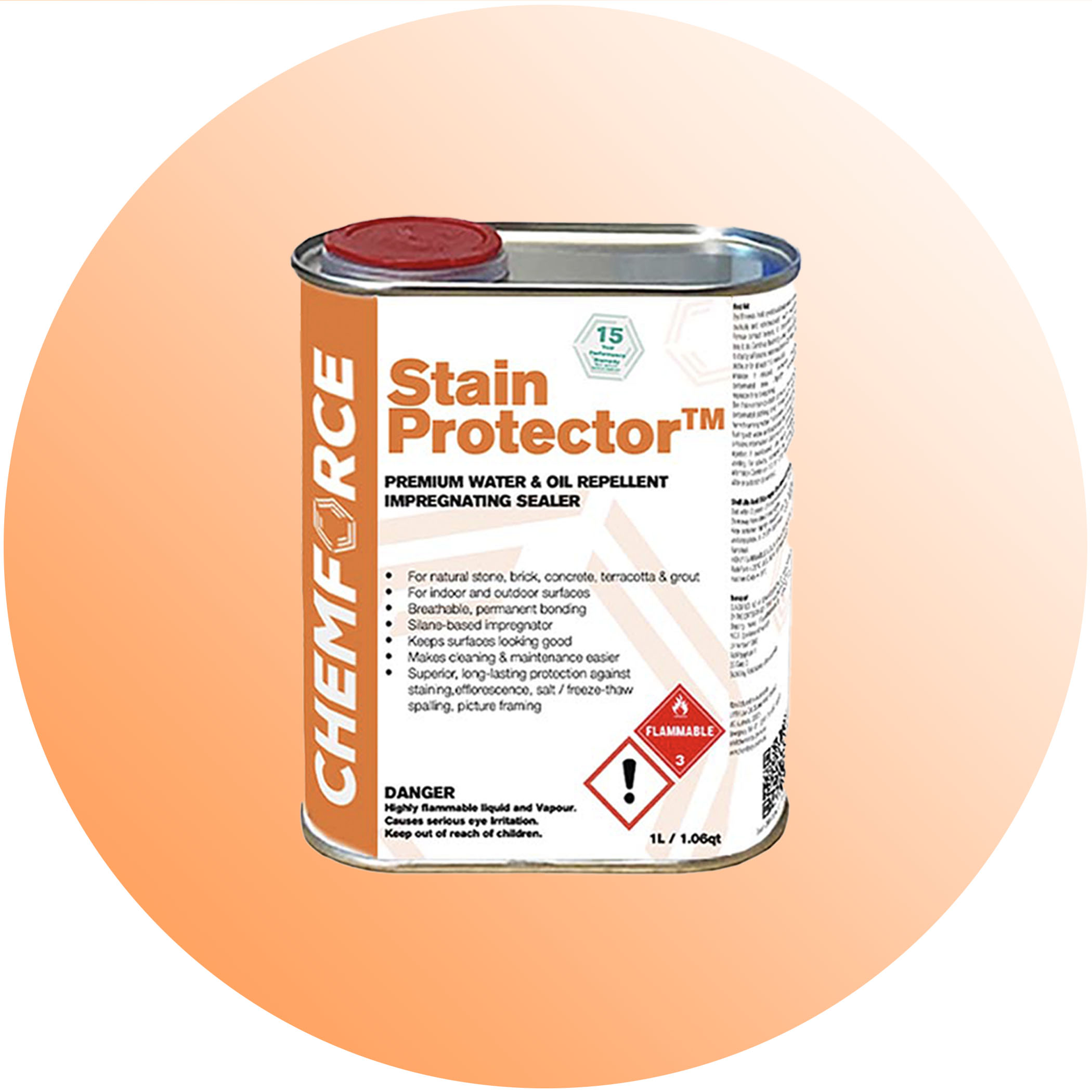
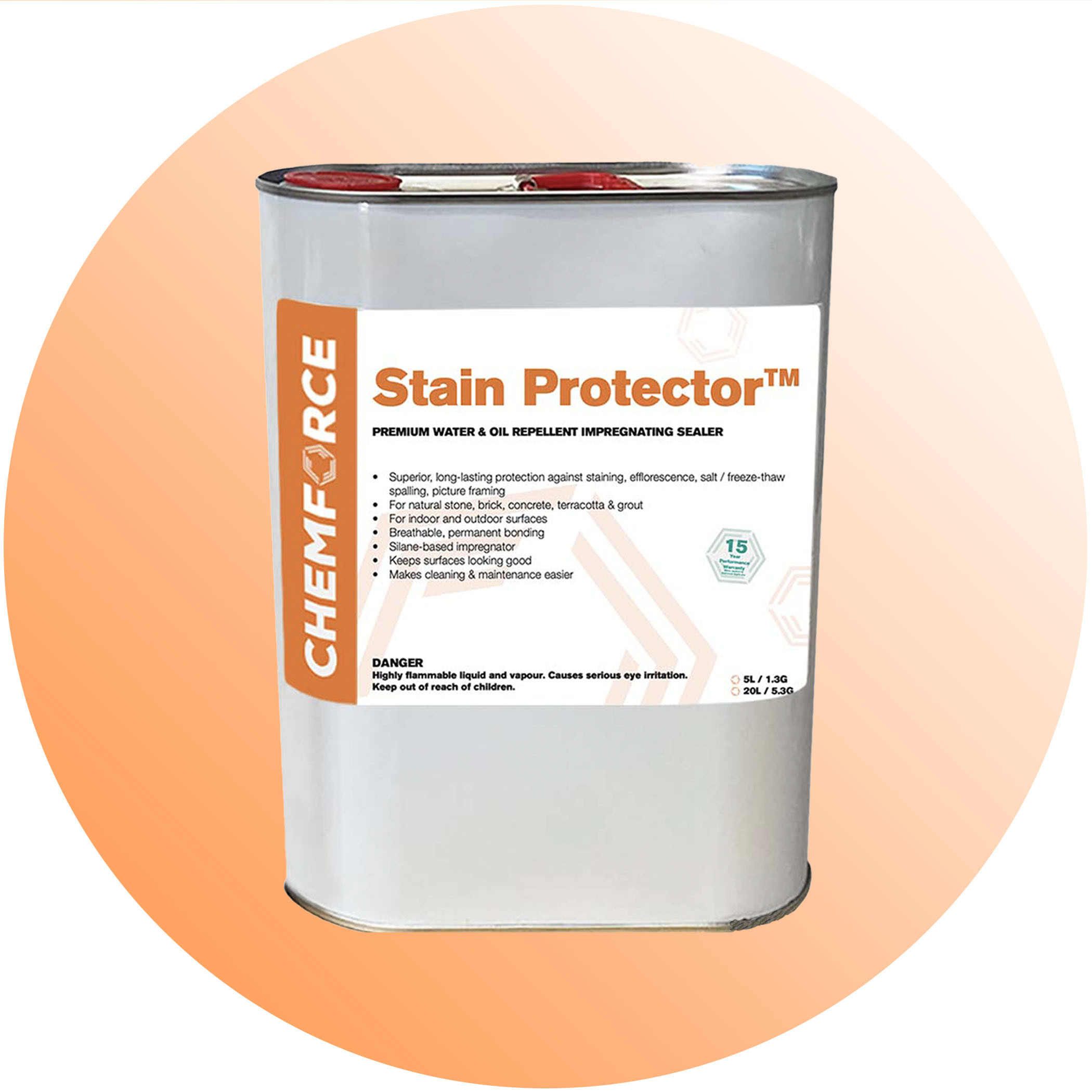
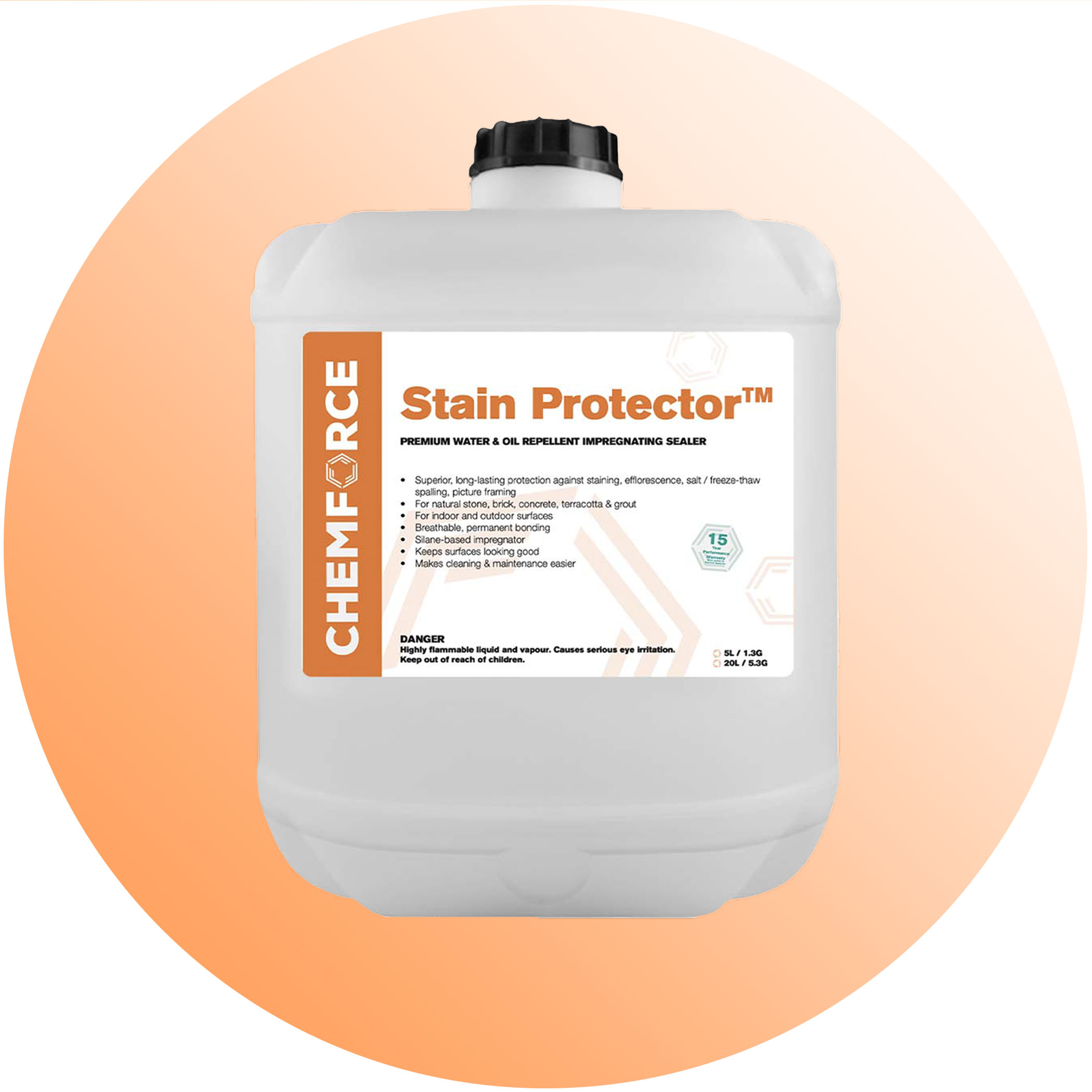
Description
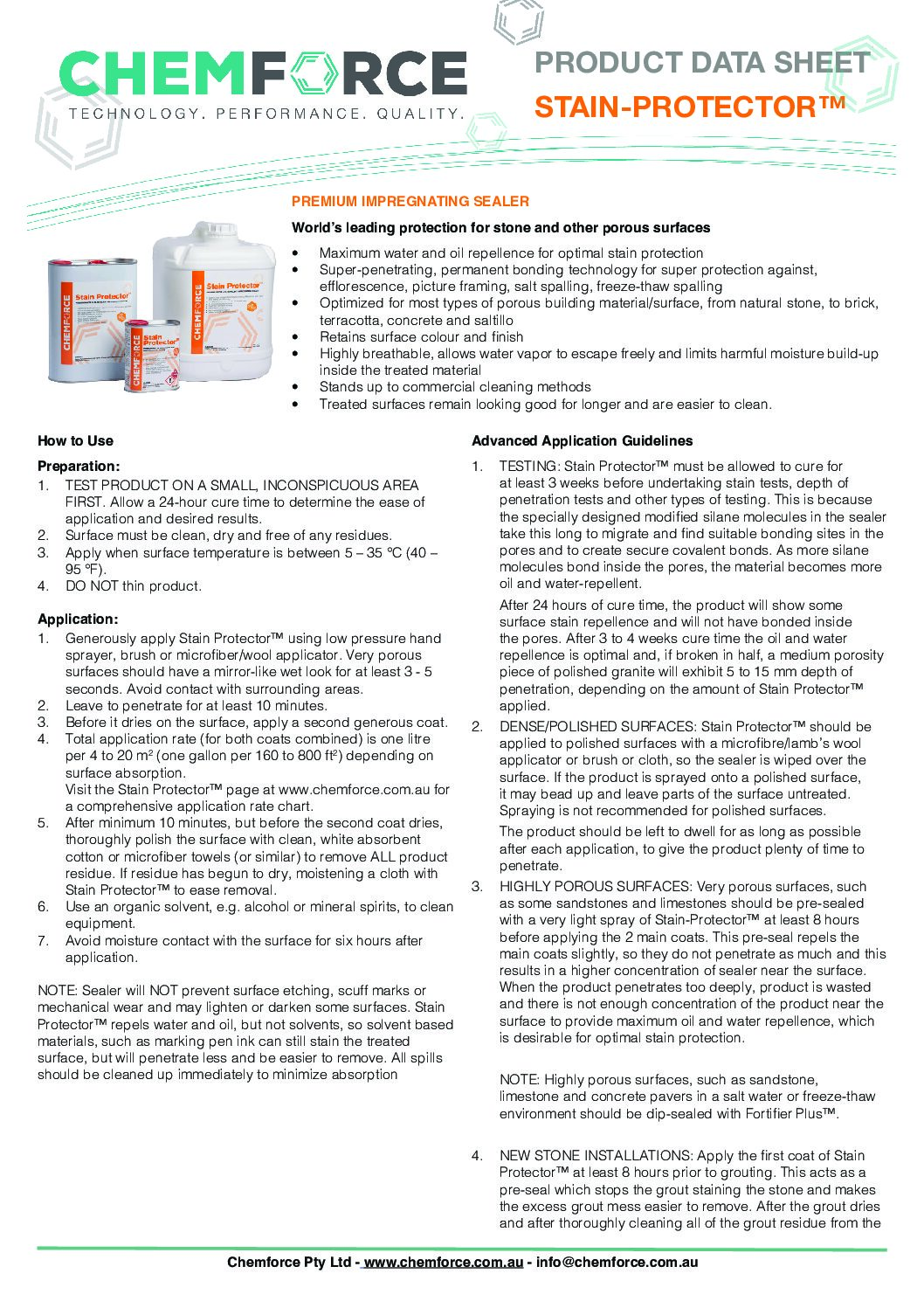
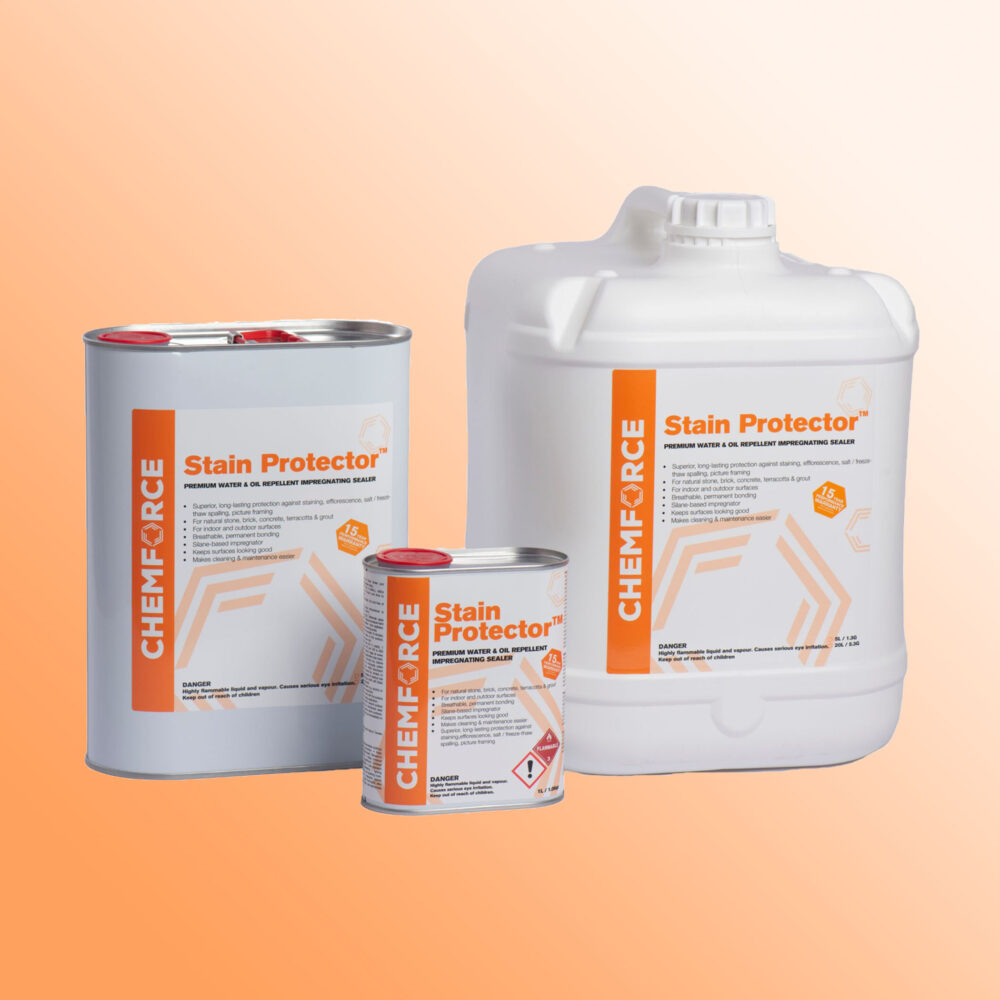
Chemforce Stain Protector is a penetrating sealer for natural stone, tile, masonry and pavers, built to repel stains from oil, grease, mould and everyday spills. Its modified silane molecules penetrate into the substrate rather than sitting as a surface film, which is why the datasheet specifies a 24-hour cure before the sealer’s real performance shows — testing it earlier under-reads how well it actually repels stains.
Application technique matters as much as the product on dense or polished surfaces: spraying isn’t recommended there, since the sealer can bead up and leave parts of the surface untreated. A microfibre or lamb’s wool applicator, brush or cloth gives more even, wiped-on coverage instead.
Technical Specifications
| Product type | Penetrating stain-repelling sealer |
|---|---|
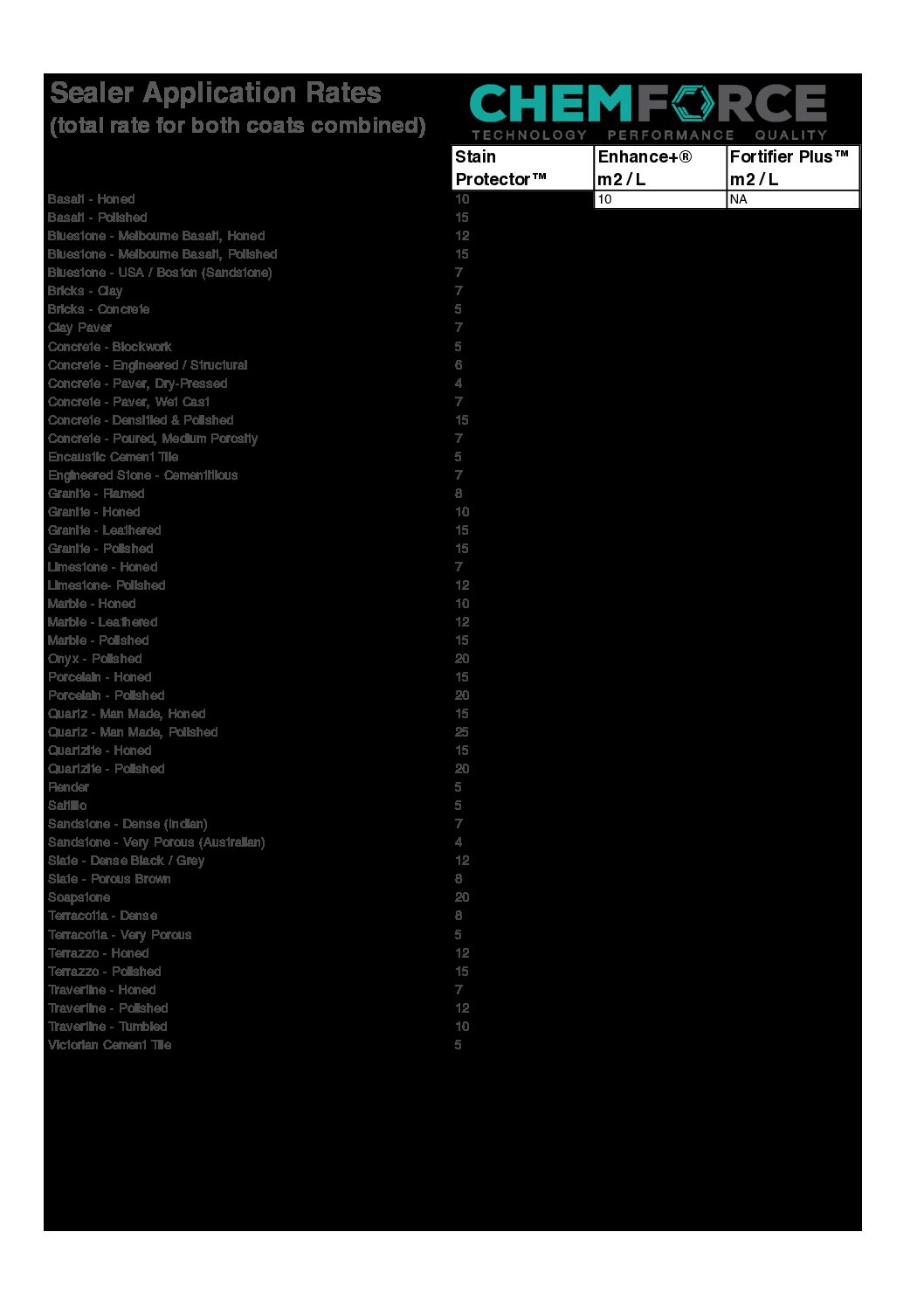
| Application rate | 1 litre per 4-20 m² (both coats combined), depending on surface absorption |
| Coats | Two, second coat applied before the first dries on the surface |
| Cure time | 24 hours before full effectiveness |
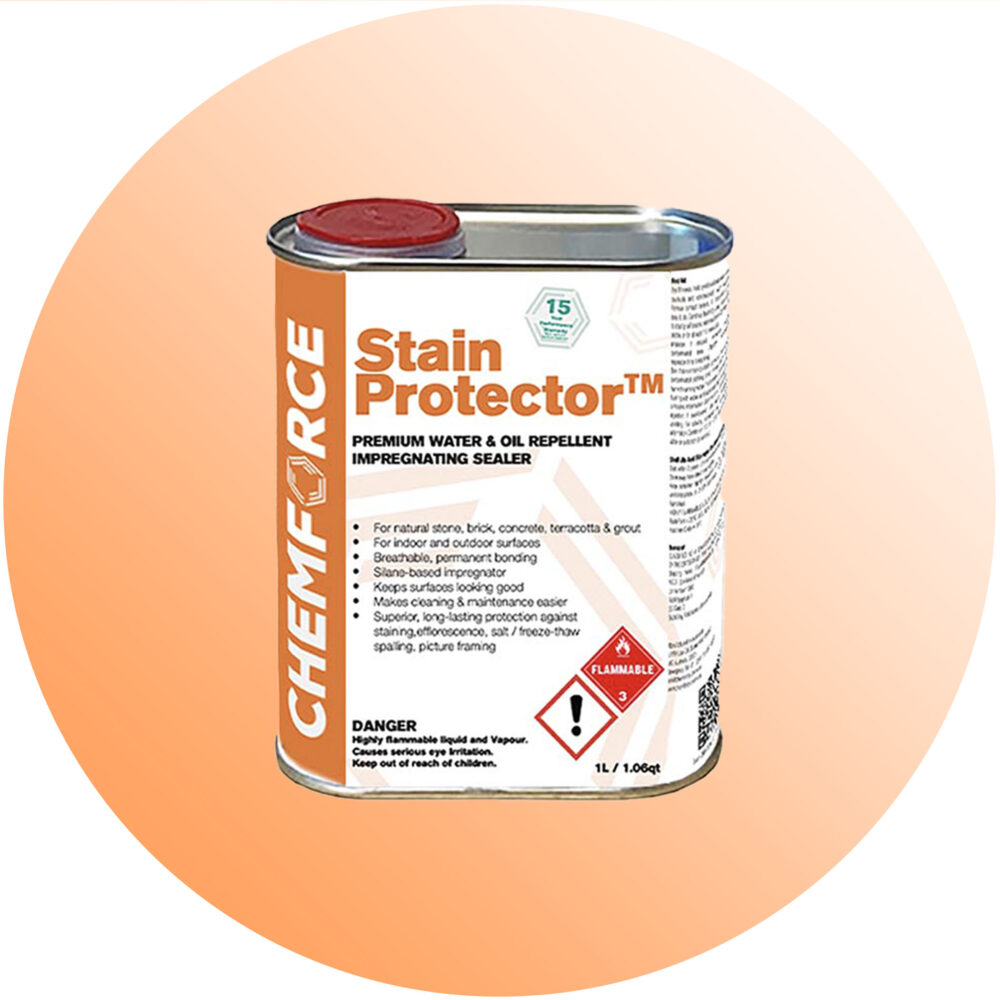
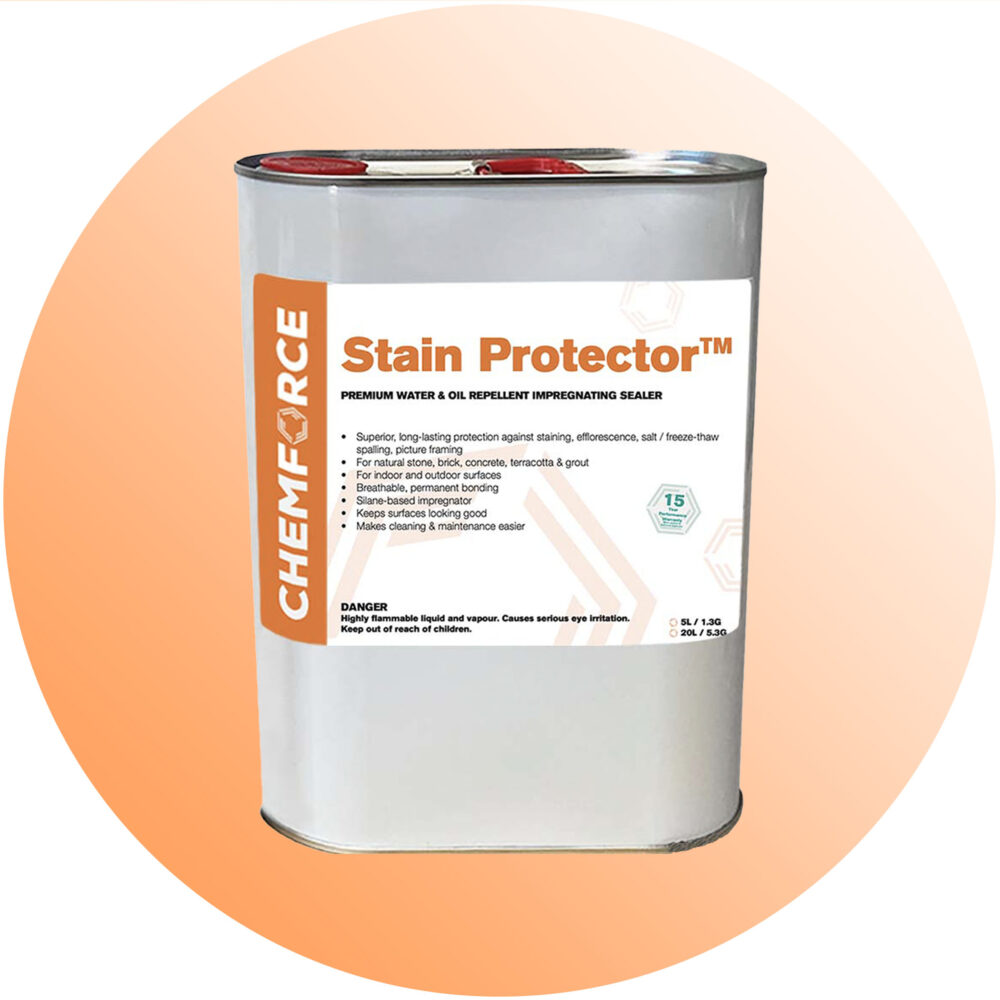
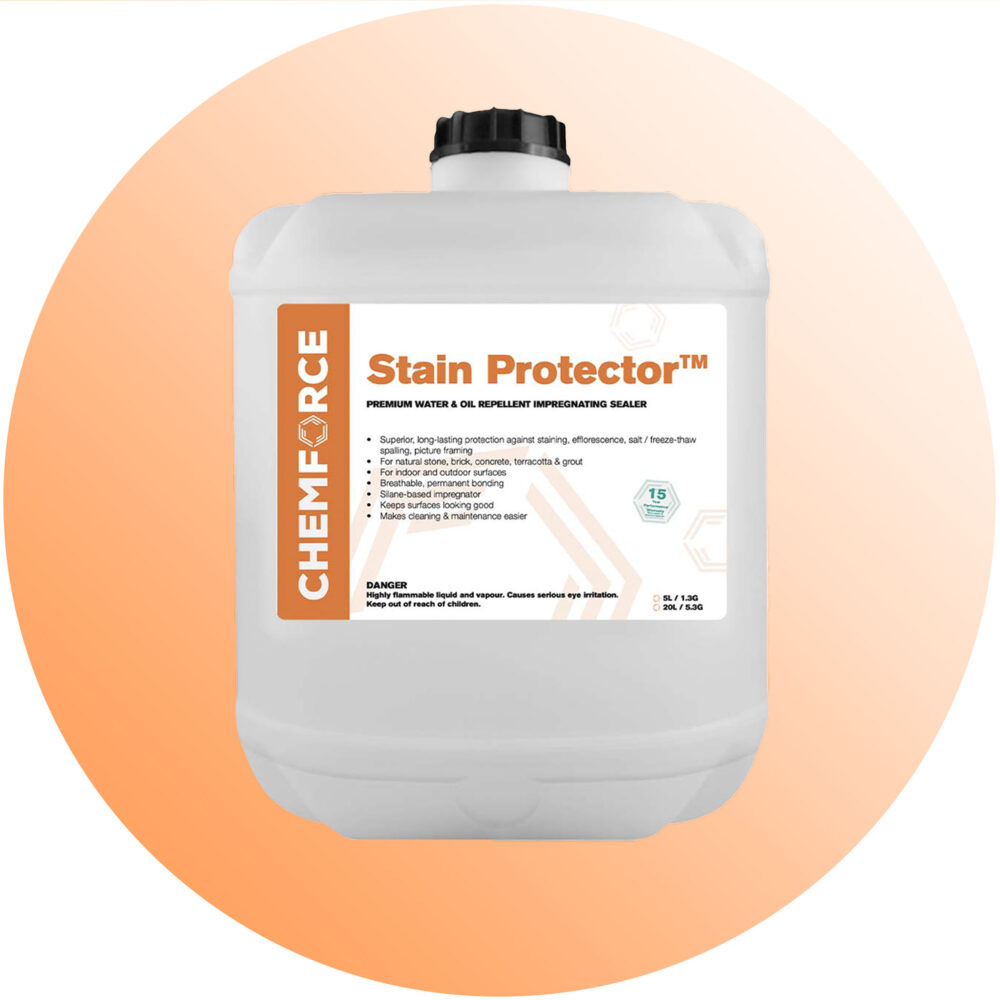
| Packaging | 1 litre, 5 litre, 20 litre |
| Country of manufacture | See packaging |
Where to Use
- Natural stone, tile, masonry and brickwork
- Pavers and other porous exterior surfaces
- Sandstone and limestone, which may need pre-sealing with lighter main coats
- Dense or polished stone surfaces, applied by wipe-on method rather than spray
How to Apply
- Test first — allow a 24-hour cure on a test area to confirm penetration and the desired result before committing to the full job.
- Apply the first coat — pour, brush or spray generously onto the surface and allow it to penetrate for several seconds, avoiding contact with surrounding areas.
- Apply the second coat — before the first coat dries, apply a second generous coat.
- Allow to cure — leave for 24 hours for the sealer to fully bond within the substrate.
- Clean up — use an organic solvent such as alcohol or mineral spirits to clean tools and equipment.
Important Notes
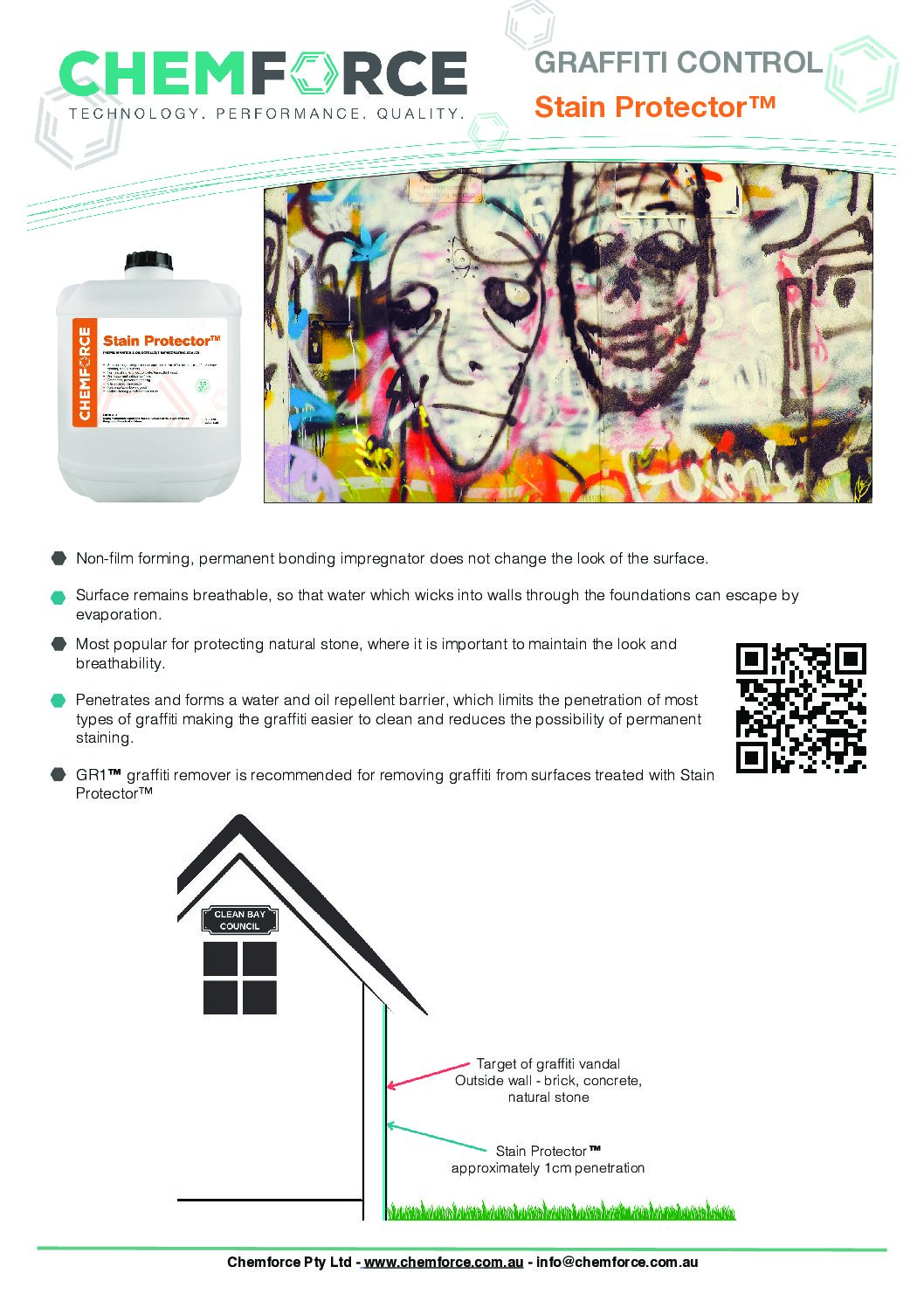
- On vertical surfaces, penetration is reduced compared with a horizontal surface, since there’s less time for the sealer to soak in before it runs.
- Spraying is not recommended on polished surfaces; use a wipe-on application method instead.
- Some sandstones and limestones benefit from pre-sealing with lighter coats so the sealer doesn’t over-penetrate and leave a higher concentration near the surface.
- Refer to the manufacturer’s full application rate chart for surface-specific guidance.
The 4-20m² per litre range on the datasheet reflects how differently stone and masonry absorb sealer: a dense, honed granite might sit near the top of that range, while a porous sandstone paver or unfilled travertine will draw down closer to the bottom, using more product per square metre to reach the same protective depth. That’s also why the two-coat method matters — a single coat can leave thin patches on an uneven-porosity surface, while the second coat, applied before the first has dried, fills in any spots the first pass missed. Because the sealer is silane-based and cures within the substrate rather than as a surface film, it doesn’t change the look or slip resistance of the treated stone the way a topical coating can, which is why it’s a common choice for pavers and outdoor stone that need to stay slip-safe once sealed.