Description
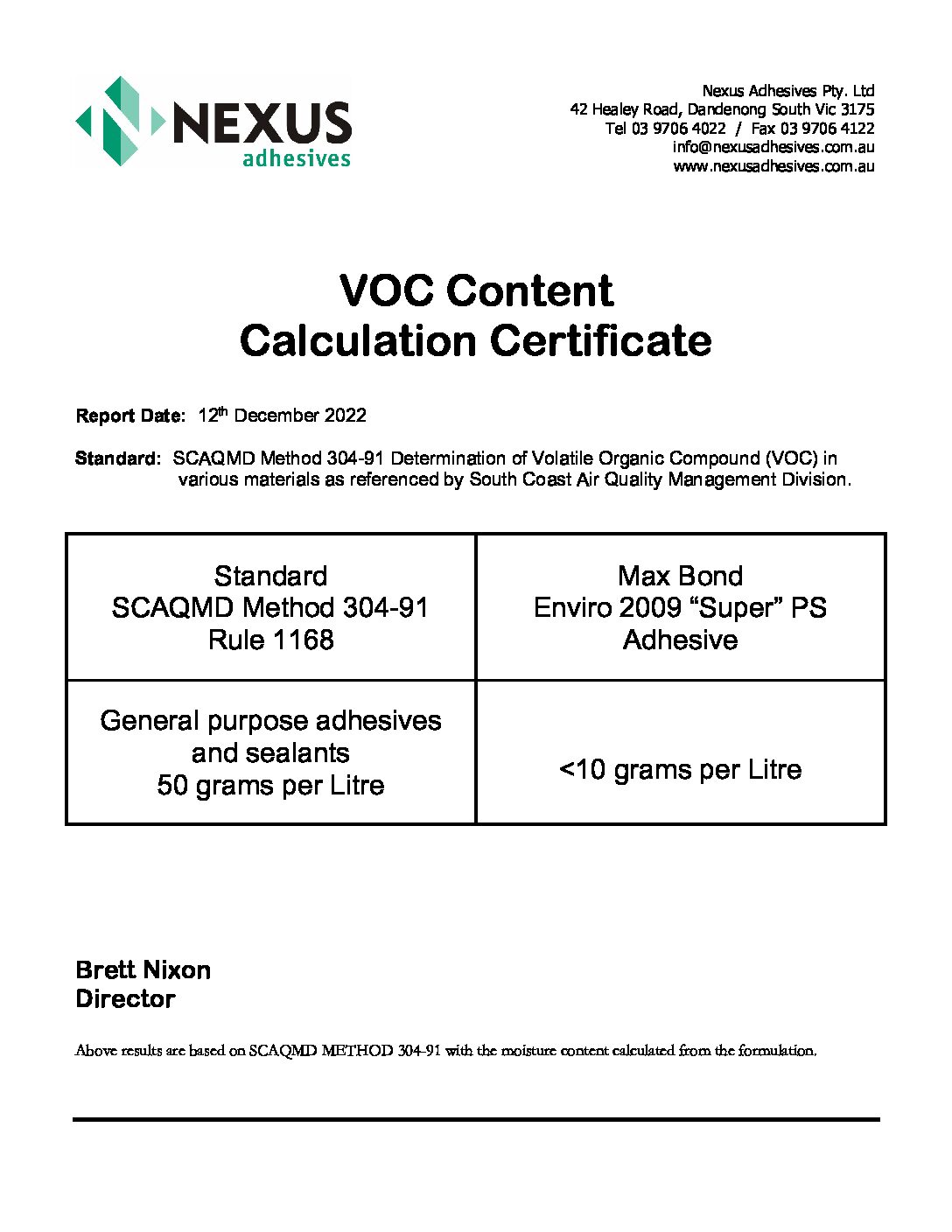
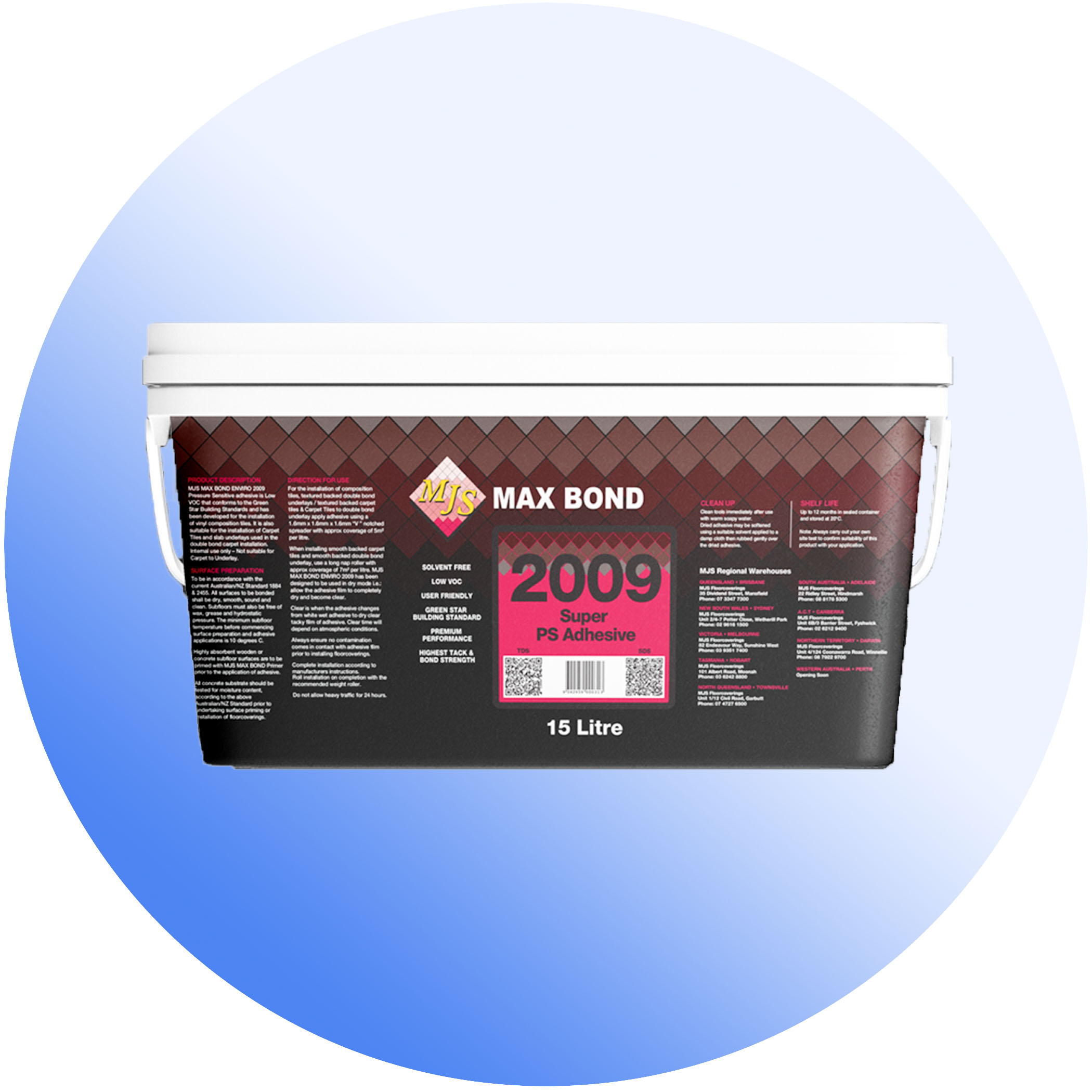
Max Bond 2009 Super Pressure Sensitive Adhesive is a low-VOC acrylic adhesive developed specifically for vinyl composition tiles, with good plasticiser resistance and suitability for both carpet tile installation and slab underlays used in double-bond carpet systems. Being pressure sensitive rather than a hard-set adhesive, it’s built around a clear-time installation method: the adhesive is laid, allowed to change from a white wet film to a dry, clear tacky film, and only then is the floorcovering pressed in.
That clear-time approach gives real control over the installation window — clear time depends on atmospheric conditions, so an installer can gauge readiness visually rather than working to a fixed timer. Being suitable for use over absorbent heated subfloors extends where it can be specified, provided the heating shutdown timing specified in AS1884-2012 clause 4.1.3 is followed.
Technical Specifications
| Base | Acrylic |
|---|---|
| Solids content | Approx. 50% |
| Minimum subfloor temperature | 10°C |
| Application trowel | 1.6mm x 1.6mm V-notched spreader |
| Coverage | Approx. 5m² per litre |
| Heavy traffic restriction | 24 hours |
| Shelf life | 12 months from manufacture, sealed at 20°C |
| Packaging | 4 and 15 litre pails |
Where to Use
- Vinyl composition tile (VCT) installation
- Carpet tiles
- Double-bond carpet slab underlays
- Absorbent heated subfloors (per AS1884-2012 guidance)
How to Apply
- Prepare the substrate — dry, smooth, sound and clean, free of wax, grease and hydrostatic pressure.
- Prime if needed — highly absorbent wooden or concrete subfloors should be primed with Max Bond Primer.
- Apply the adhesive — spread with a 1.6mm x 1.6mm V-notched spreader.
- Wait for clear time — allow the adhesive to change from white wet film to dry, clear tacky film.
- Lay the material — press the floorcovering into place, roll with the recommended weight roller.
- Restrict traffic — do not allow heavy traffic for 24 hours.
Important Notes
- Internal use only.
- Always carry out a site test to confirm suitability with the specific application.
- Clean tools immediately with warm soapy water; dried adhesive can be softened with a suitable solvent.
Reading a pressure sensitive adhesive by eye rather than by timer takes a small amount of practice, but it’s genuinely more reliable than a fixed wait time — atmospheric humidity and temperature can shift clear time meaningfully from one day to the next, and an adhesive checked visually for full clarity is a more accurate readiness signal than a stopwatch alone. Confirming full clarity across the whole adhesive bed before laying material is a small extra check that avoids a patchy, inconsistent bond across a larger tile or carpet installation.