Description
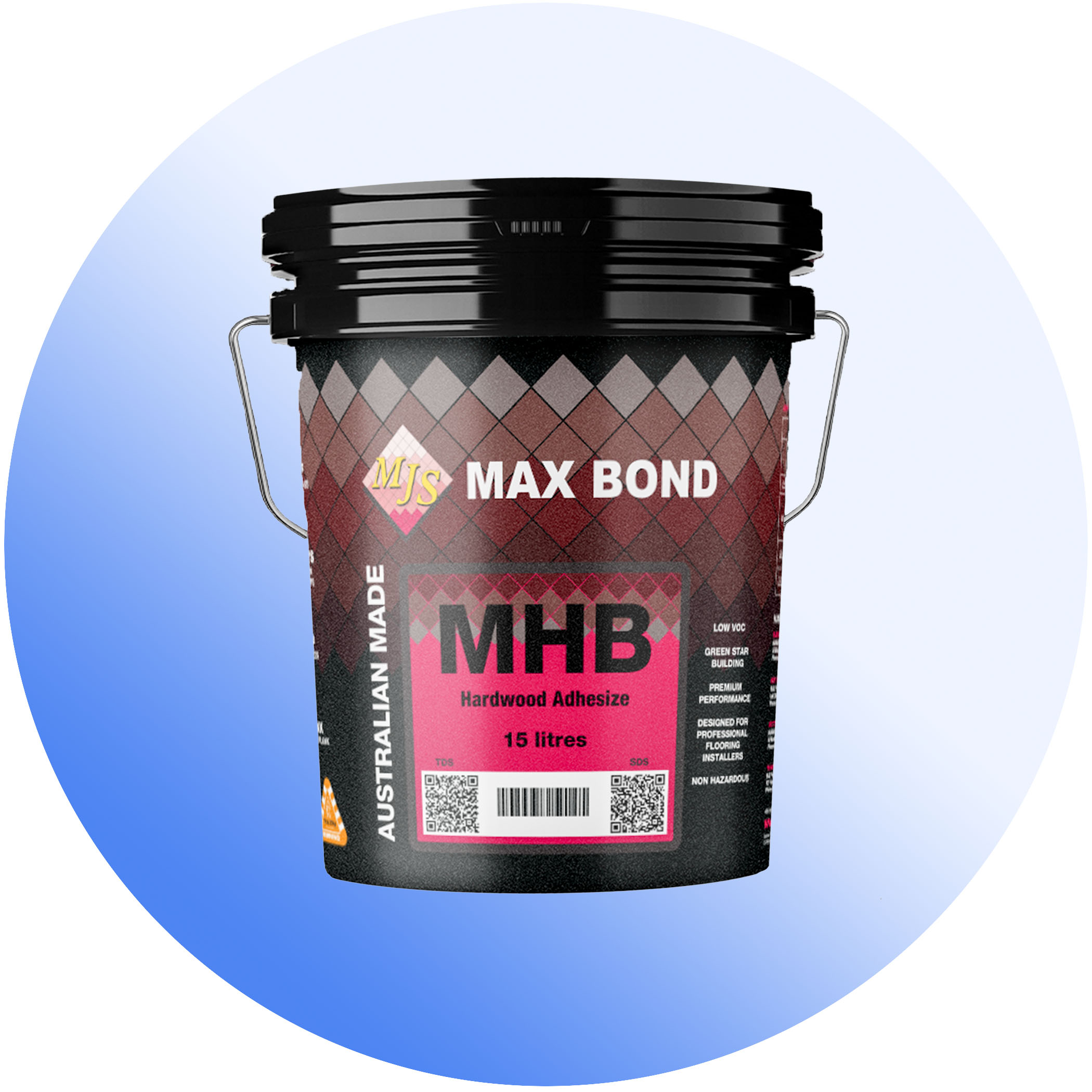
Hardboard underlay that is only stapled down will eventually telegraph every fixing through the floorcovering. Max Bond Hardboard Adhesive is the high-solids, high bond strength water-based adhesive made to bed those sheets into a continuous film instead.
It is designed specifically for fixing hardboard and timber underlays to timber substrates, and at 3.8 grams per litre VOC it is about as low-emission as a flooring adhesive gets.
Technical Specifications
| Product type | High solids water-based timber underlay adhesive |
|---|---|
| For bonding | Hardboard and timber underlays to timber substrates |
| VOC content | 3.8 g/L, tested to SCAQMD Method 304-91 |
| Trowel | 2.4mm x 2.4mm x 2.4mm V-notch |
| Working area | Spread 2 to 3 m² at a time |
| Transfer required | 100% adhesive transfer to the back of the underlay |
| Rolling | 40 kg roller |
| Minimum subfloor temperature | 10°C |
| Standard | AS 1884 Floor Coverings Resilient Sheet |
| Pack size | 15 litre pail |
Bedding Versus Stapling
Hardboard underlay fixed only with staples relies on those fixings to hold the sheet flat across its whole area. Over time the sheet lifts slightly between fixings, and every one of them eventually telegraphs through a vinyl floor as a visible dimple.
Bedding the sheet into a continuous adhesive film removes that. The method matters: spread only 2 to 3 square metres at a time so the underlay goes into wet adhesive, aim for 100 percent transfer to the back of the sheet, and roll with a 40 kg roller before the adhesive sets.
Where to Use
- Fixing hardboard underlay to timber subfloors
- Fixing timber underlays ahead of resilient floorcoverings
- Projects where low VOC adhesives are specified
- Occupied buildings where solvent-based adhesives are unsuitable
How to Apply
- Prepare: All surfaces must be dry, smooth and free of contaminants. Prepare to AS 1884, including moisture testing.
- Spread in sections: Apply with a 2.4mm V-notched trowel, covering only 2 to 3 square metres at a time.
- Lay into wet adhesive: Set the underlay into the wet film and ensure 100 percent adhesive transfer to its back.
- Roll: Roll the underlay with a 40 kg roller.
- Fix and finish: Staple or nail as required before the adhesive sets, then complete to the underlay manufacturer’s instructions.
Important Notes
- The timber subfloor must be absorbent so the adhesive can dry.
- Minimum subfloor temperature before preparation or application is 10 degrees.
- Clean tools immediately with warm soapy water. Dried adhesive needs a solvent cleaner.
See the full flooring adhesives range for related products.