Description
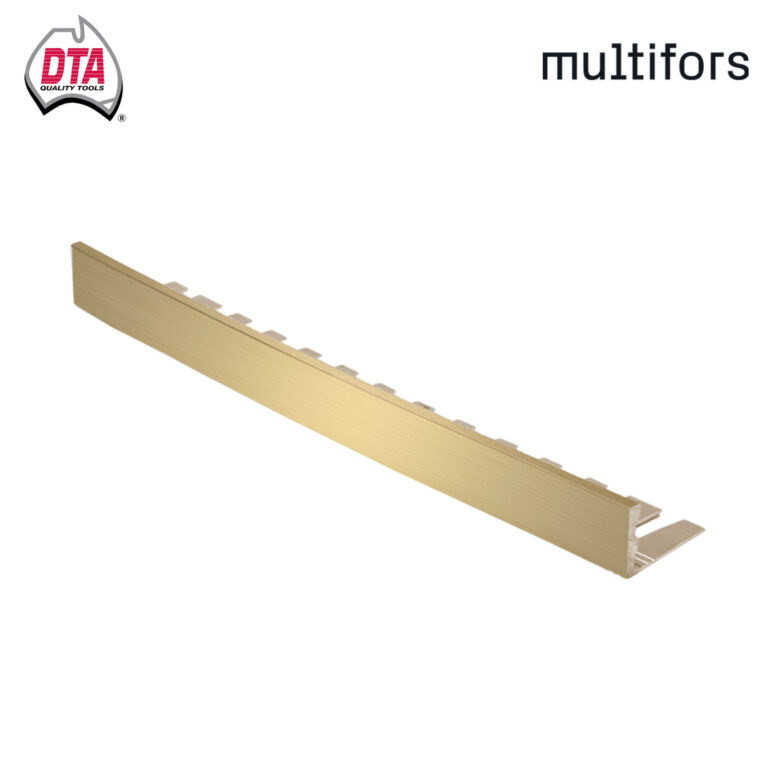
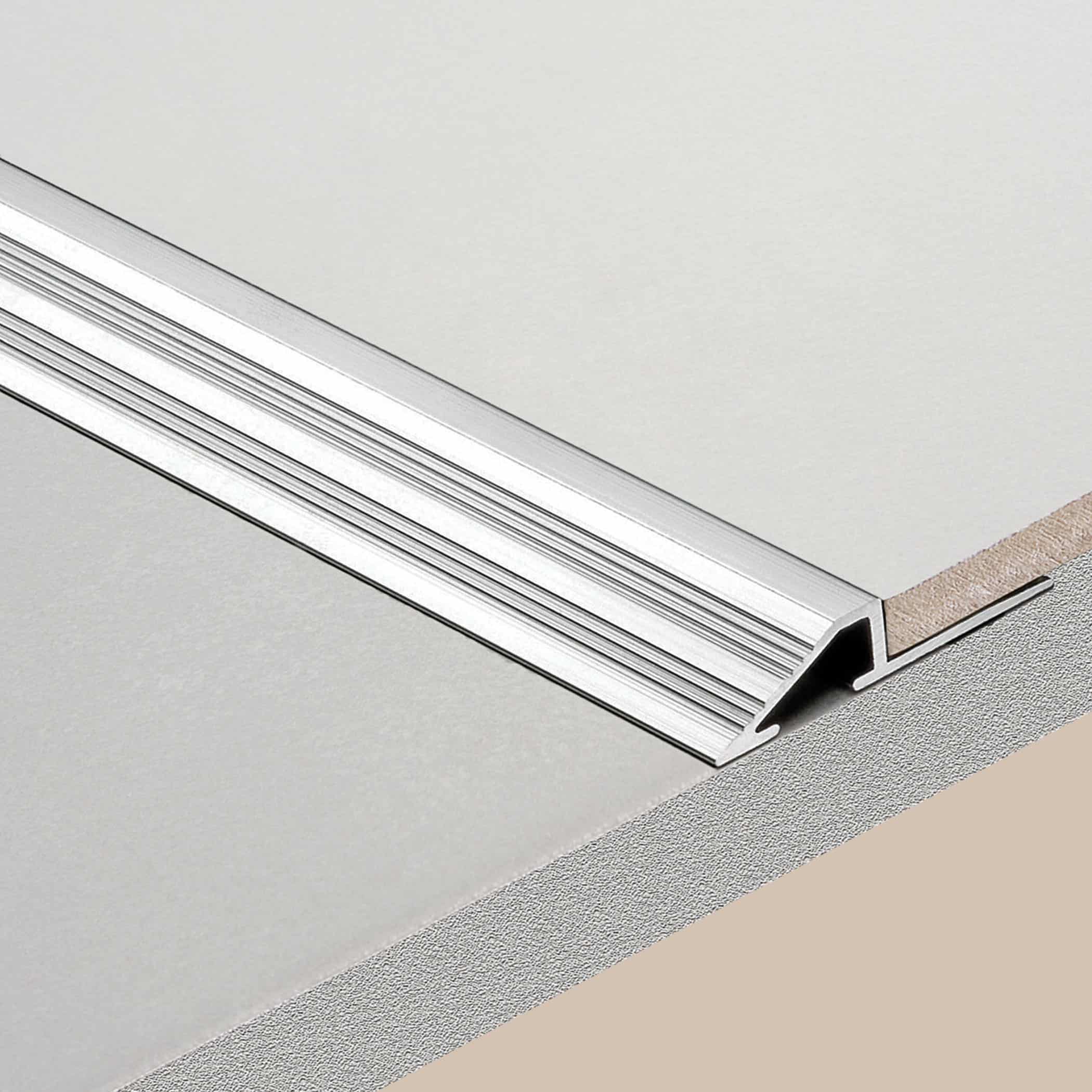
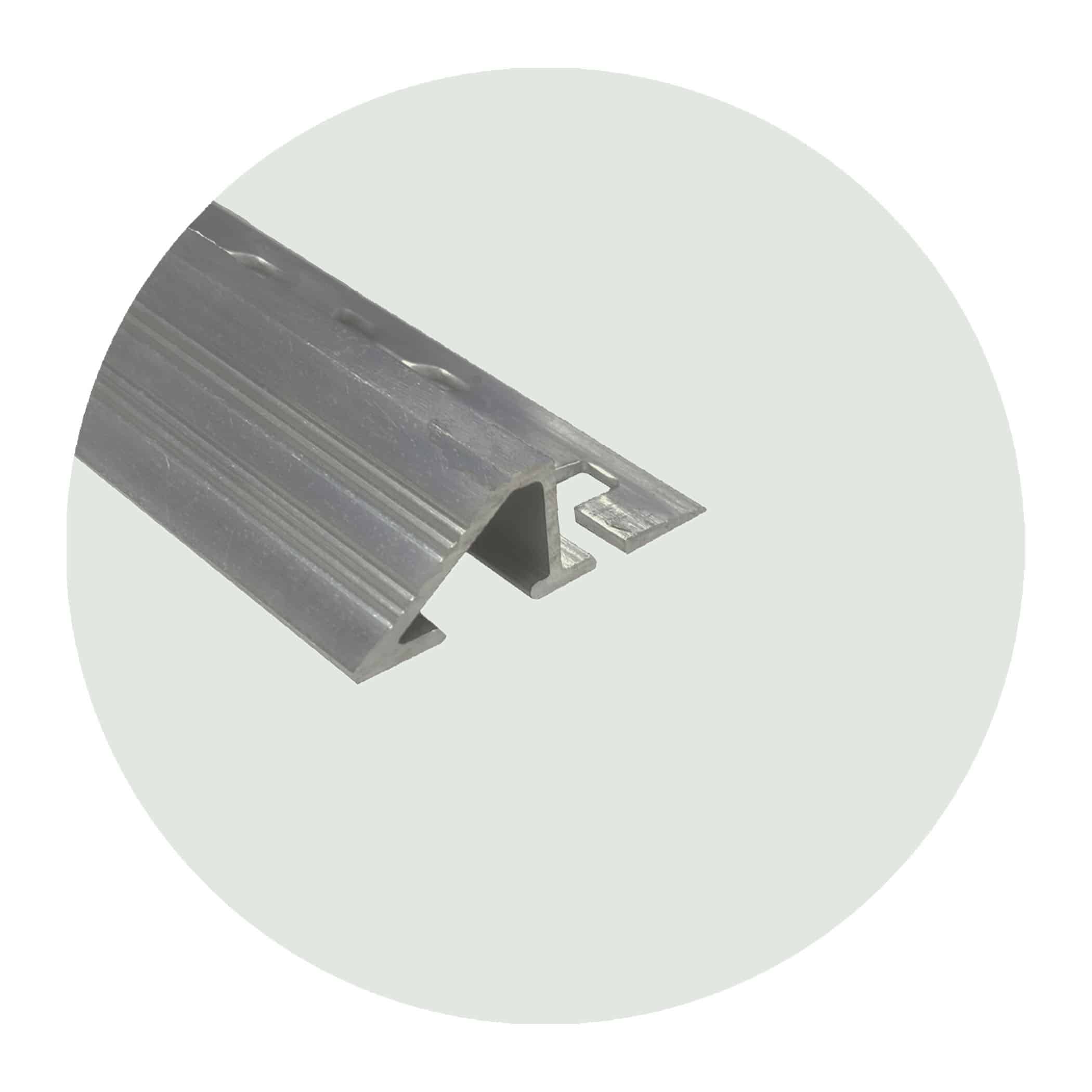
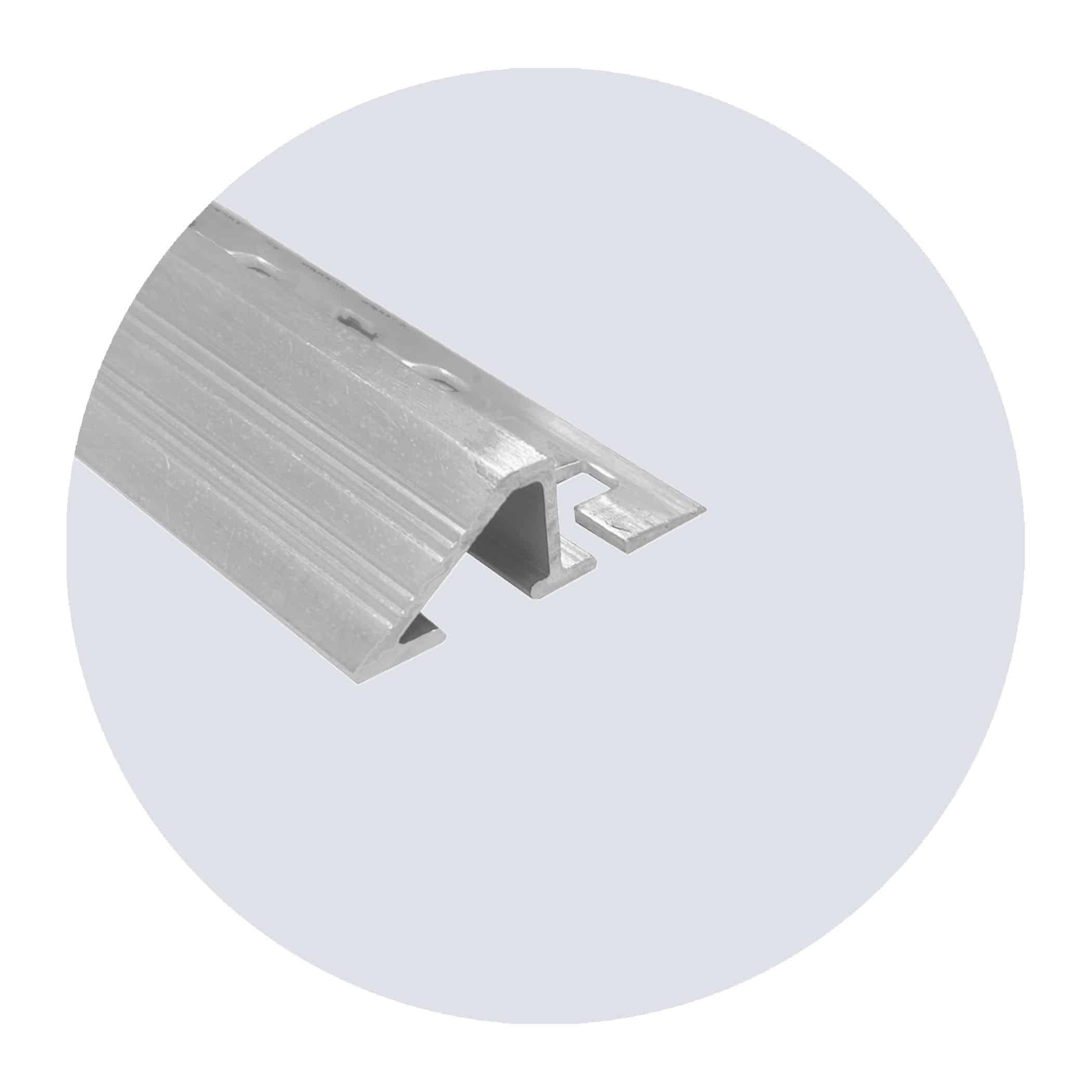
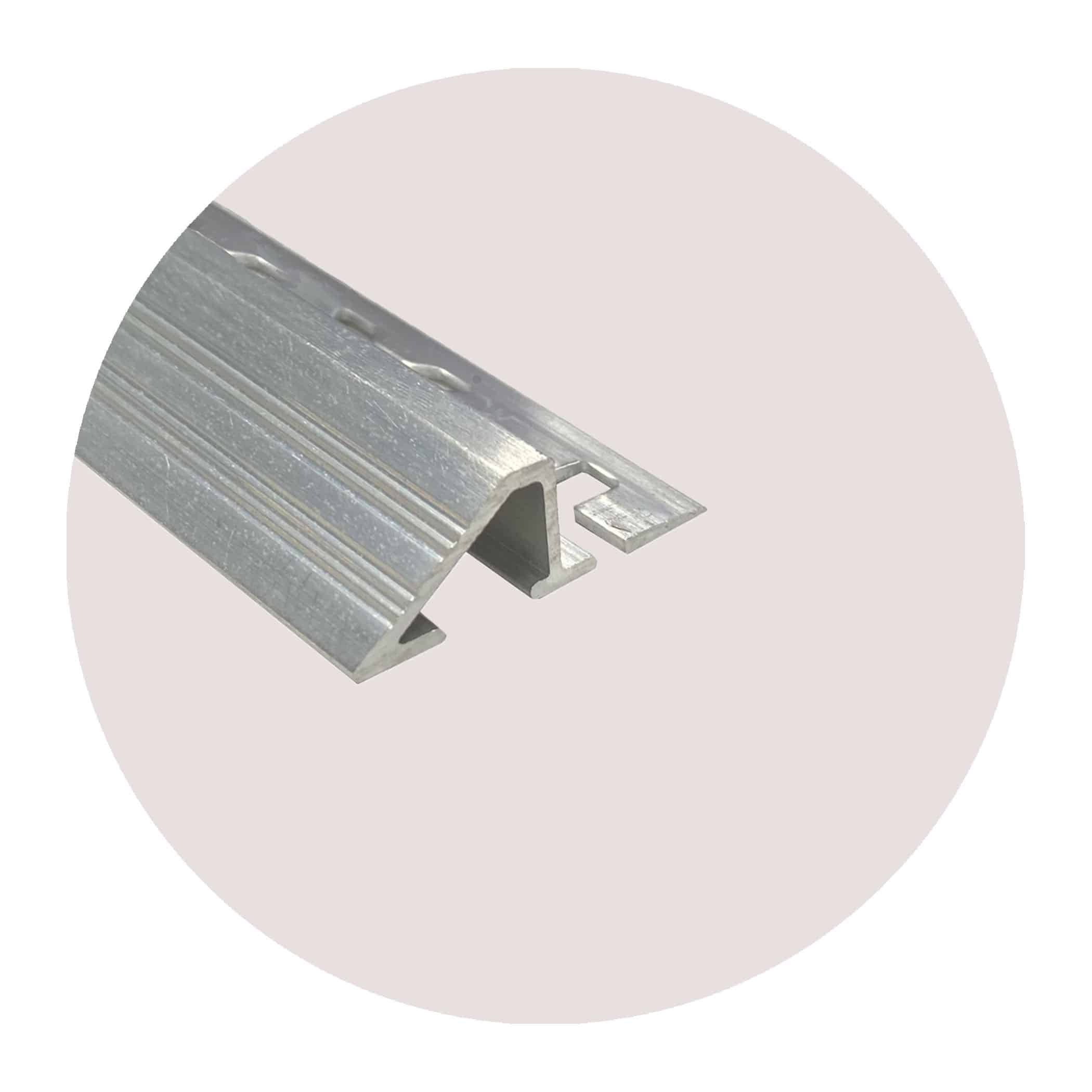
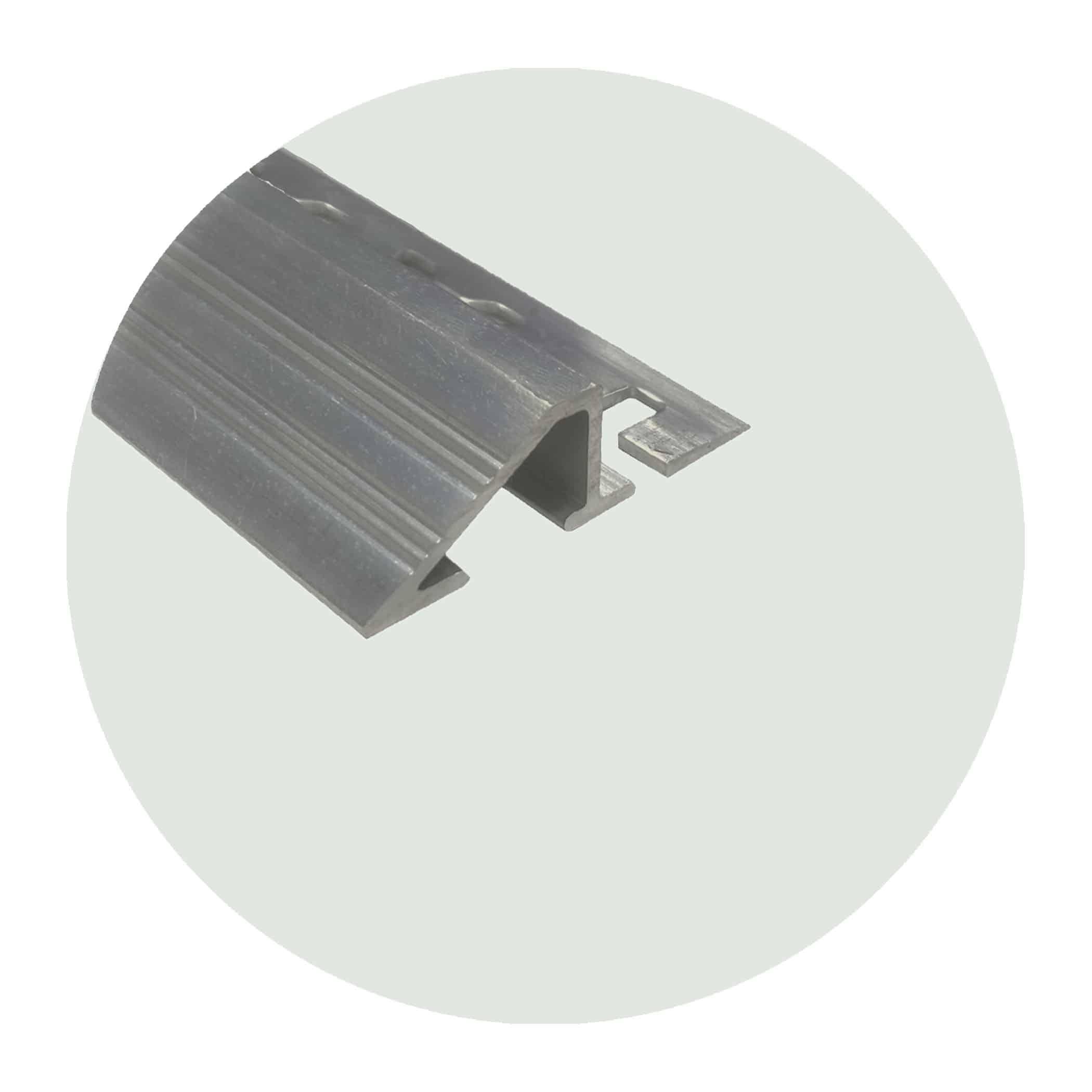
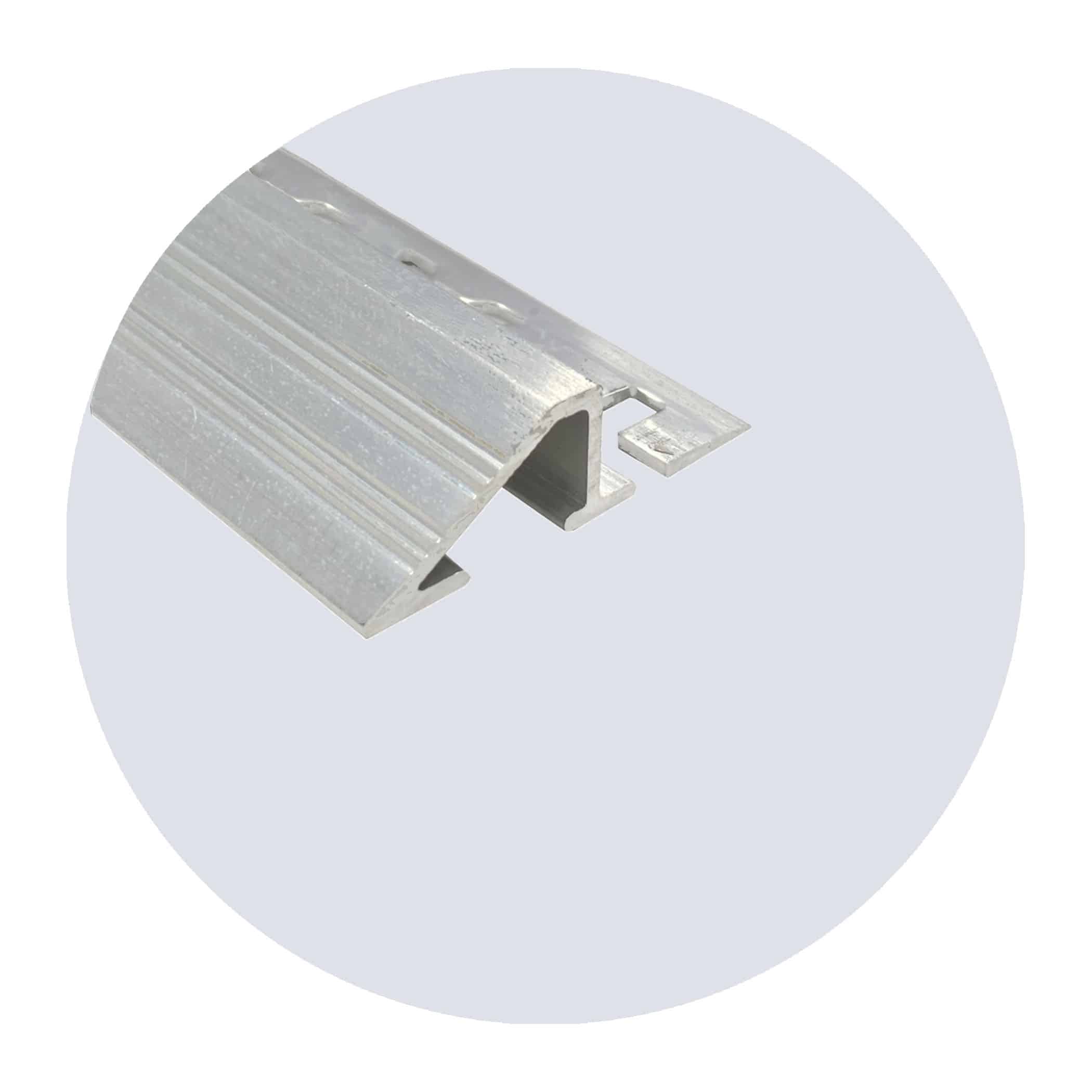
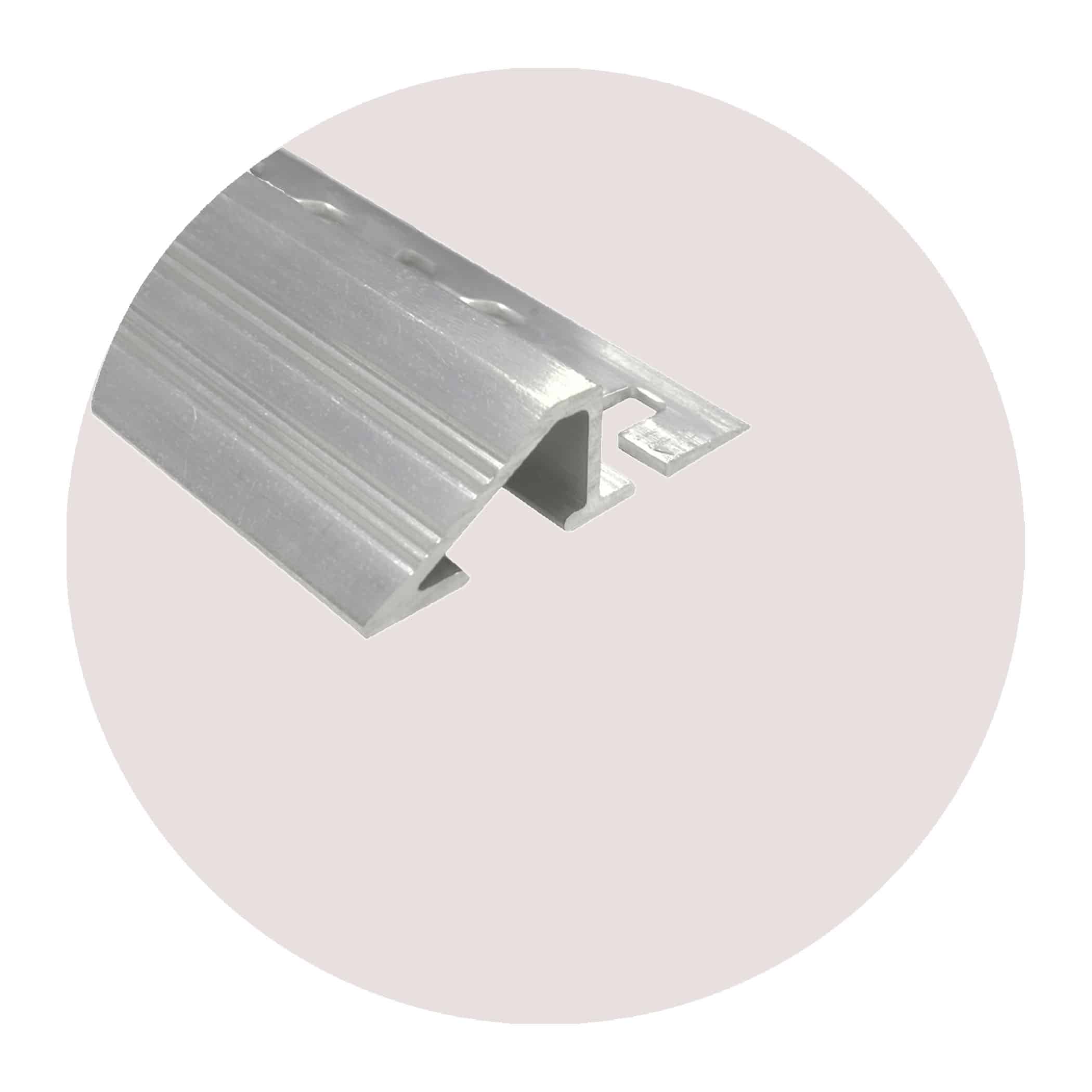
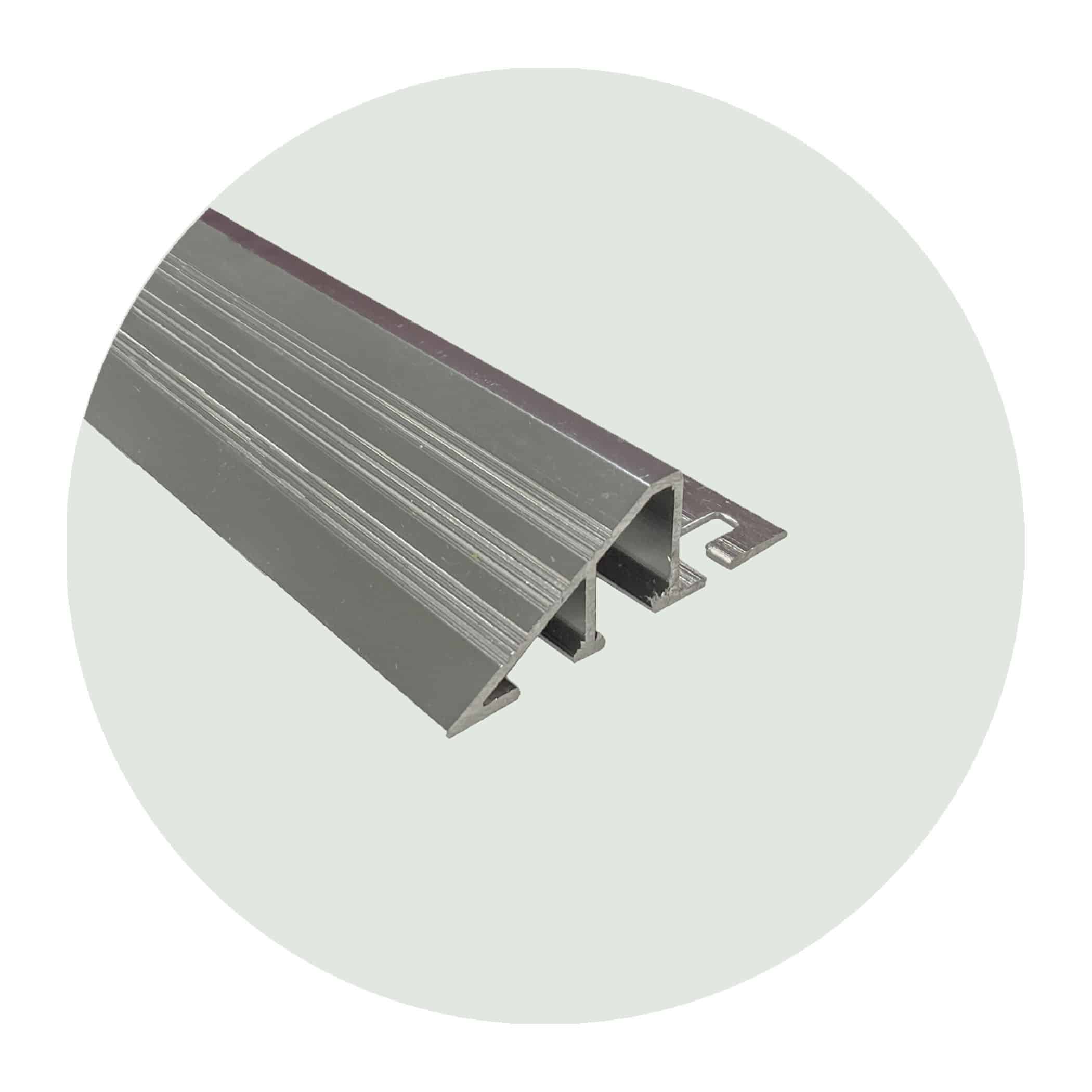
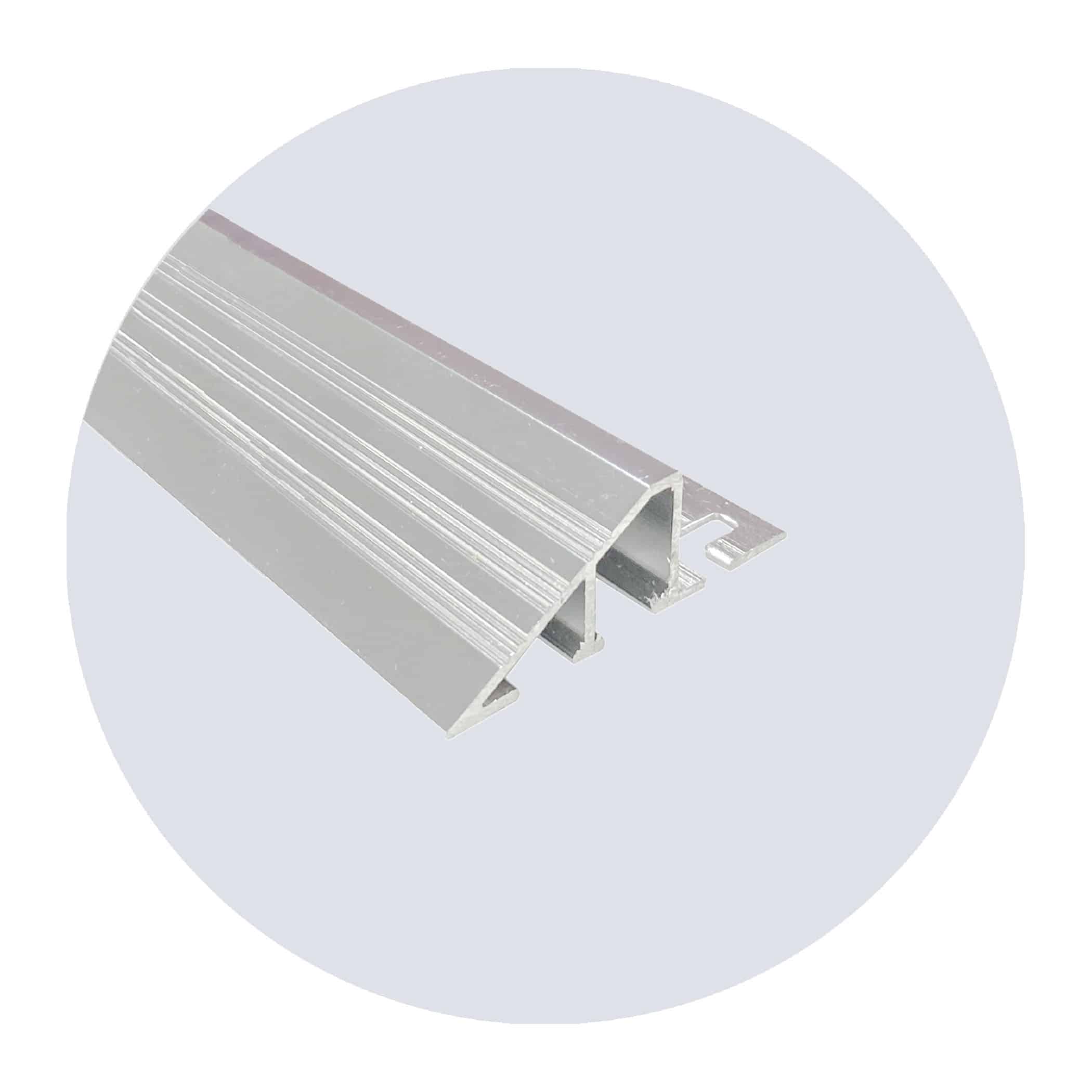
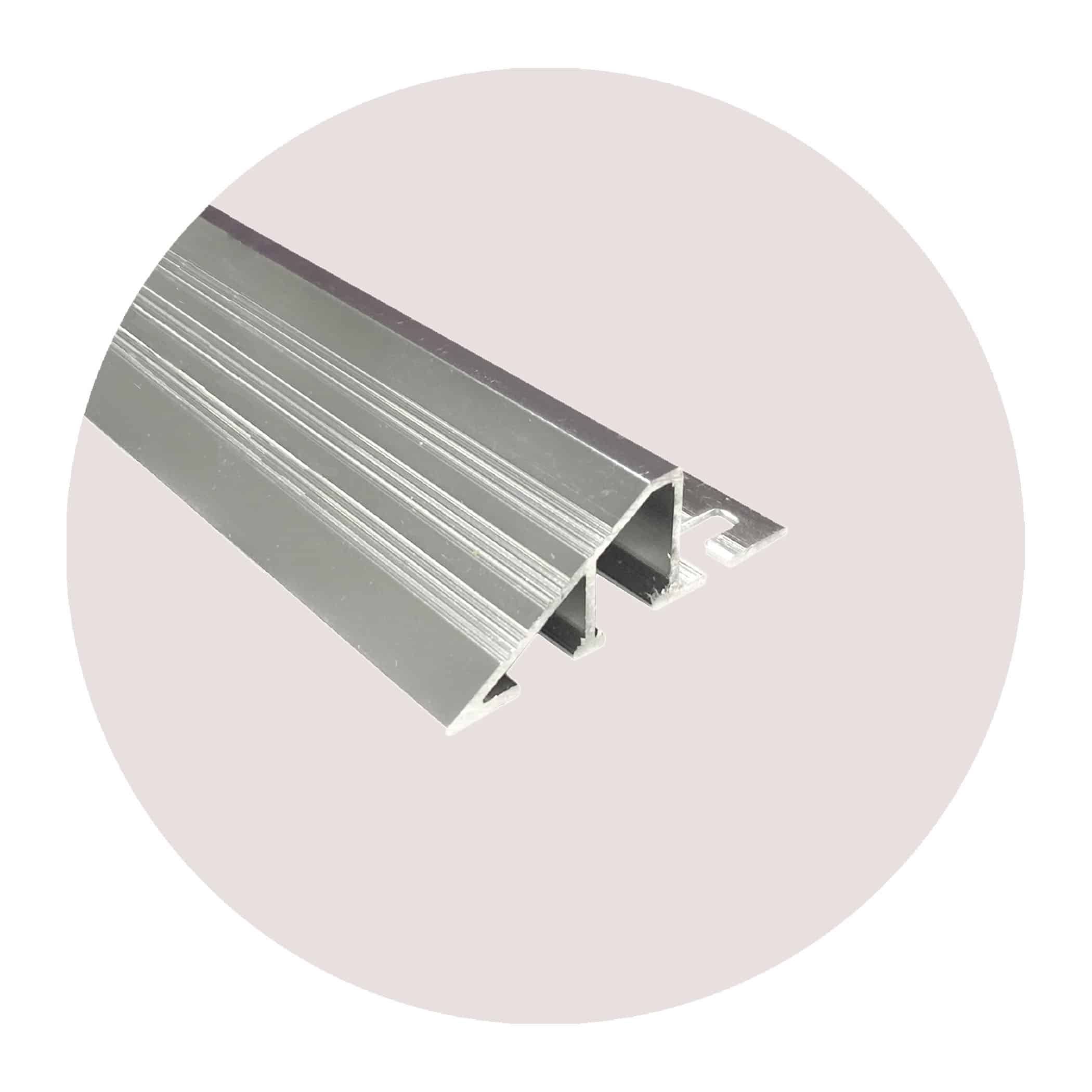
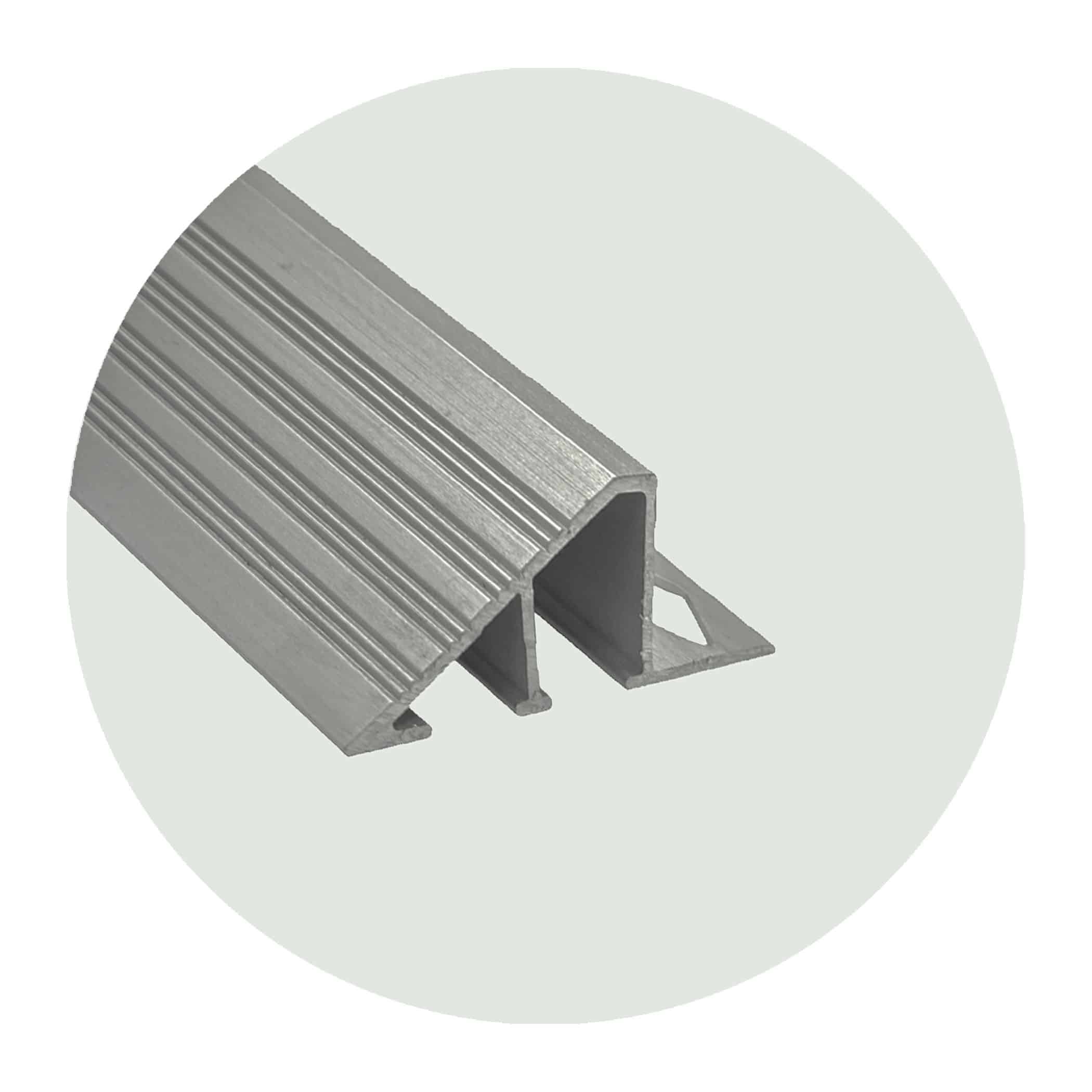
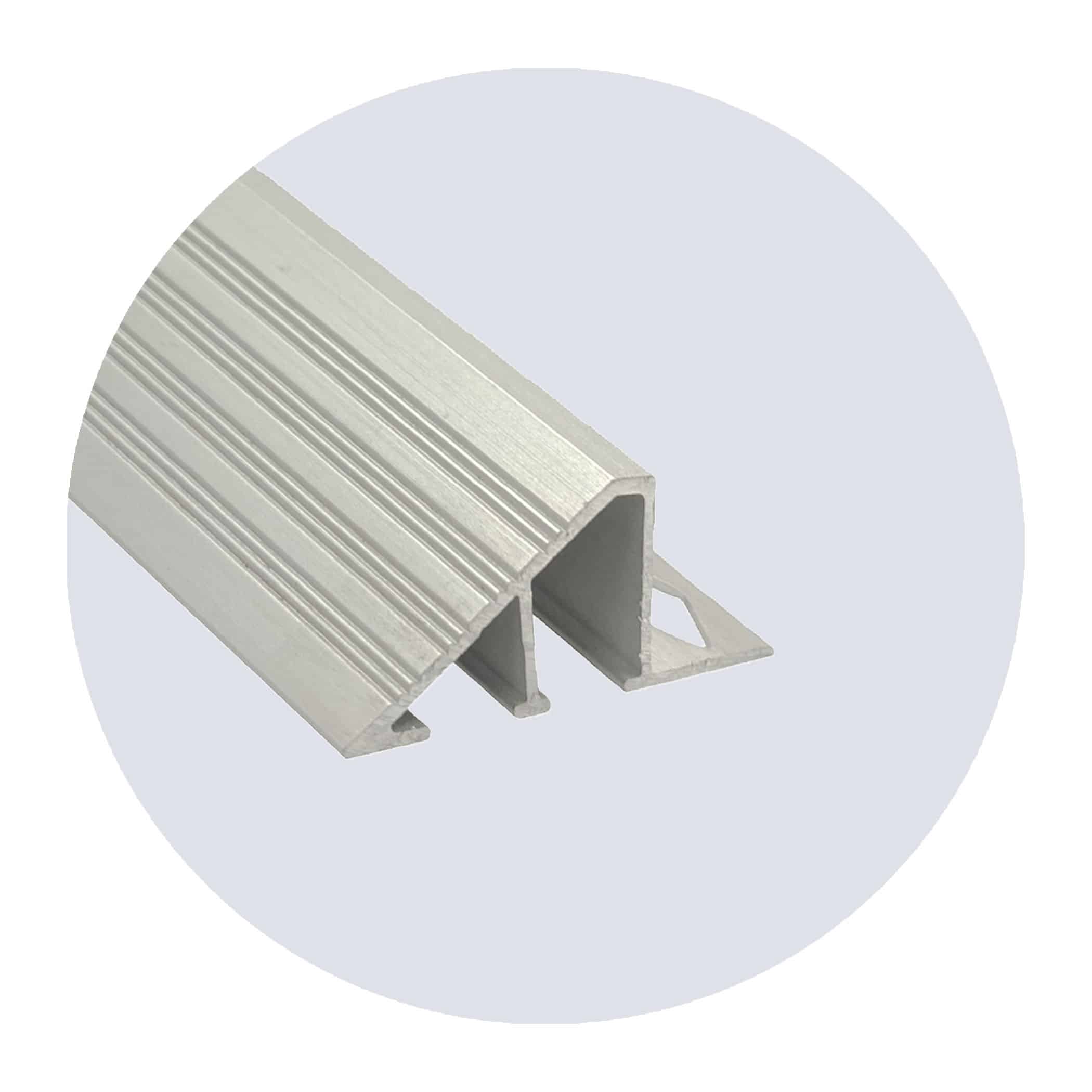
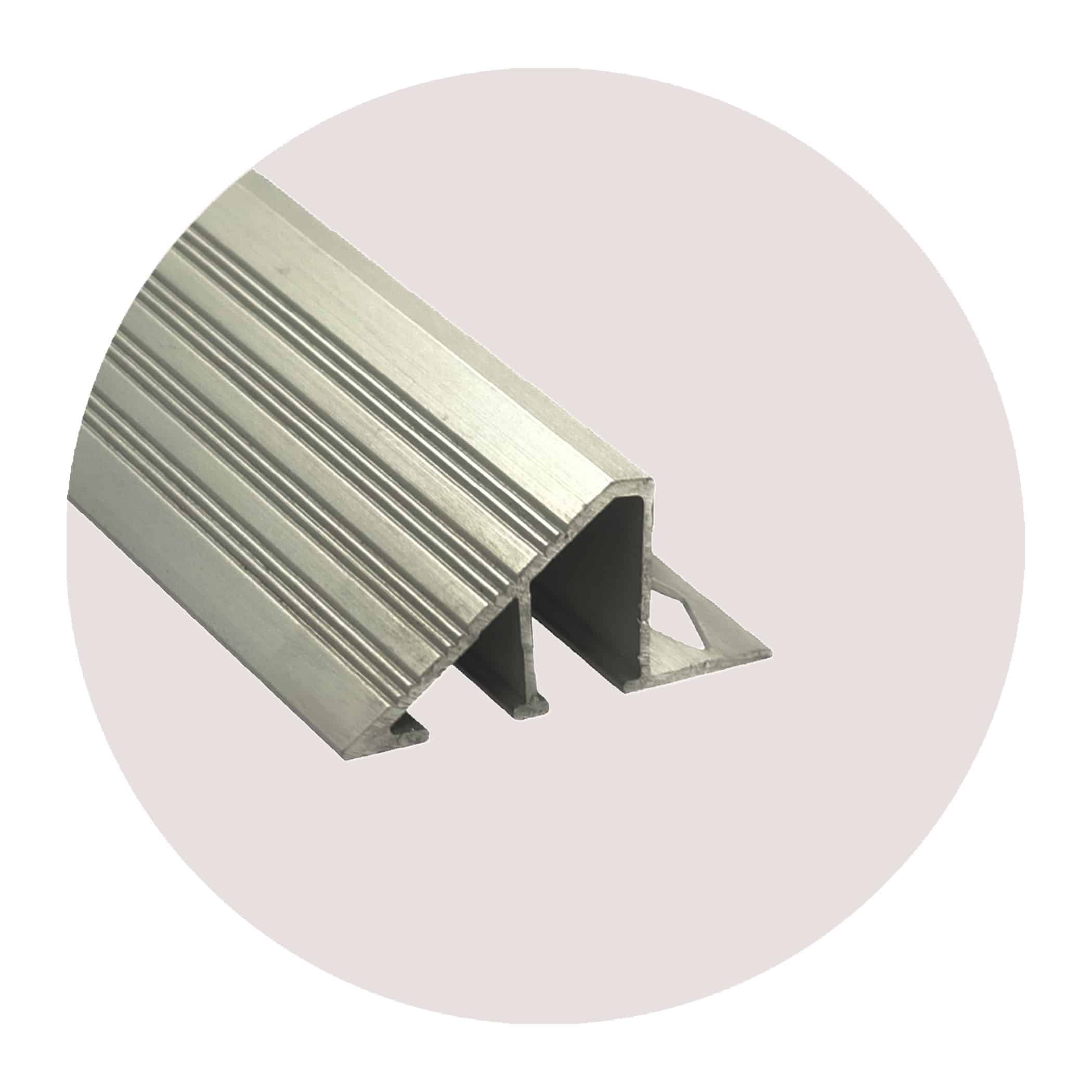
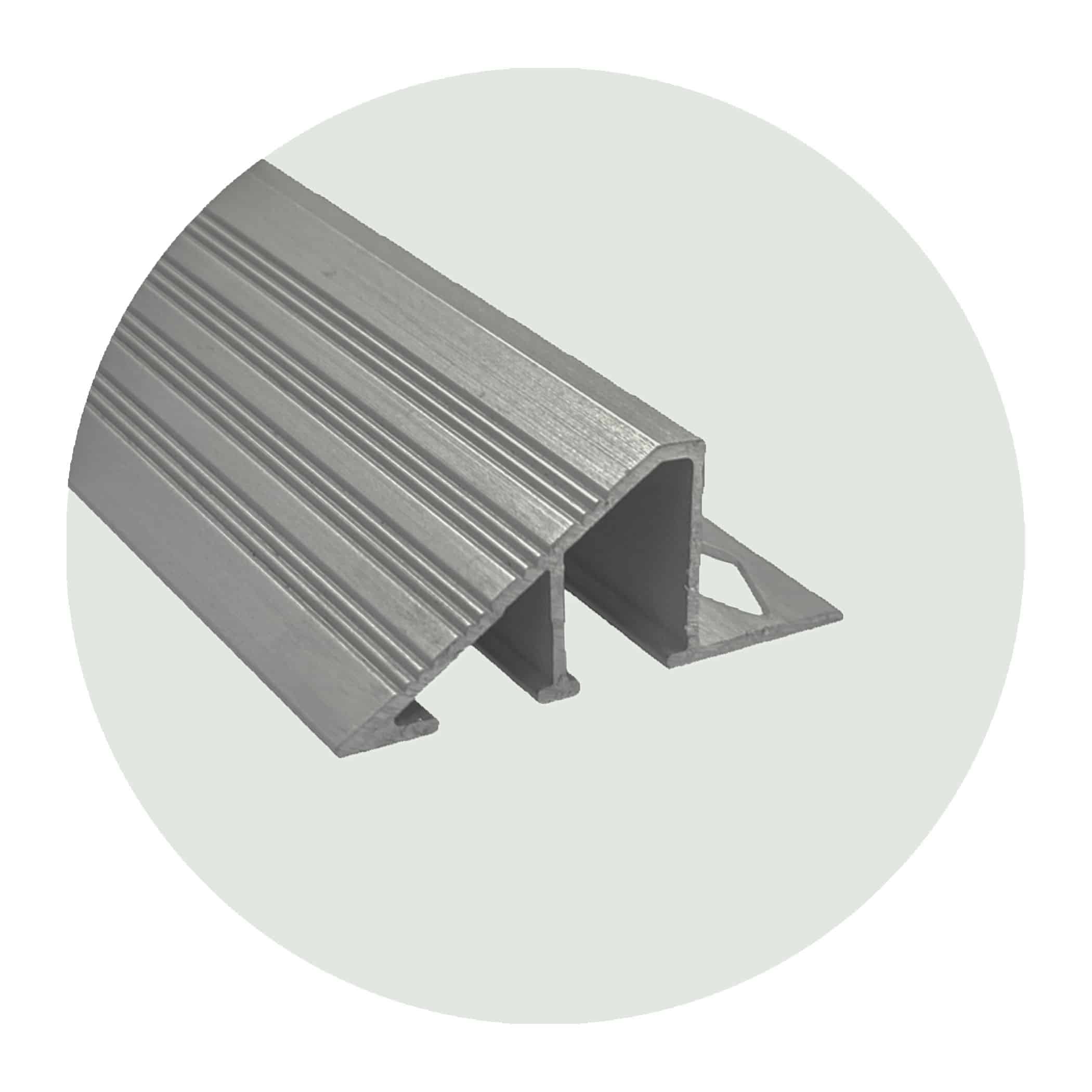
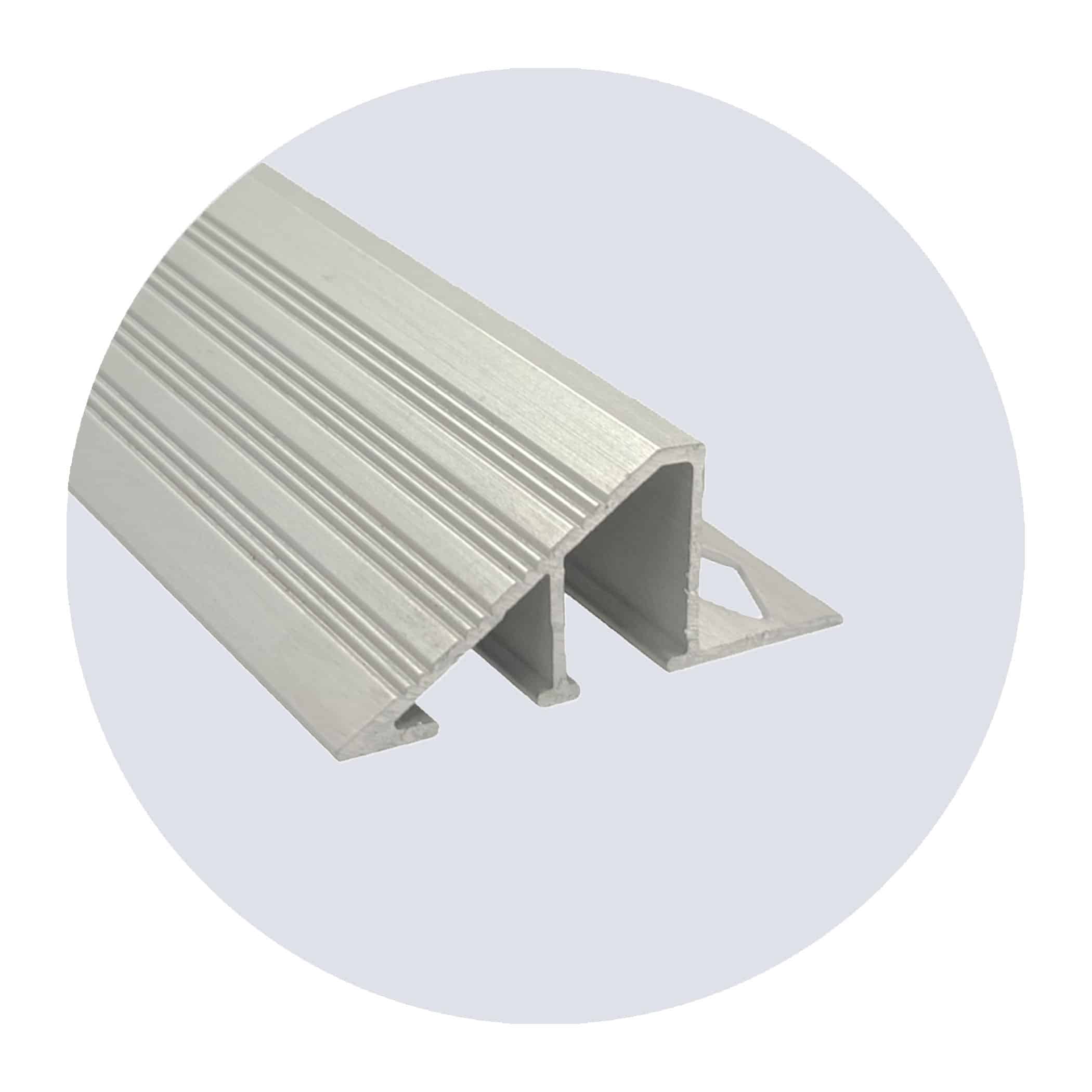
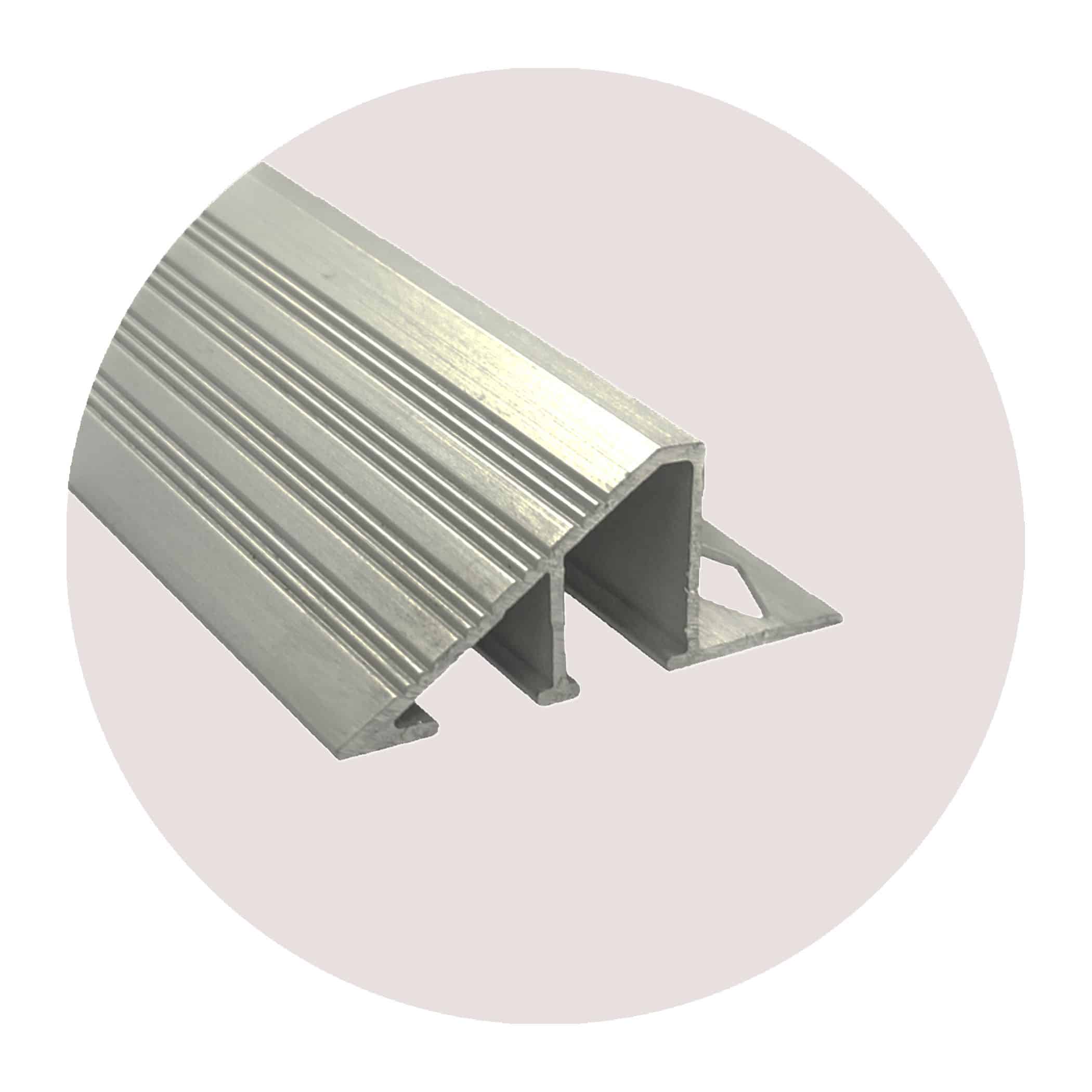
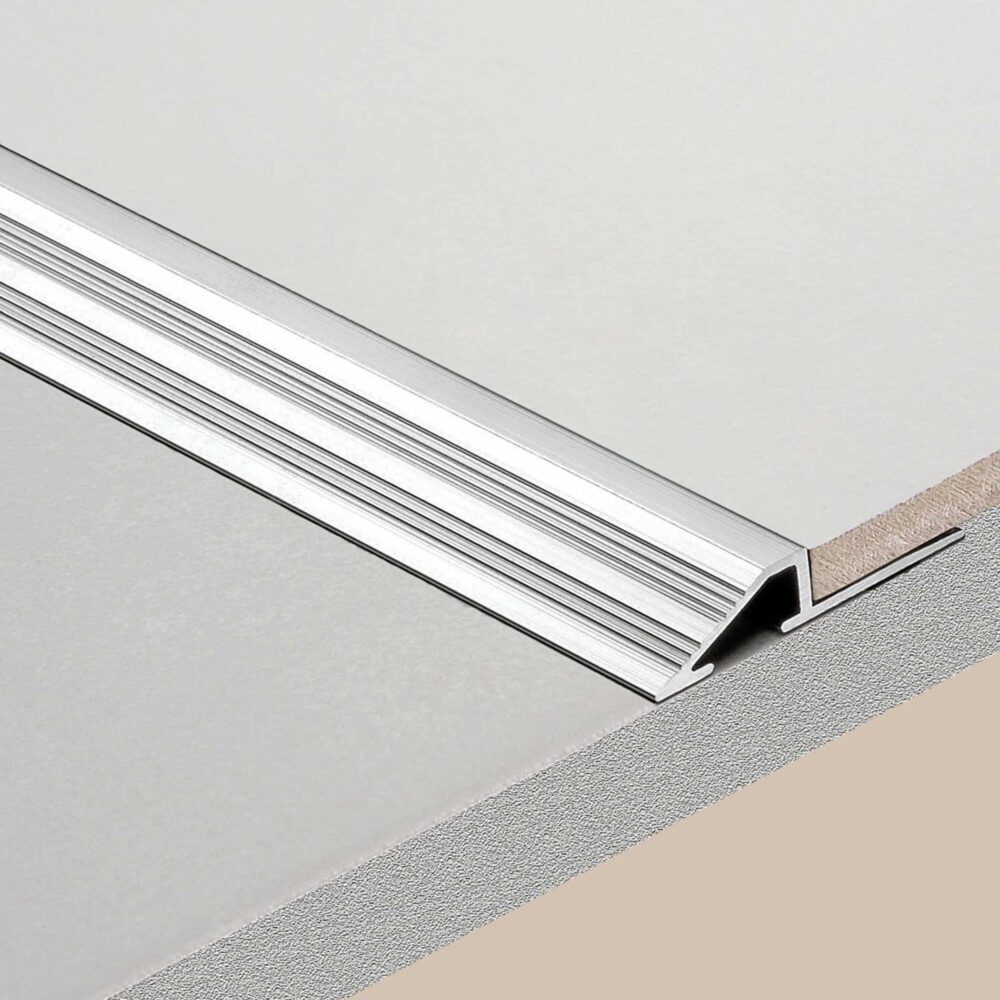
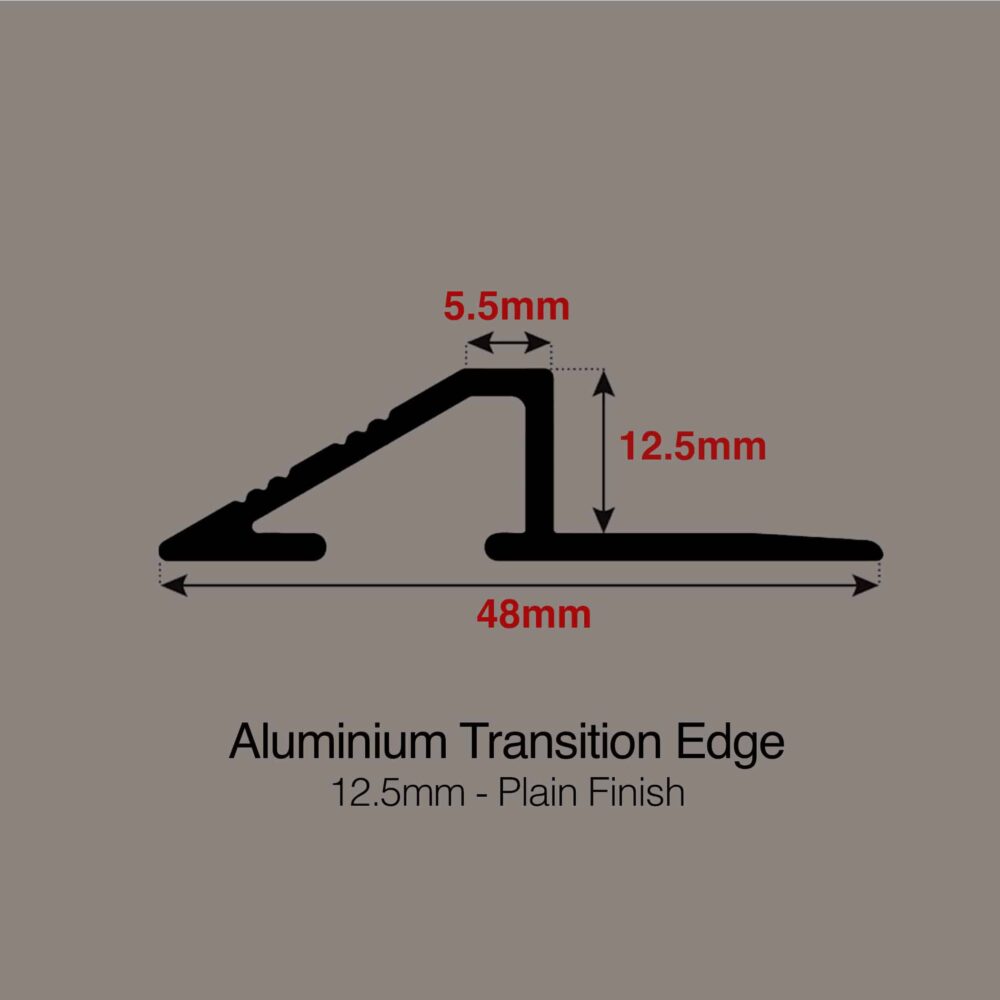
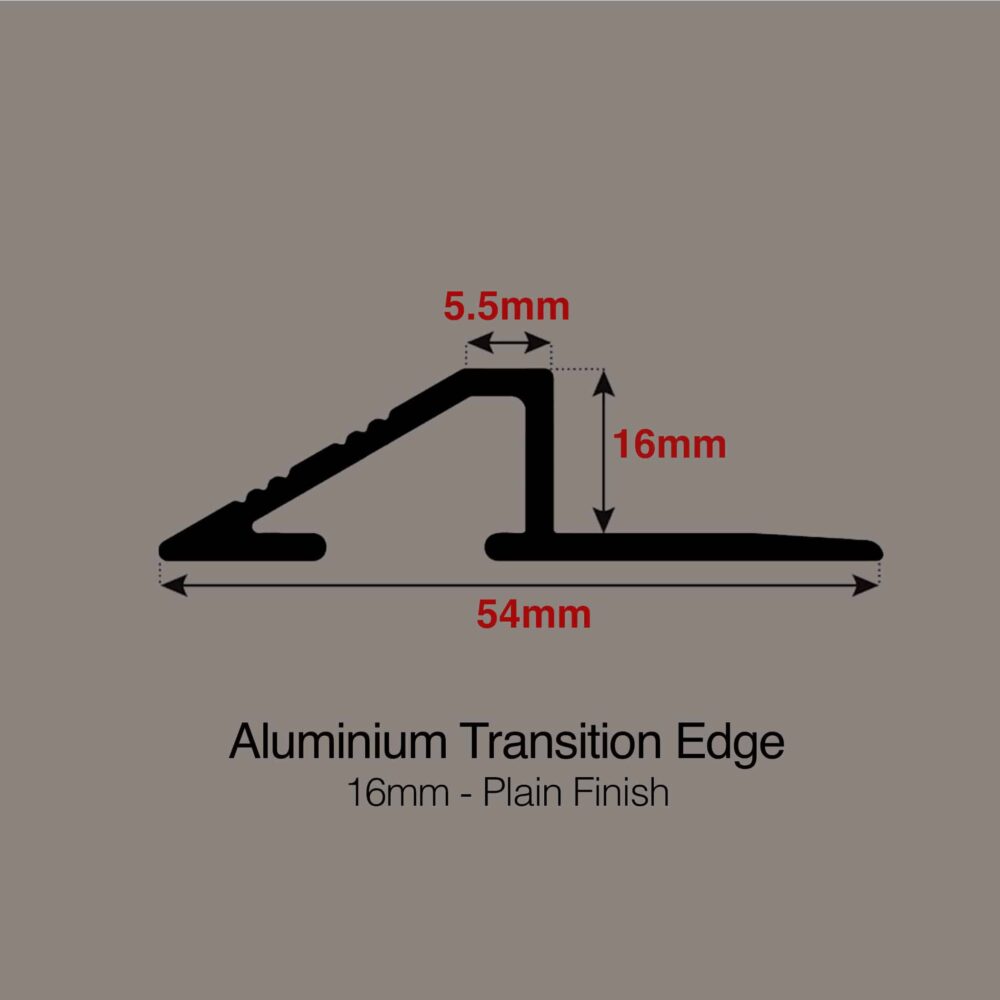
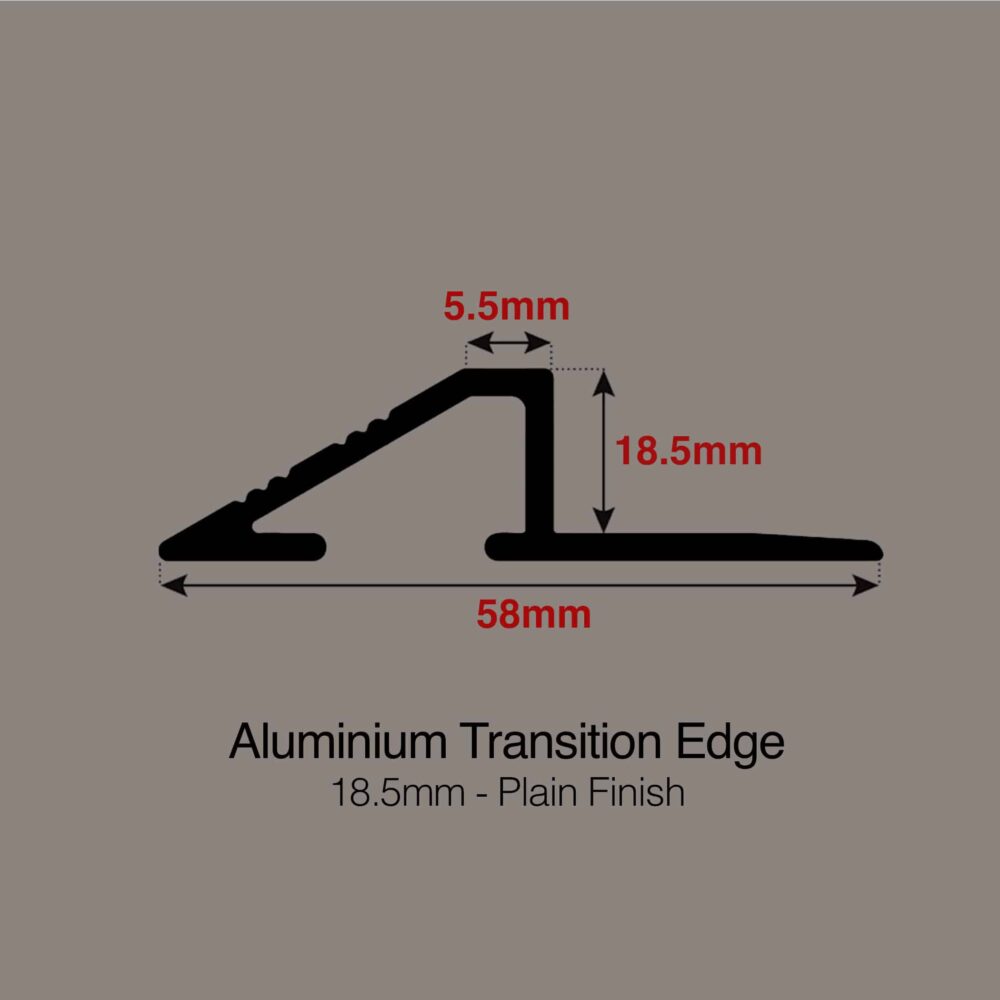
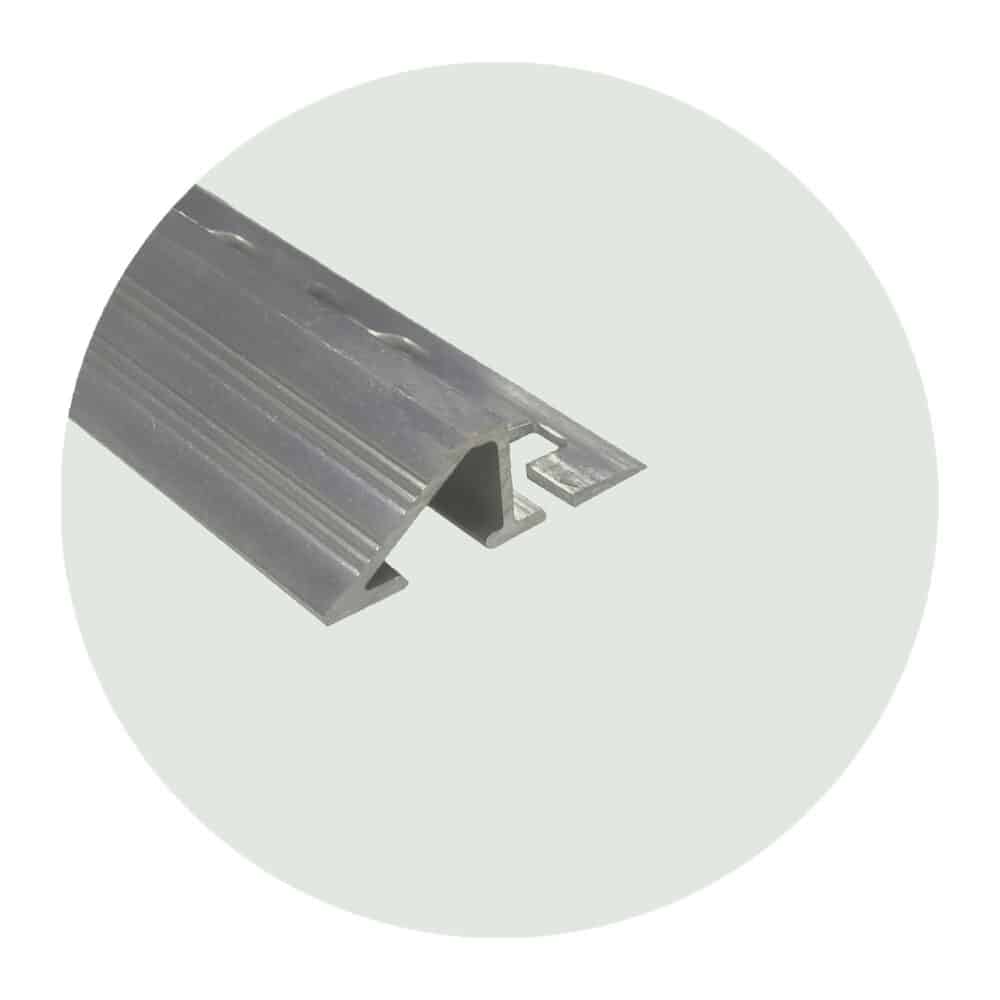
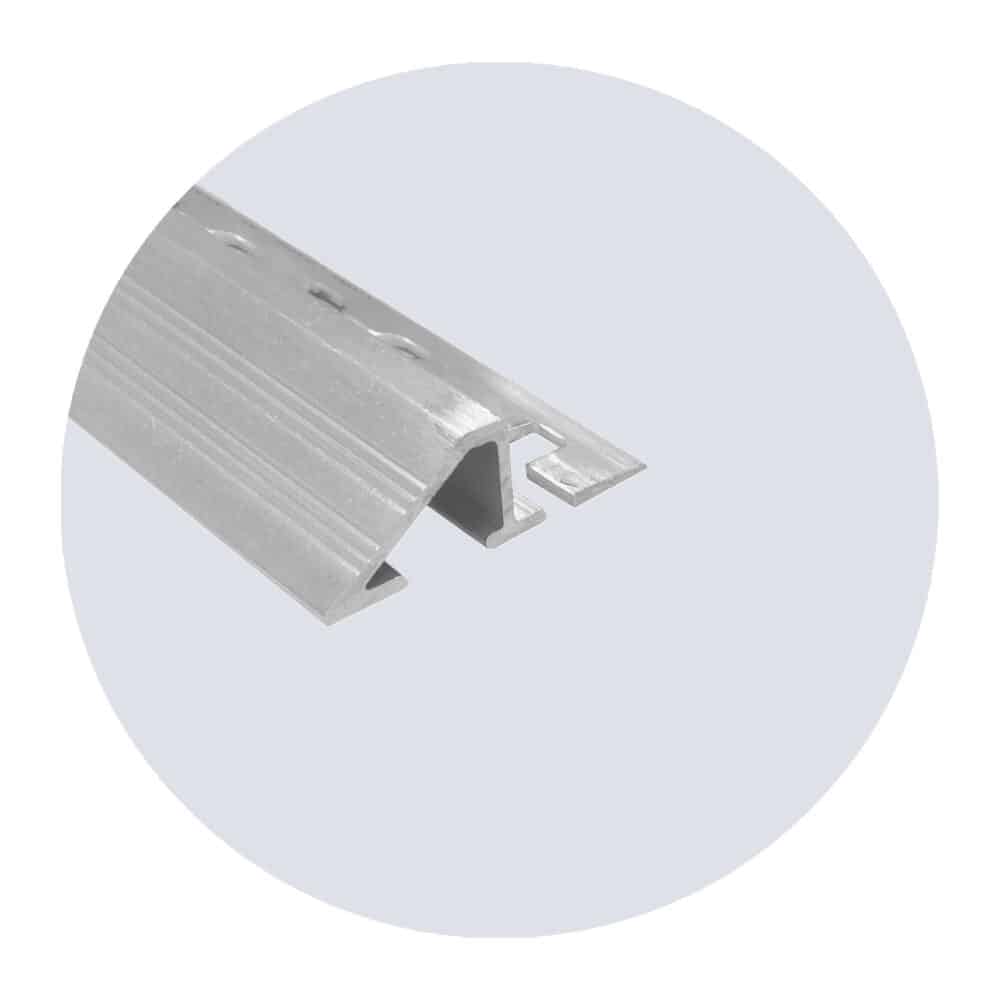
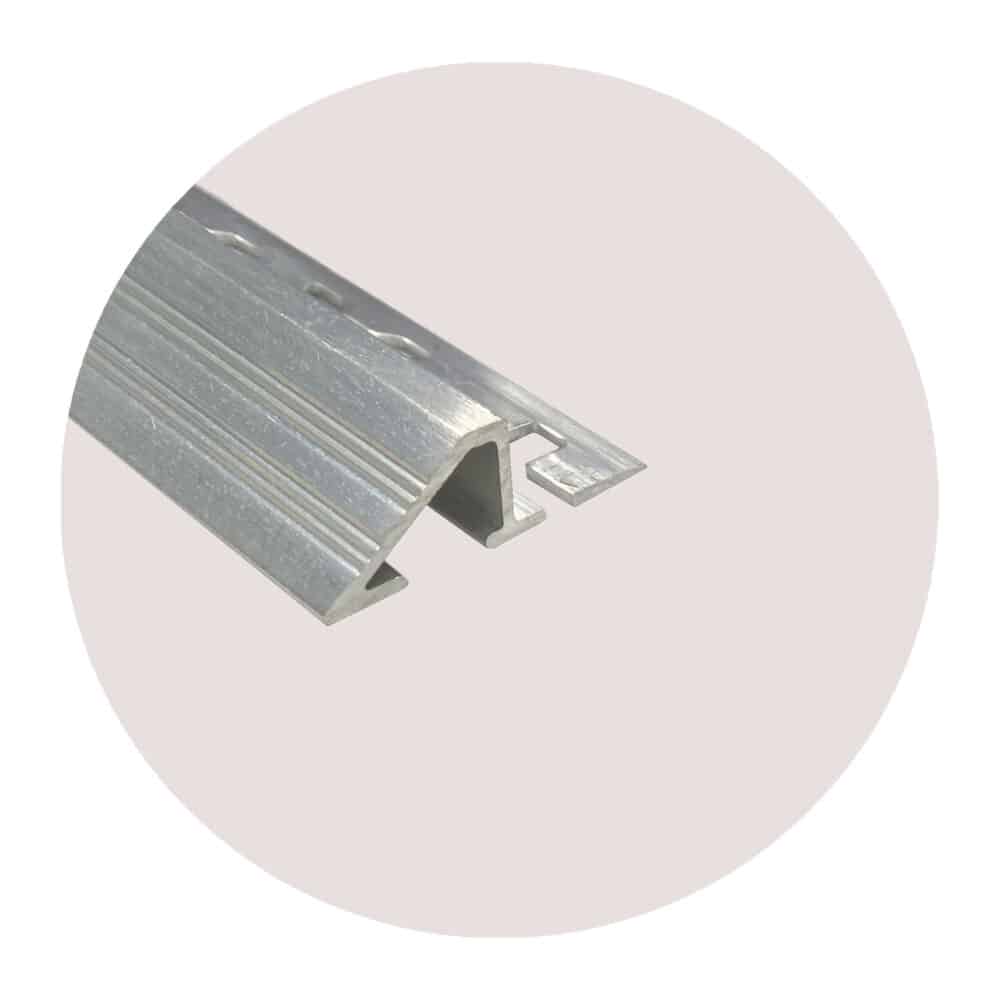
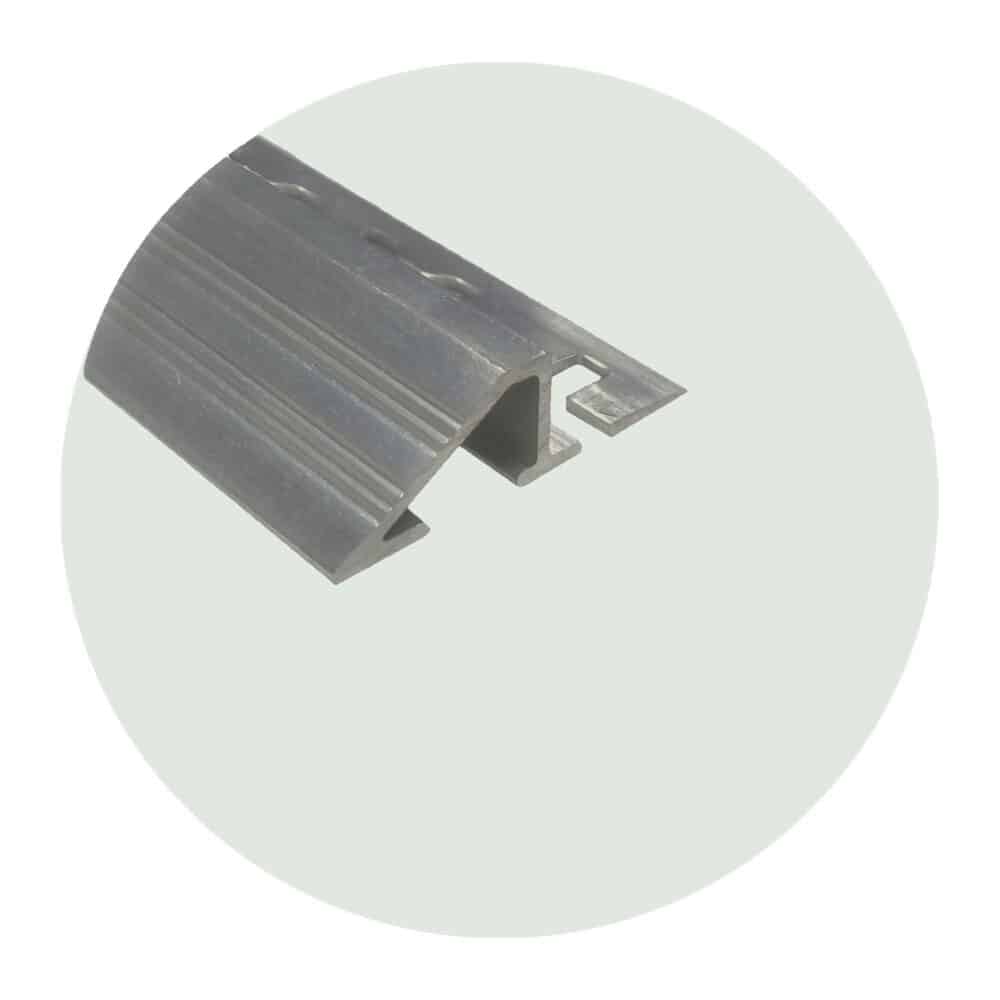
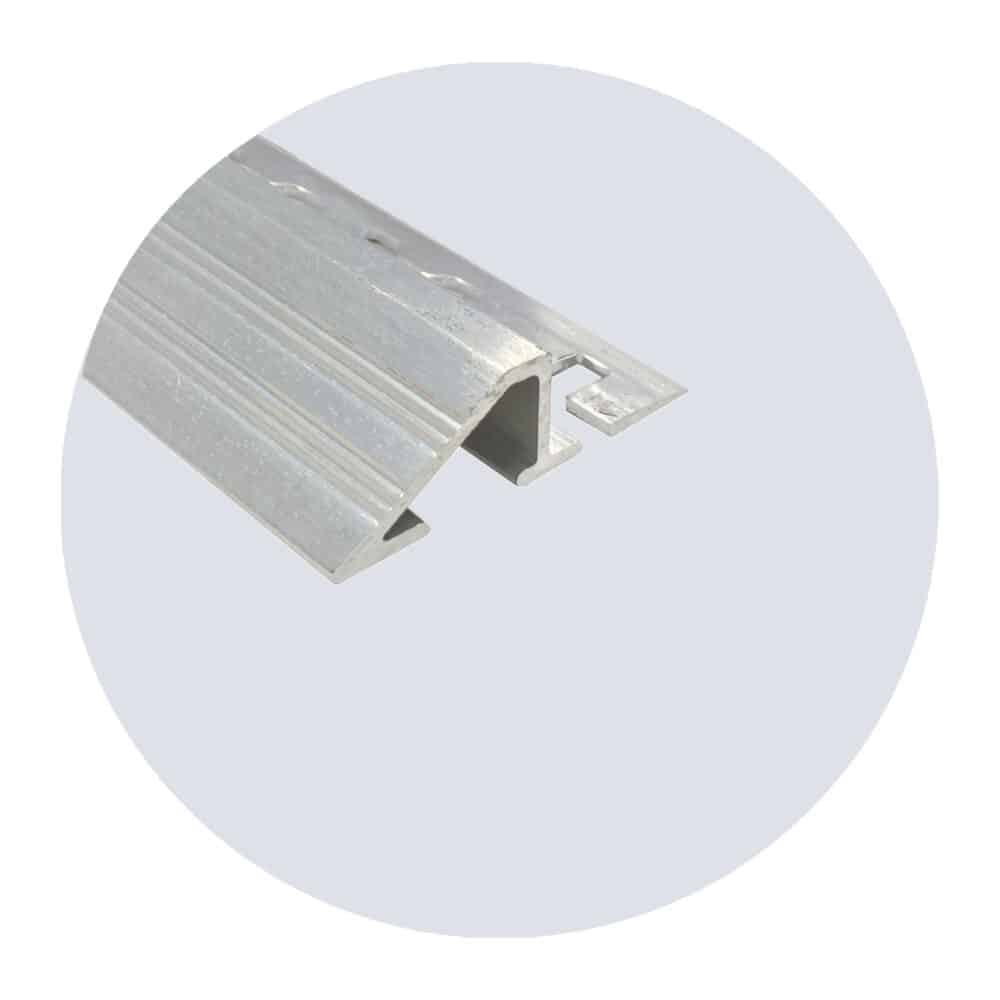
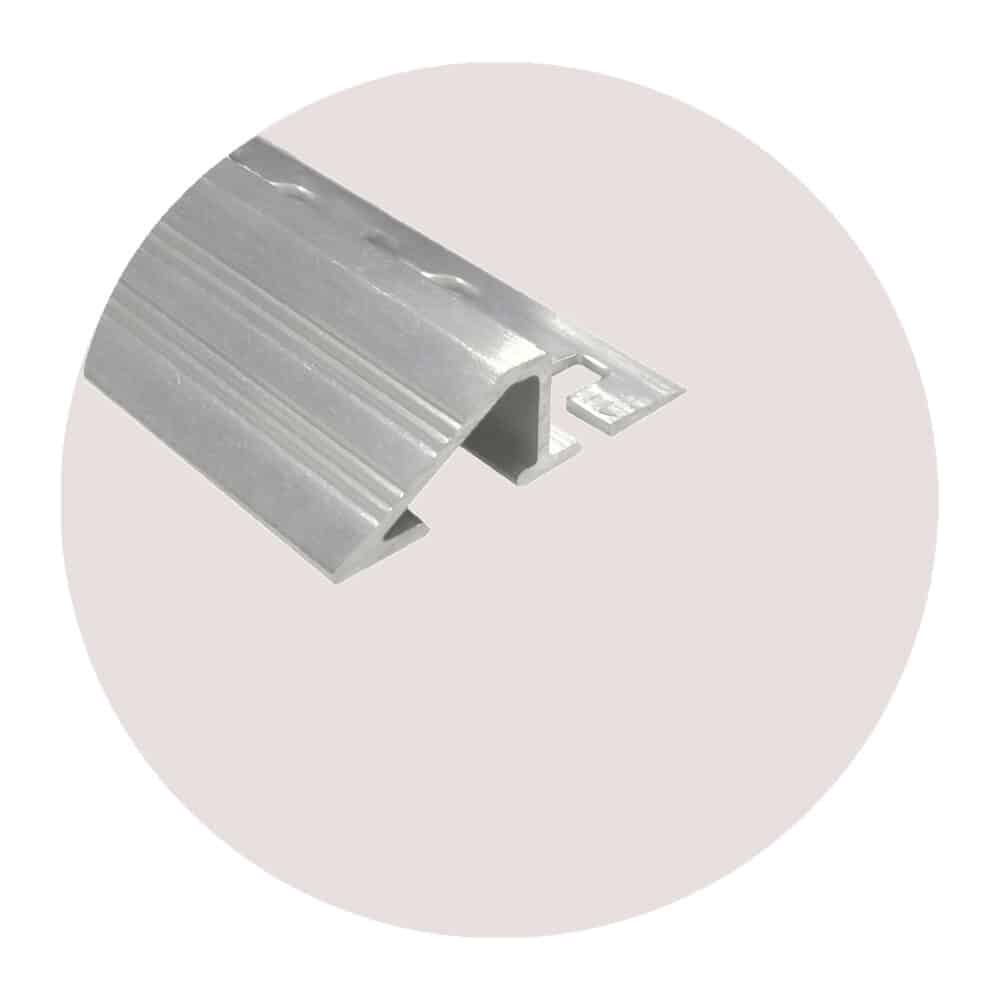
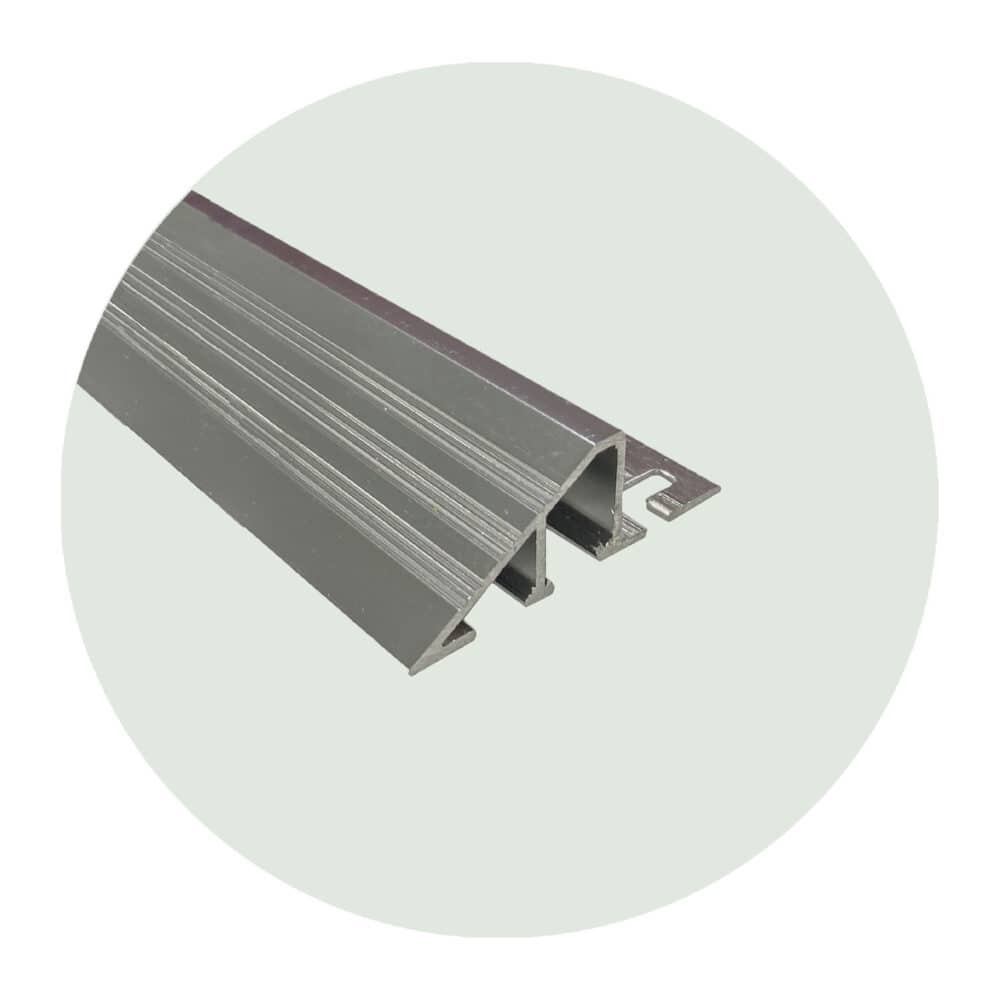
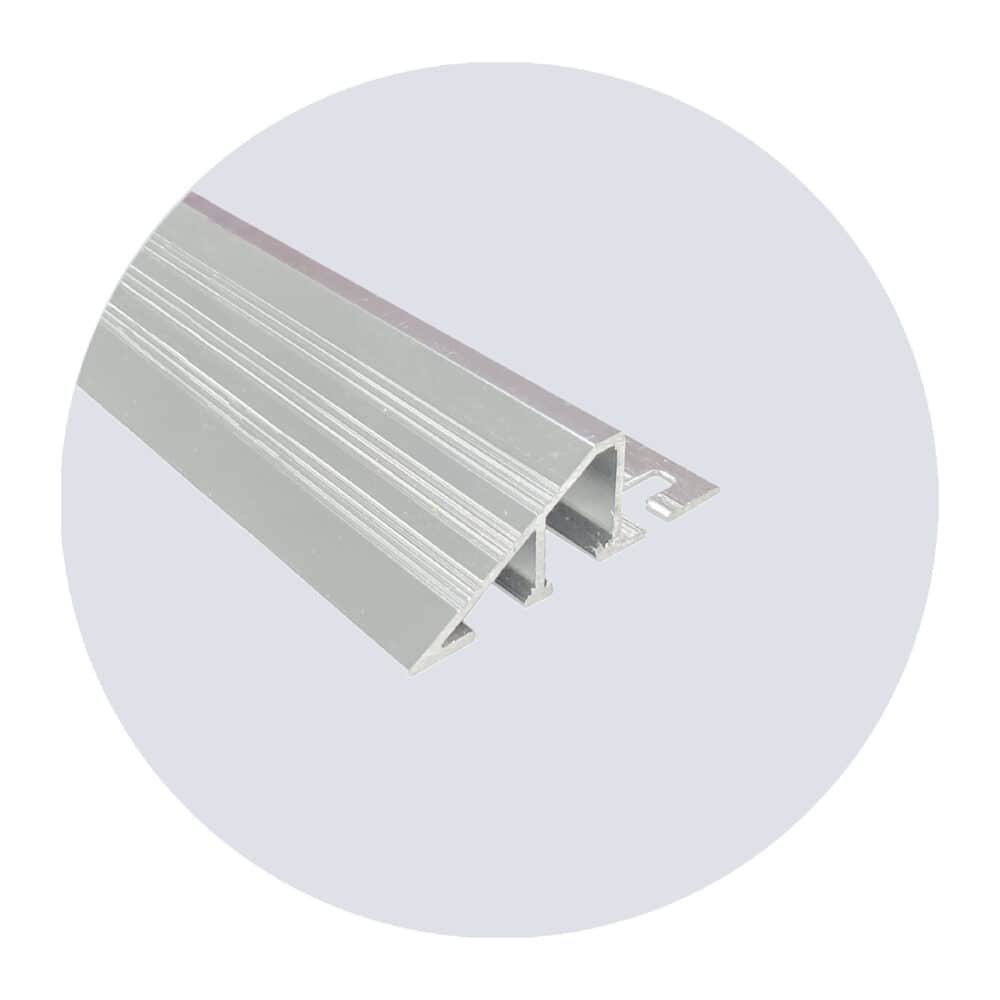
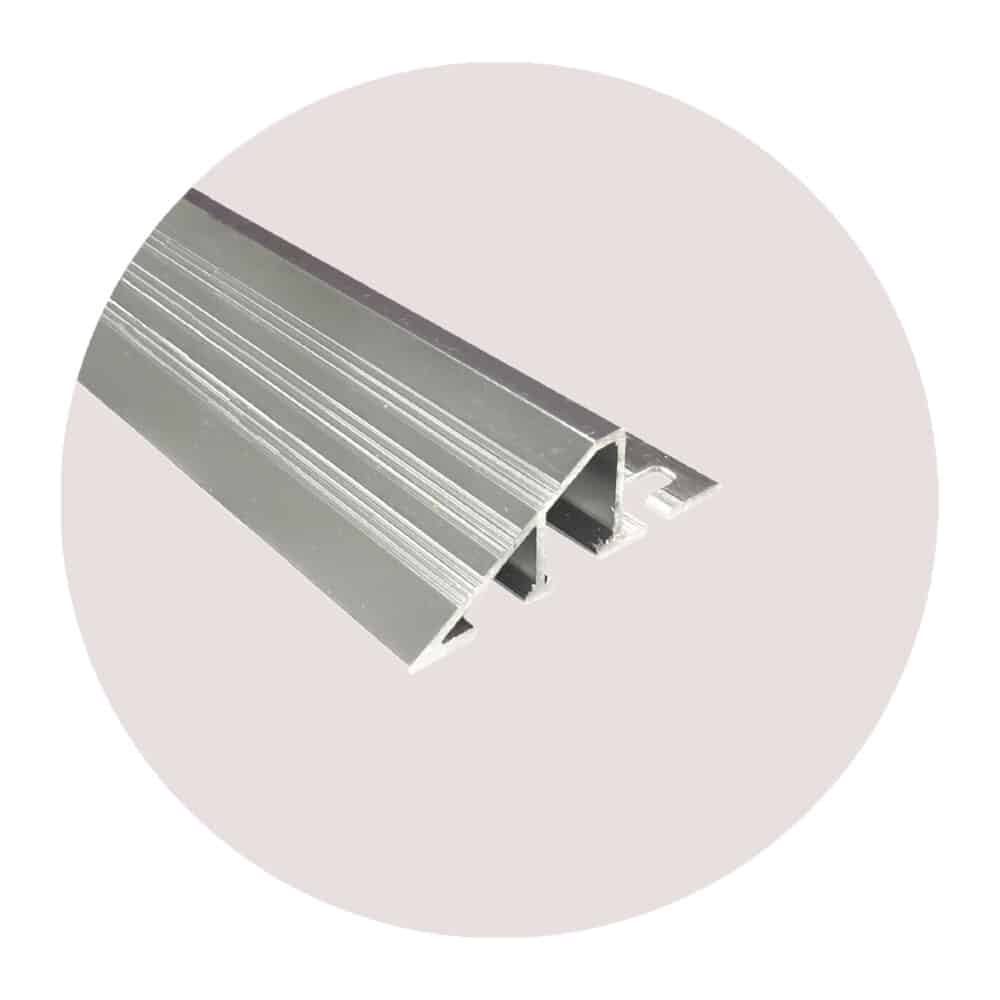
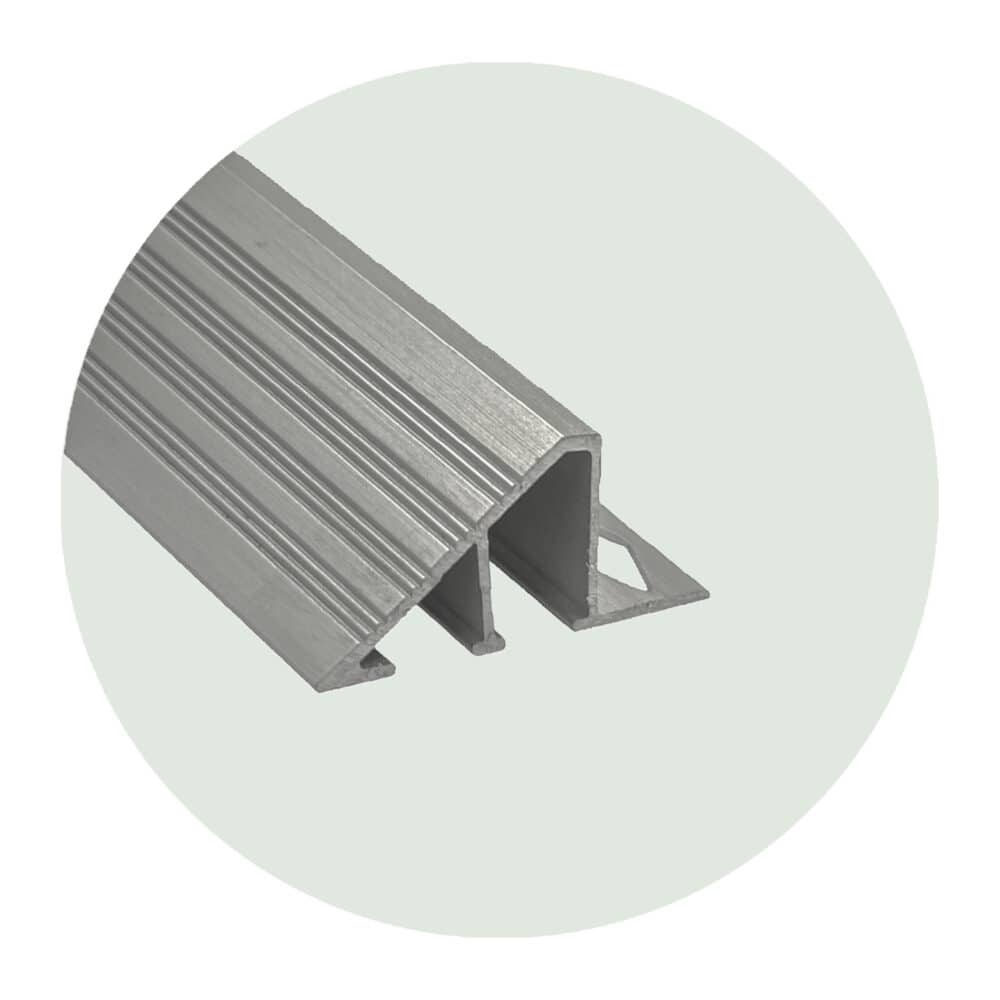
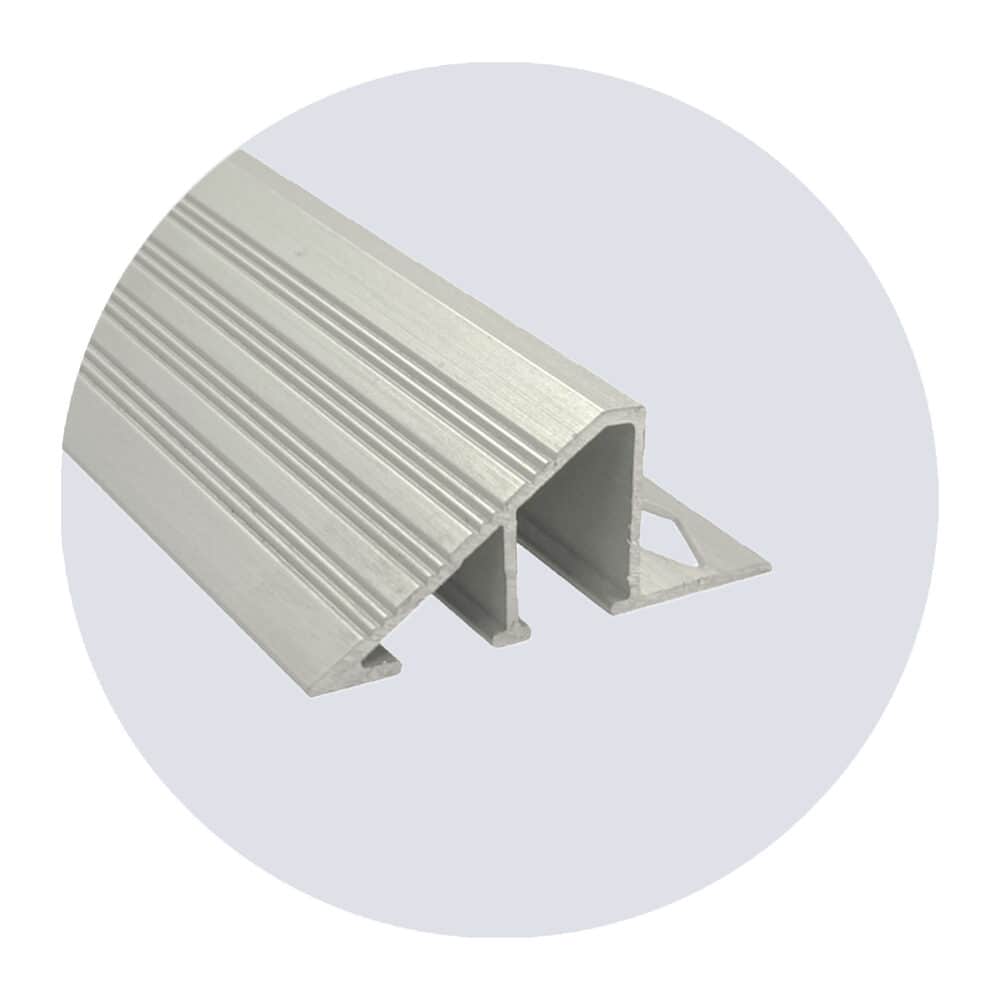
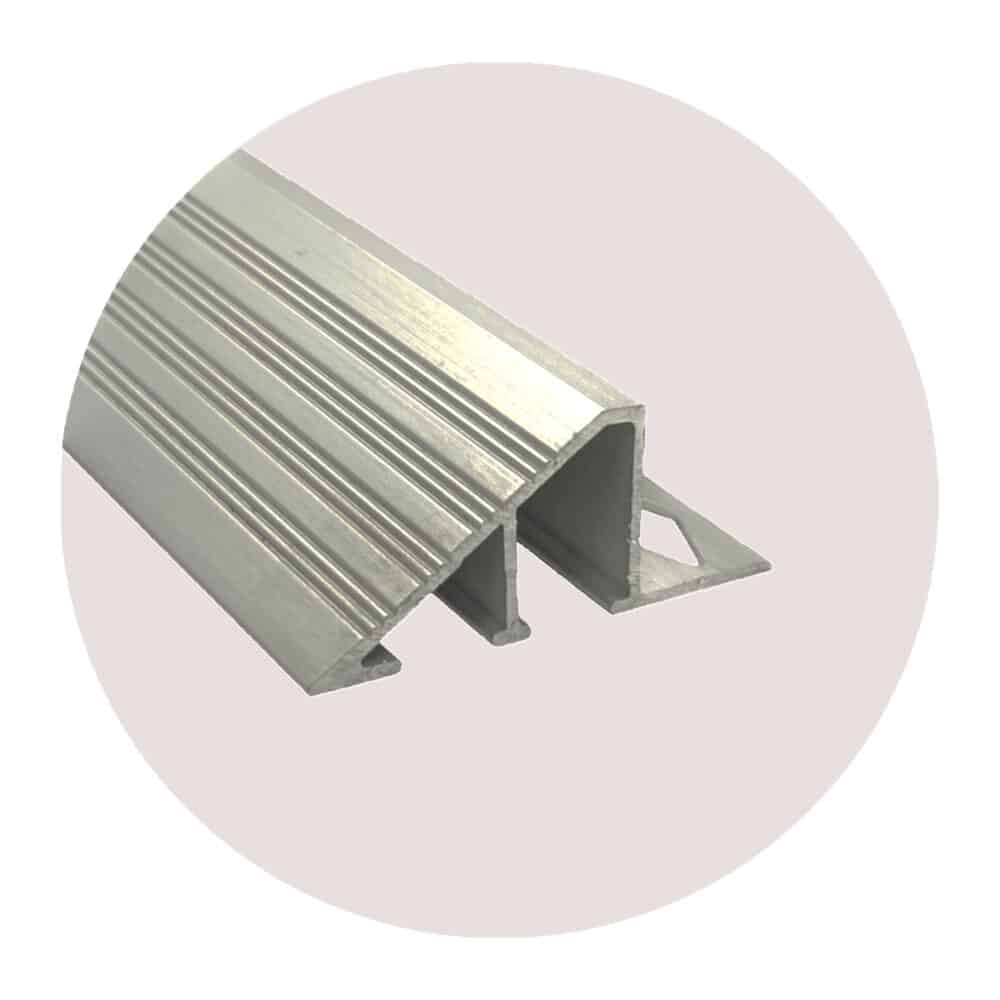
A transition edge does two jobs at once: it bridges a height change and it protects the cut edge of the floorcovering that stops there. This DTA profile does both, with an incline that takes the step gradually from concrete, timber or vinyl to the adjoining surface.
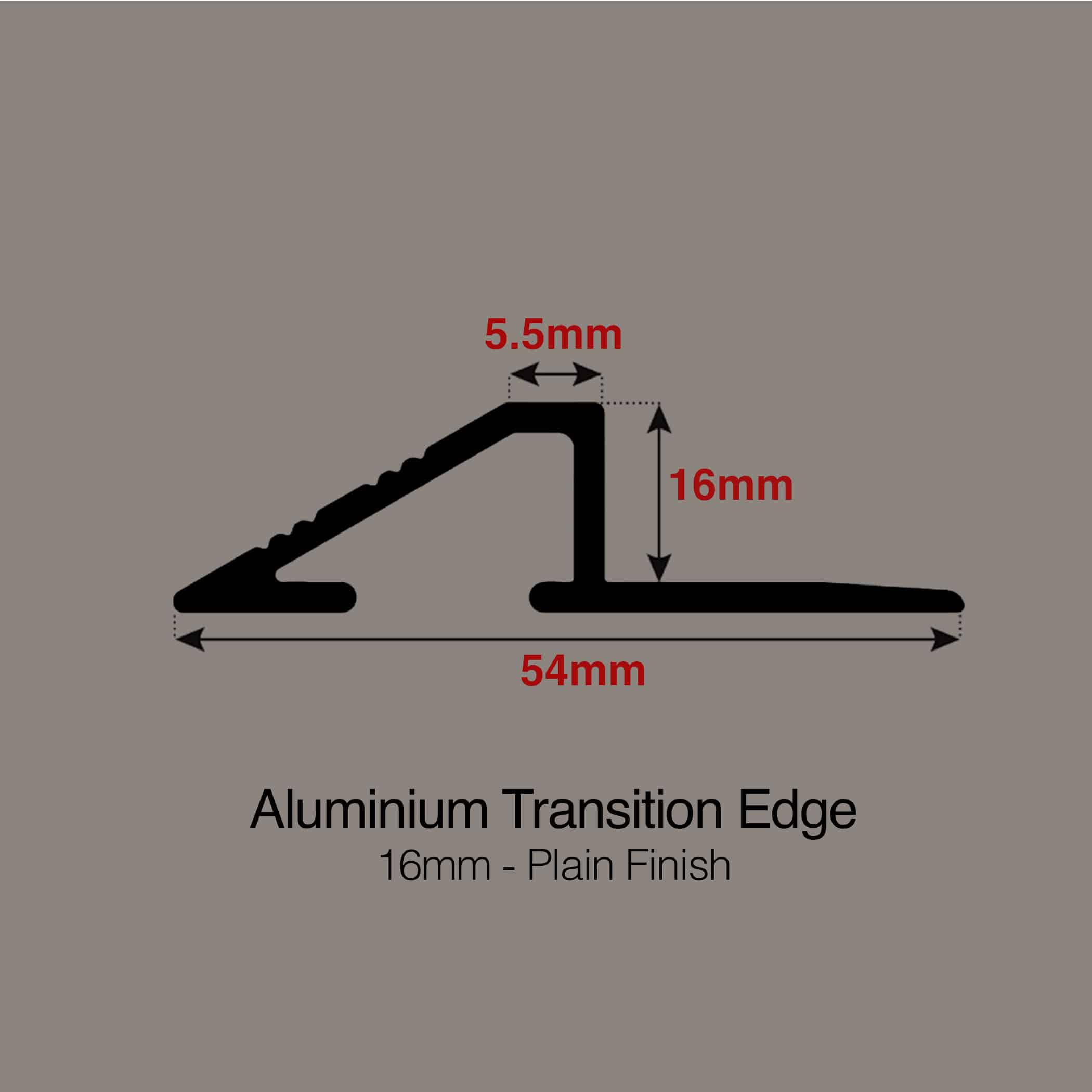
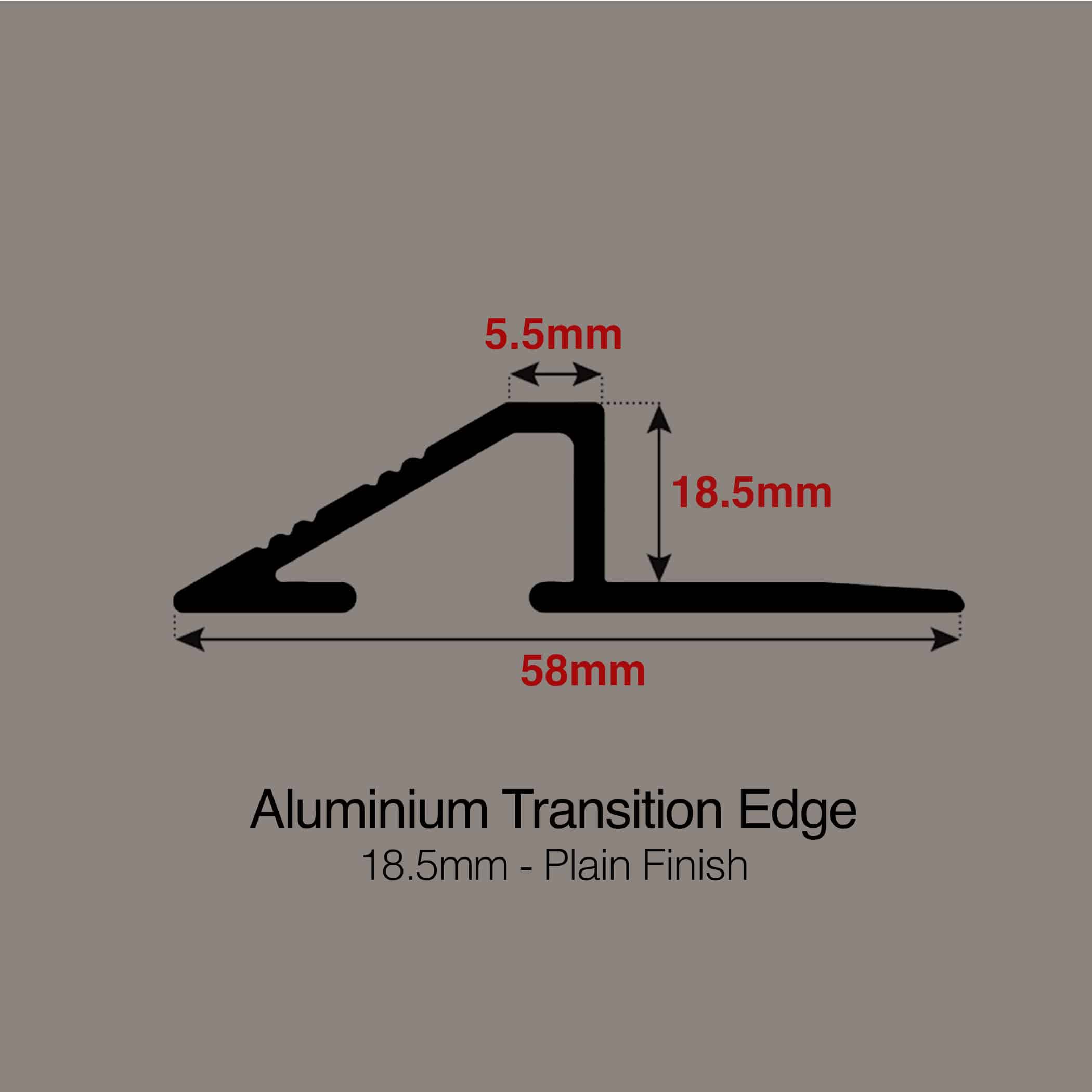
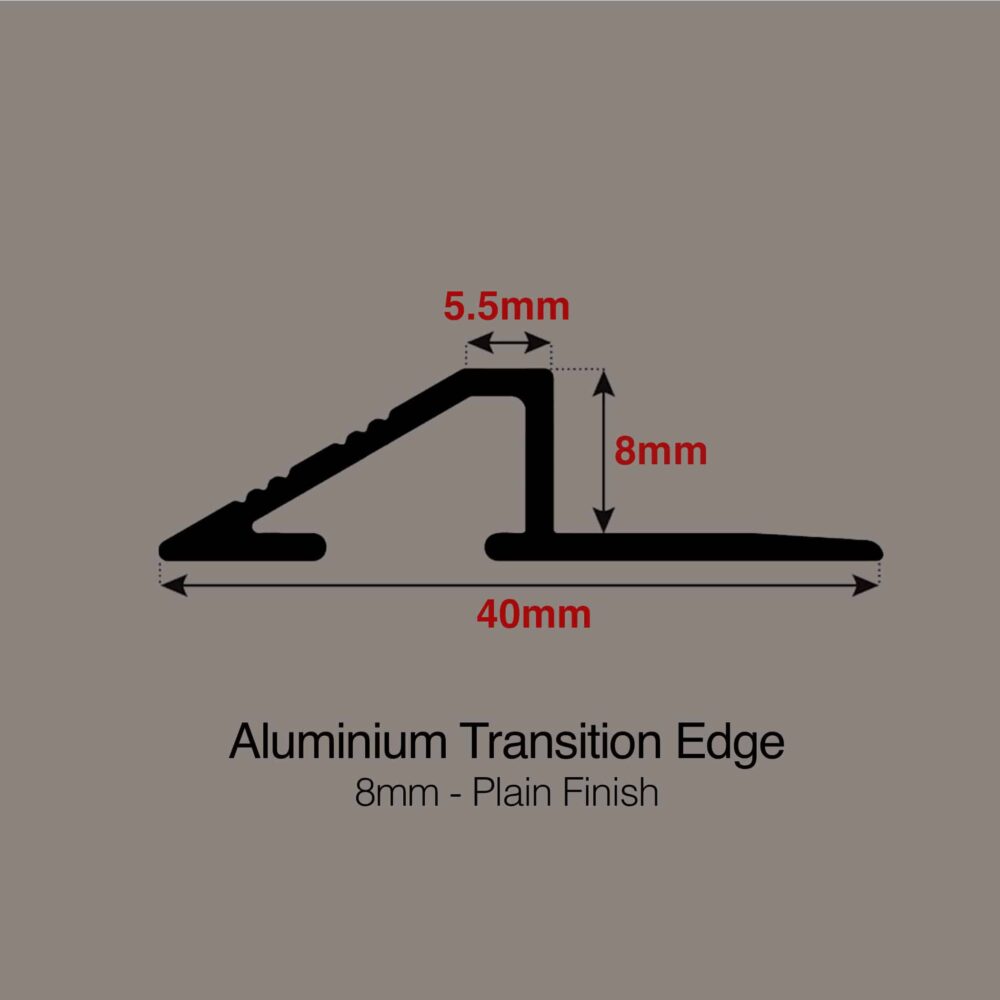
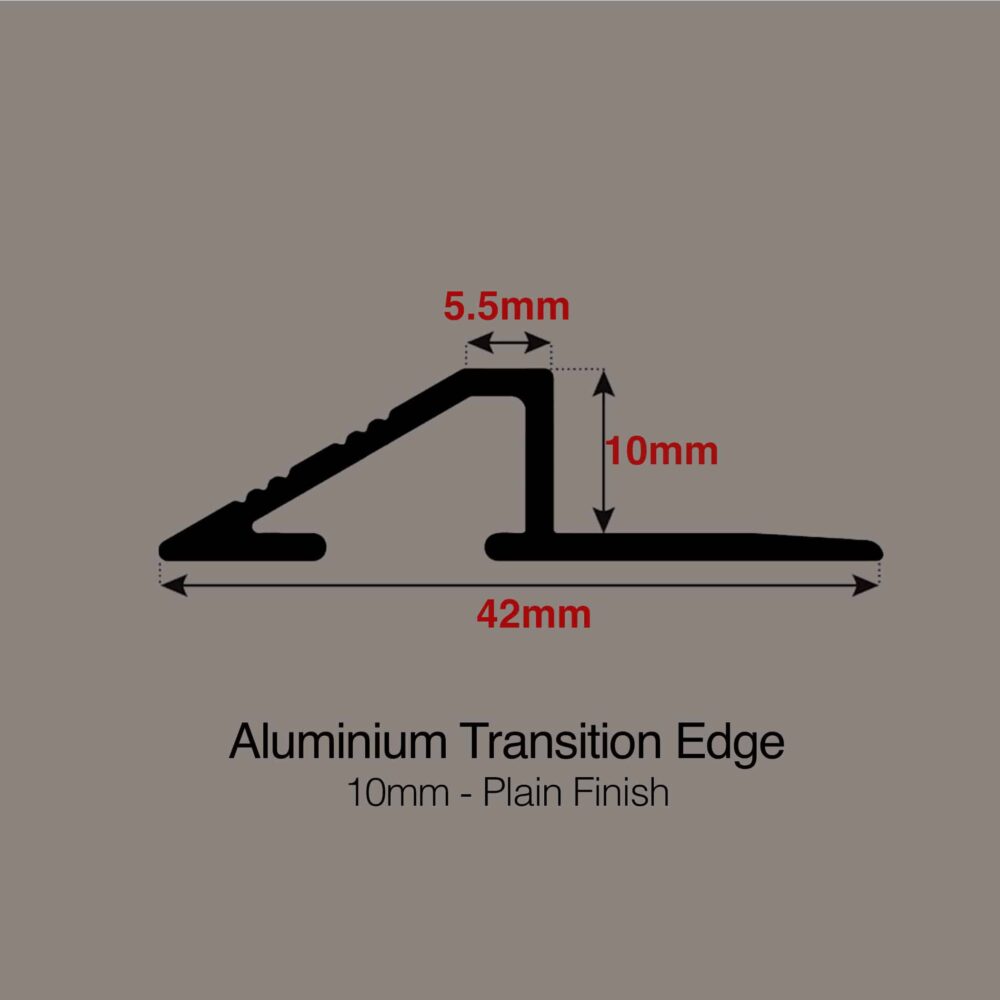
It runs from an 8 millimetre rise up to 18 millimetres, which is a wider range than most edge profiles cover. The larger sizes carry a mid-section support leg, so the profile does not flex underfoot at the heights where a simple folded edge would.
Technical Specifications
| Product type | Aluminium transition edge |
|---|---|
| Length | 3.0m |
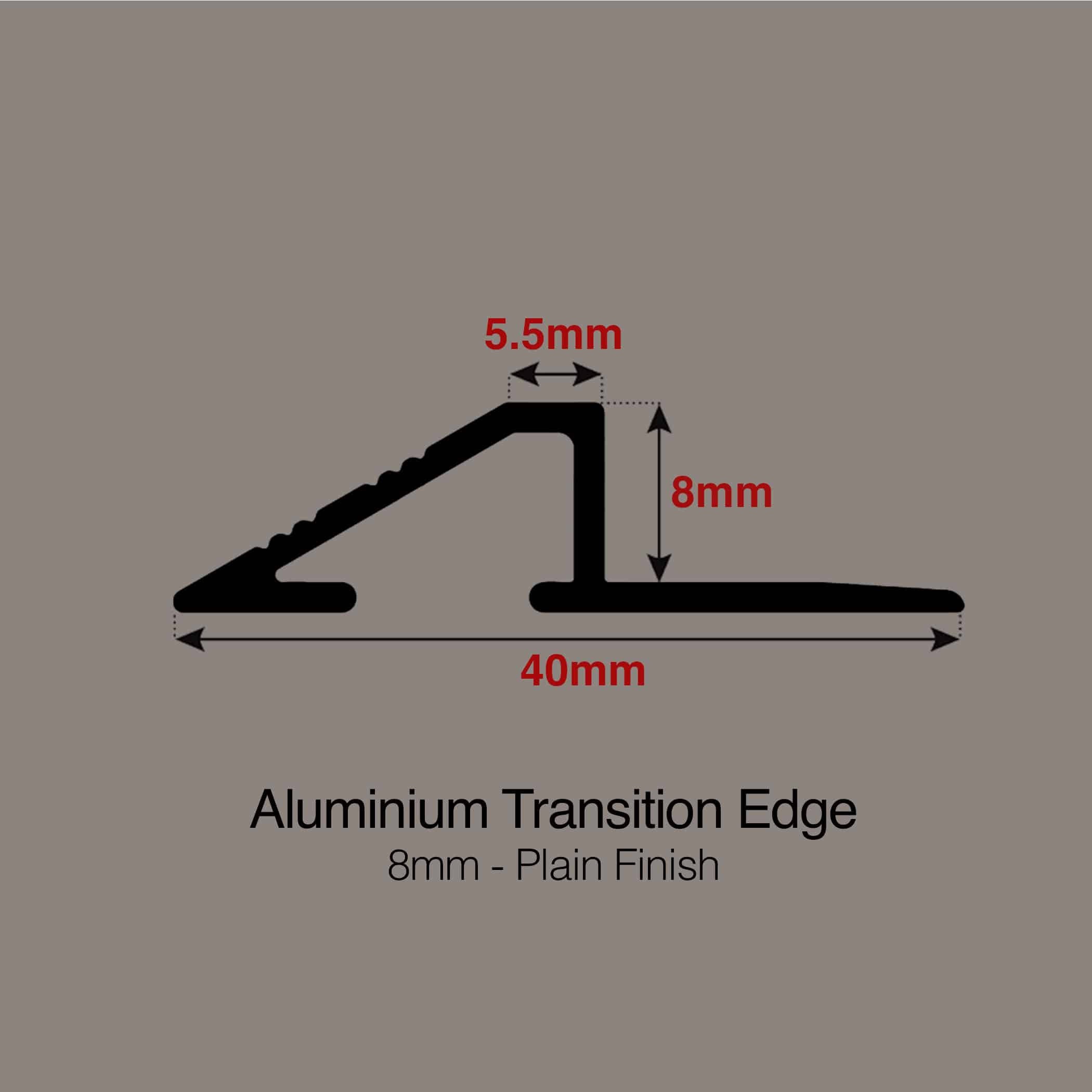
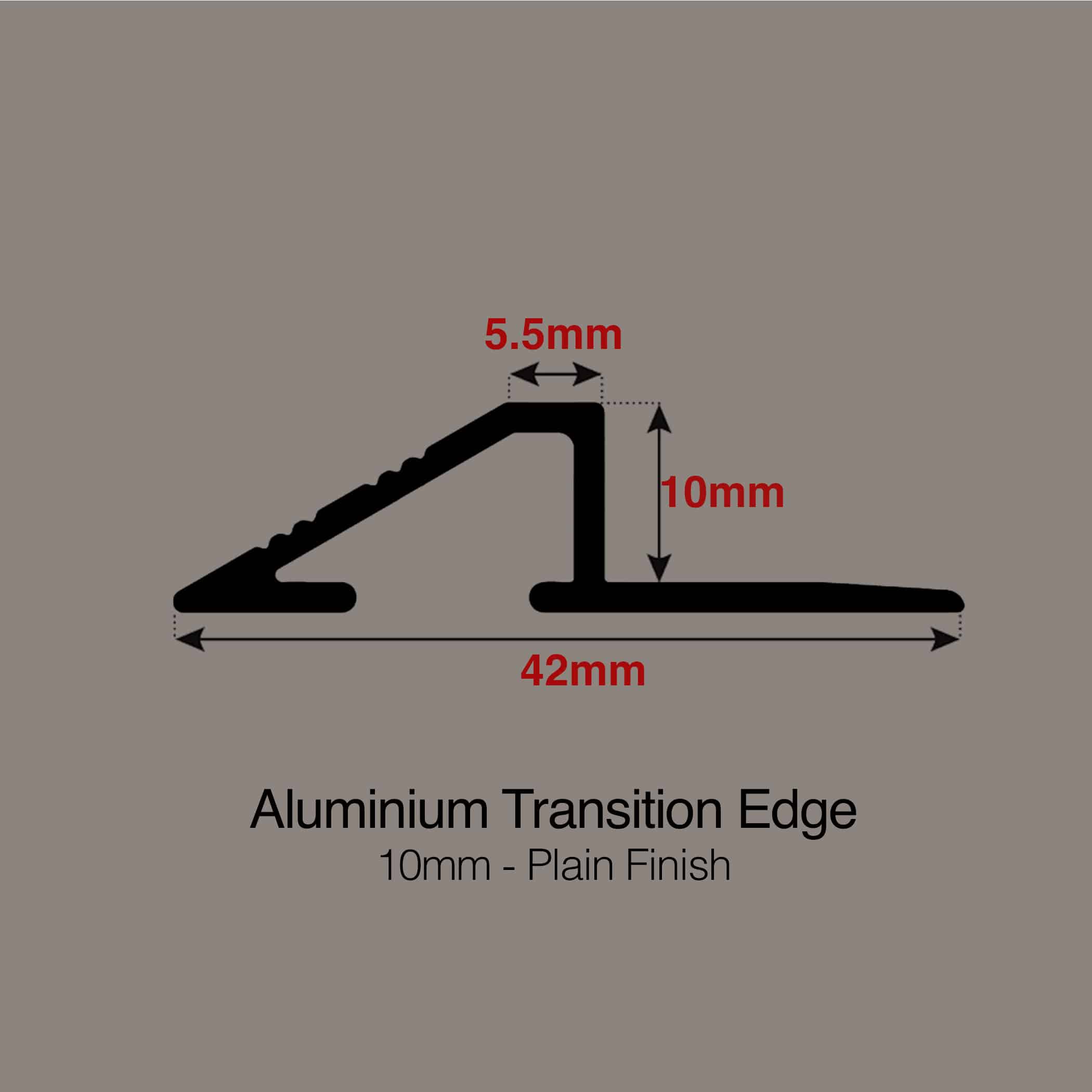
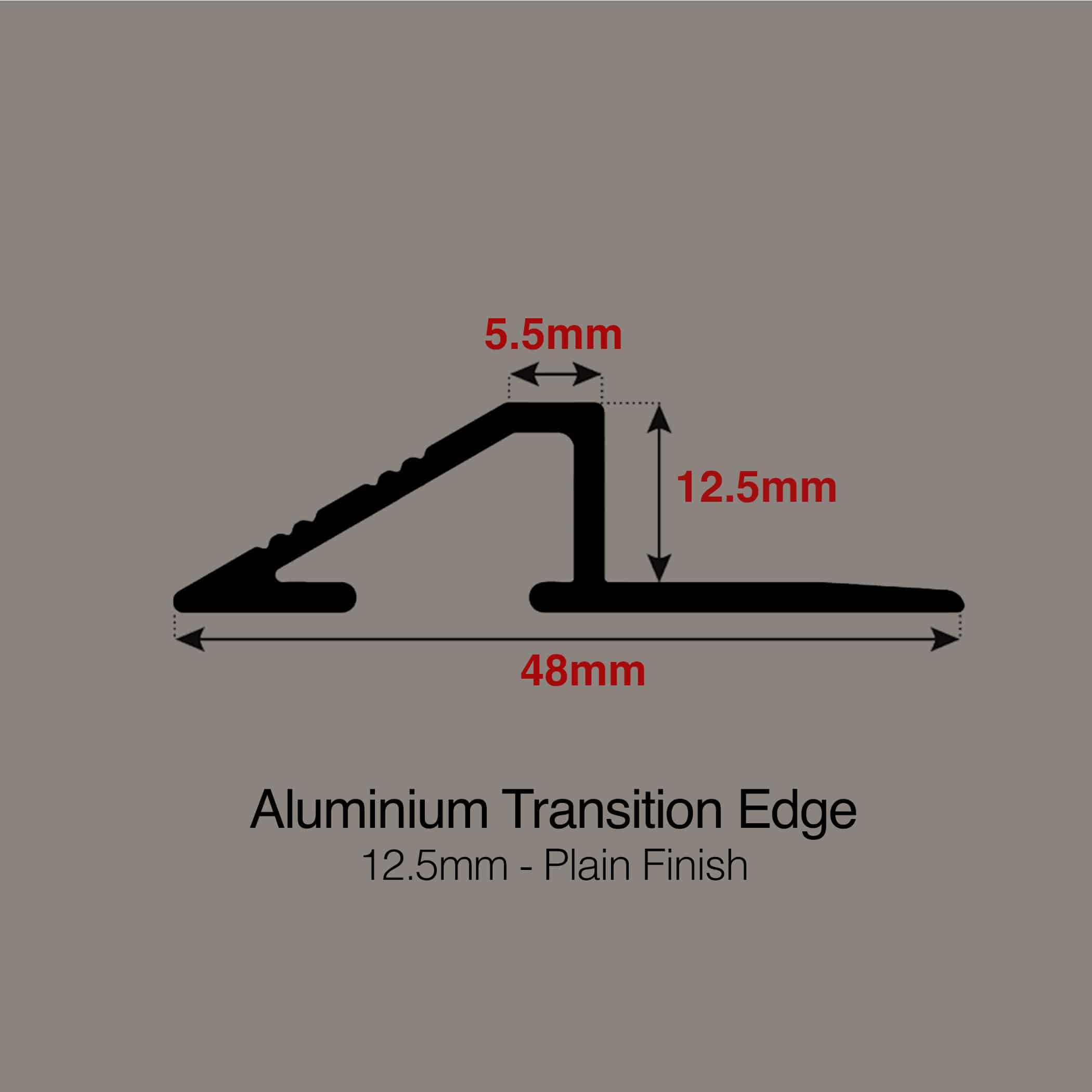
| Rises available | 8mm, 10mm, 12mm, 16mm, 18mm |
| Support leg | Fitted to 12mm profiles and larger |
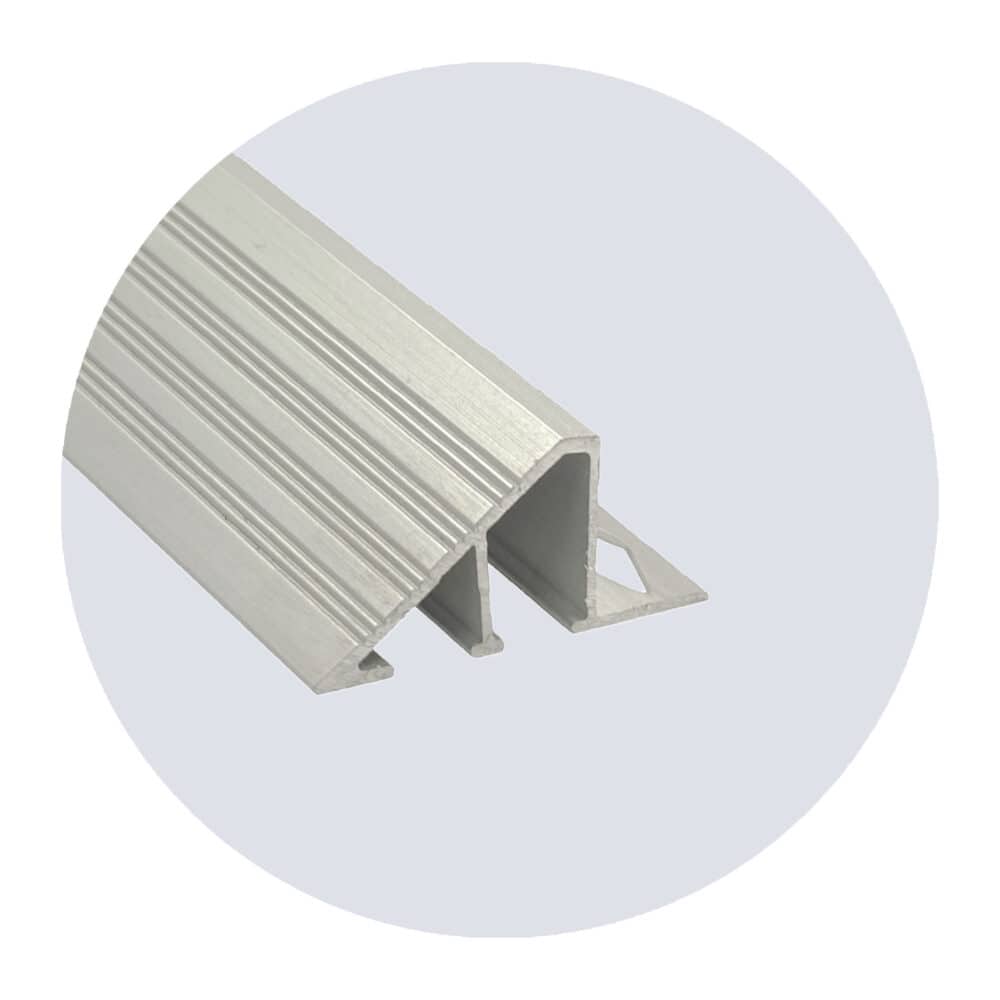
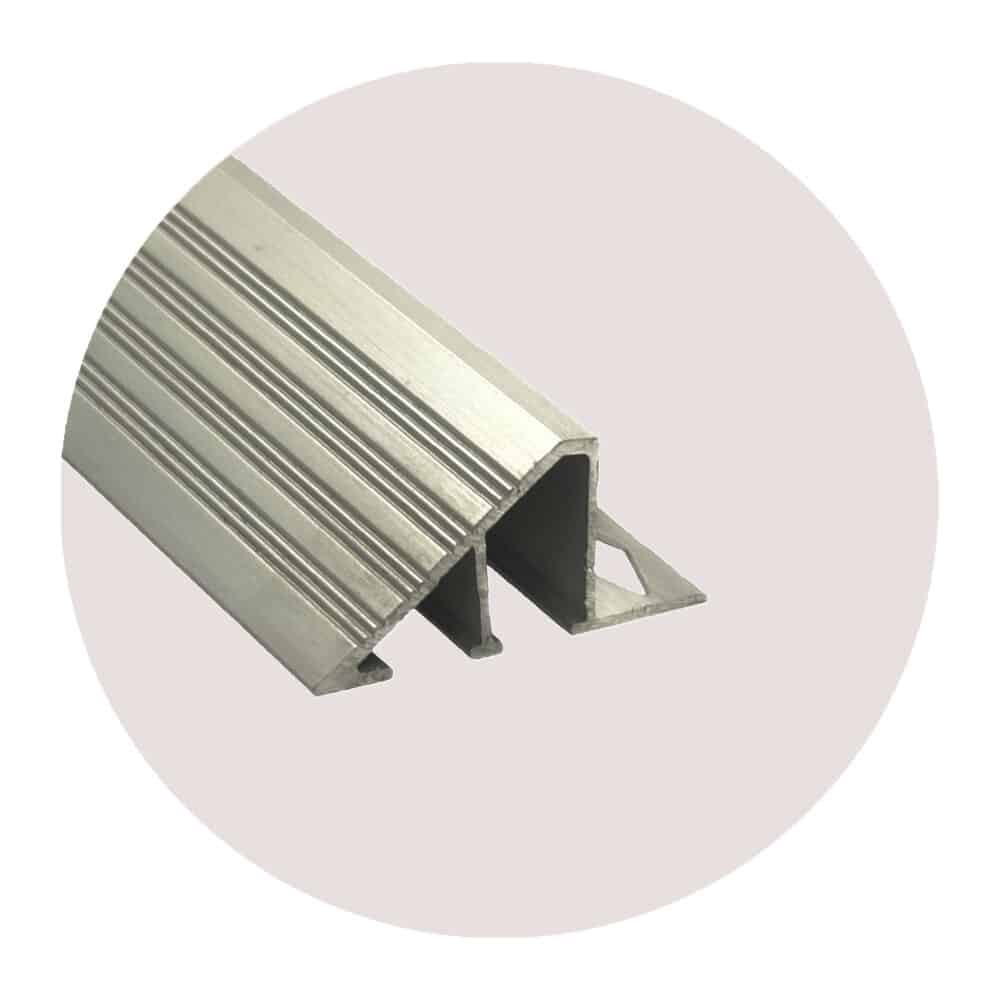
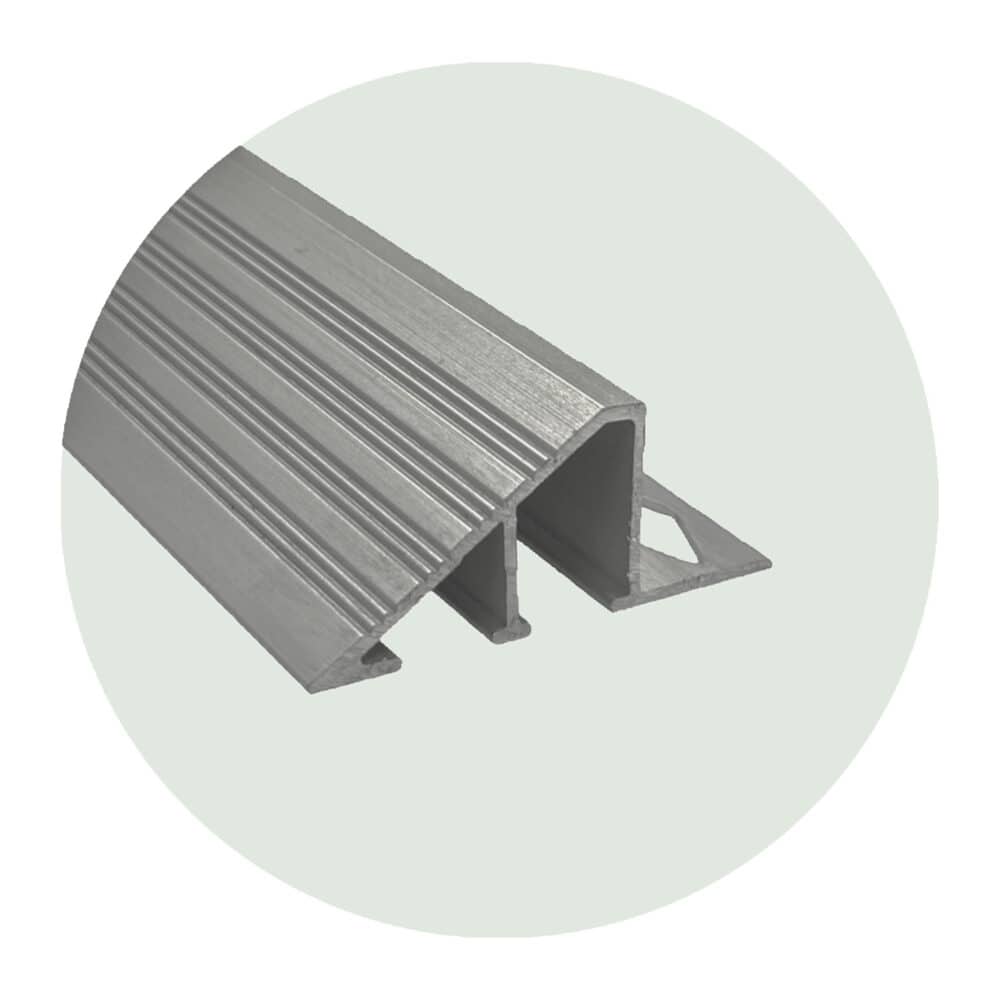
| Finishes | Plain Aluminium, Matt Silver, Bright Silver |
| Application | Domestic and commercial |
Choosing the Right Rise
Getting the rise wrong is the common mistake, and it shows immediately. A profile shorter than the actual height difference leaves a lip proud of the lower floor, which catches feet and eventually lifts. One taller than the difference rocks, which works the fixings loose over a few months.
Measure from the top of the lower finished surface to the top of the higher one, after both floorcoverings are down rather than before. Five rises from 8 to 18 millimetres means there is usually an exact match rather than a compromise.
Where to Use
- Protecting the exposed edge of vinyl, timber or carpet where it terminates
- Transitions from concrete or timber to an adjoining floor finish
- Height differences from 8mm up to 18mm
- Both domestic and commercial installations
How to Apply
- Measure the rise: Establish the height difference and select the matching profile size.
- Cut to length: Cut the 3 metre length to the width of the opening.
- Position: Set the incline so it runs down onto the lower surface and the edge is fully covered.
- Fix down: Fix so the profile sits flat with the support leg, where fitted, bearing on the substrate.
Important Notes
- Profiles of 12mm and larger include a mid-section support leg, which is what allows the greater rise without flexing.
- Above 18mm a ramp is the better answer than an edge, because the step becomes too abrupt to walk over comfortably.
- Wear safety glasses and gloves when cutting aluminium.
Finishes and Ordering
Three finishes are available: plain aluminium, matt silver and bright silver. Plain aluminium is the un-anodised mill finish and is the economical choice where the trim sits somewhere it will not be looked at. Matt silver and bright silver are anodised, which gives a consistent colour and a harder surface.
Each profile is supplied in a 3 metre length, so a standard doorway leaves usable offcut. Where several openings are being trimmed in one job, order the same finish at the same time so the anodising matches across all of them.
See the full transition ramps range for related products.