Description
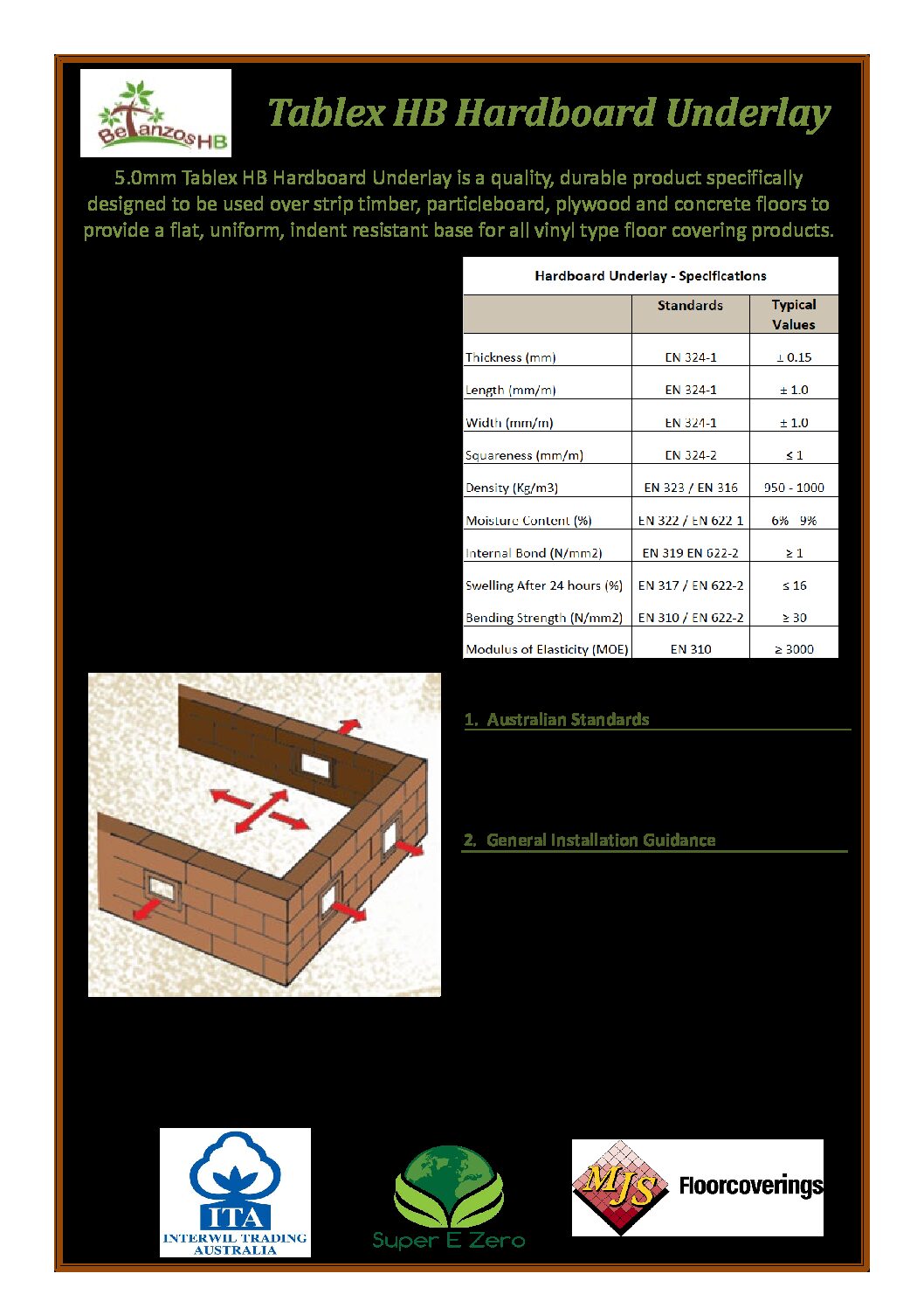
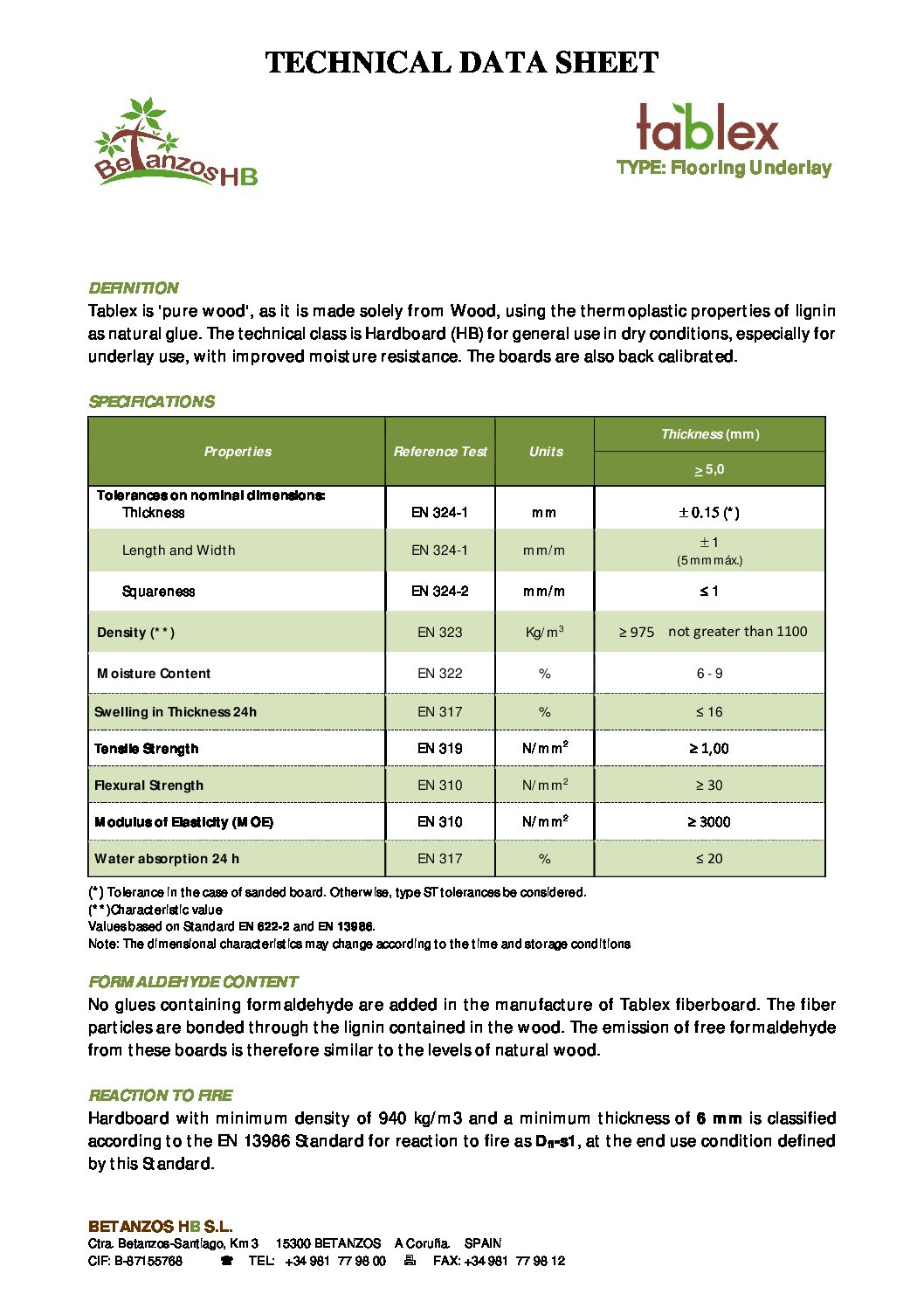
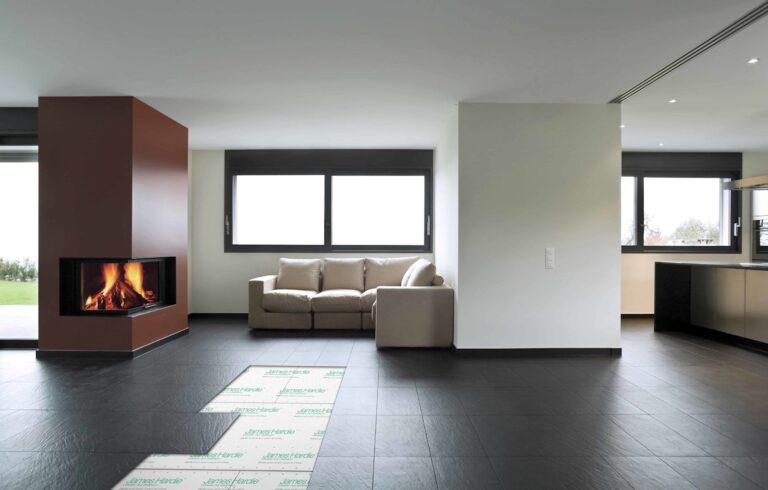
Tablex is a 5mm hardboard underlay, also sold as masonite underlay, laid over strip timber, particleboard, plywood or concrete to give a dense, indent resistant, flat and uniform base before a resilient floorcovering goes down. Vinyl shows everything underneath it, and Tablex exists to stop that.
It is 100 percent natural plantation hardwood made to Super E0 standards with no added resins, and it is preconditioned for the Australian climate, which matters because an underlay that moves after laying takes the floorcovering with it.
Technical Specifications
| Product type | Hardboard underlay for resilient floorcoverings |
|---|---|
| Sheet size | 1220mm x 915mm |
| Thickness | 5mm |
| Coverage | 1.12 m² per sheet |
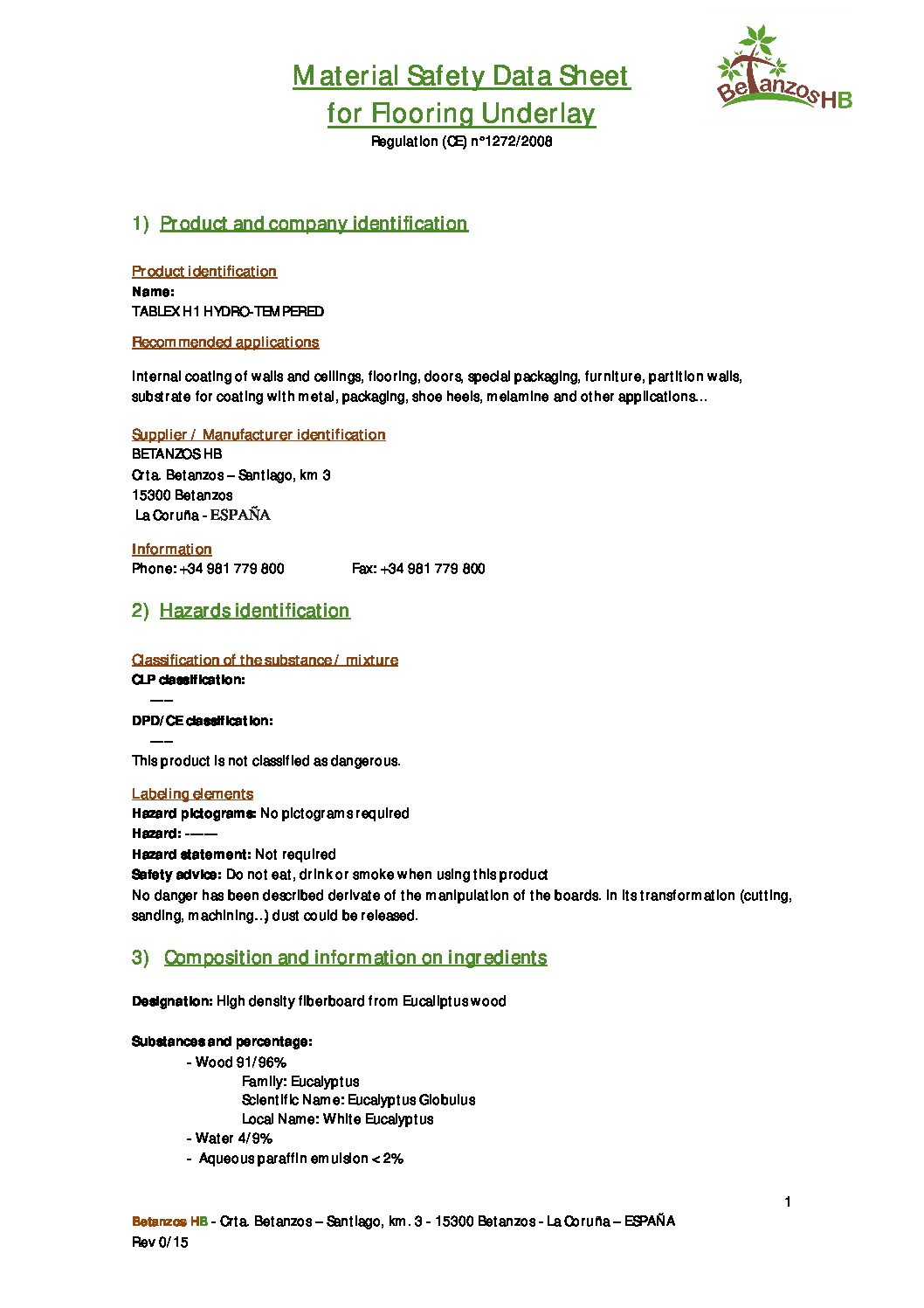
| Composition | 100% natural plantation hardwood, no added resins |
| Emissions | Manufactured to Super E0 standards |
| Standard | Complies with AS 1884-2021 |
| Subfloor moisture | Timber substrates must read 9% to 14% before laying |
| Conditioning | Dry lay for 24 hours before fixing |
Why Indent Resistance Matters
The failure most people notice in a vinyl floor is not wear, it is the permanent dents left by table legs, chair feet and heels. Those marks come from the substrate giving way under a point load, not from the vinyl itself, which is why the density of the underlay decides how the floor looks in three years.
Tablex is specified for hospital rooms, corridors, schools and sports stadiums for that reason. It is also made from 100 percent plantation hardwood with no added resins to Super E0 standards, which matters in exactly those same buildings.
Where to Use
- Under vinyl sheet, vinyl tile and other resilient floorcoverings
- Over strip timber, particleboard, plywood and concrete floors
- High traffic areas such as hospital rooms, corridors and schools
- Anywhere point loads from furniture or heels would otherwise mark the floor
How to Apply
- Test the subfloor — Check moisture content of timber, plywood or particleboard substrates. Acceptable range is 9 to 14 percent.
- Acclimatise — Dry lay the sheets and leave them 24 hours so they adapt to the humidity of the site.
- Lay smooth face up — Install with the smooth face upward, which is the surface the floorcovering bonds to.
- Fix down — Fix using normal flooring installation equipment, following AS 1884-2021 for fixing centres.
- Lay the floorcovering — Install the resilient covering once the underlay is fixed and the surface is clean.
Important Notes
- Always refer to AS 1884-2021 for the correct installation procedure for the floorcovering being laid.
- Skipping the 24 hour dry lay is the usual cause of movement showing through a finished vinyl floor.
- The underlay bridges small irregularities in the subfloor but does not correct a substantially uneven one.
See the full flooring underlay range for related products.