Description
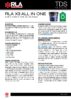
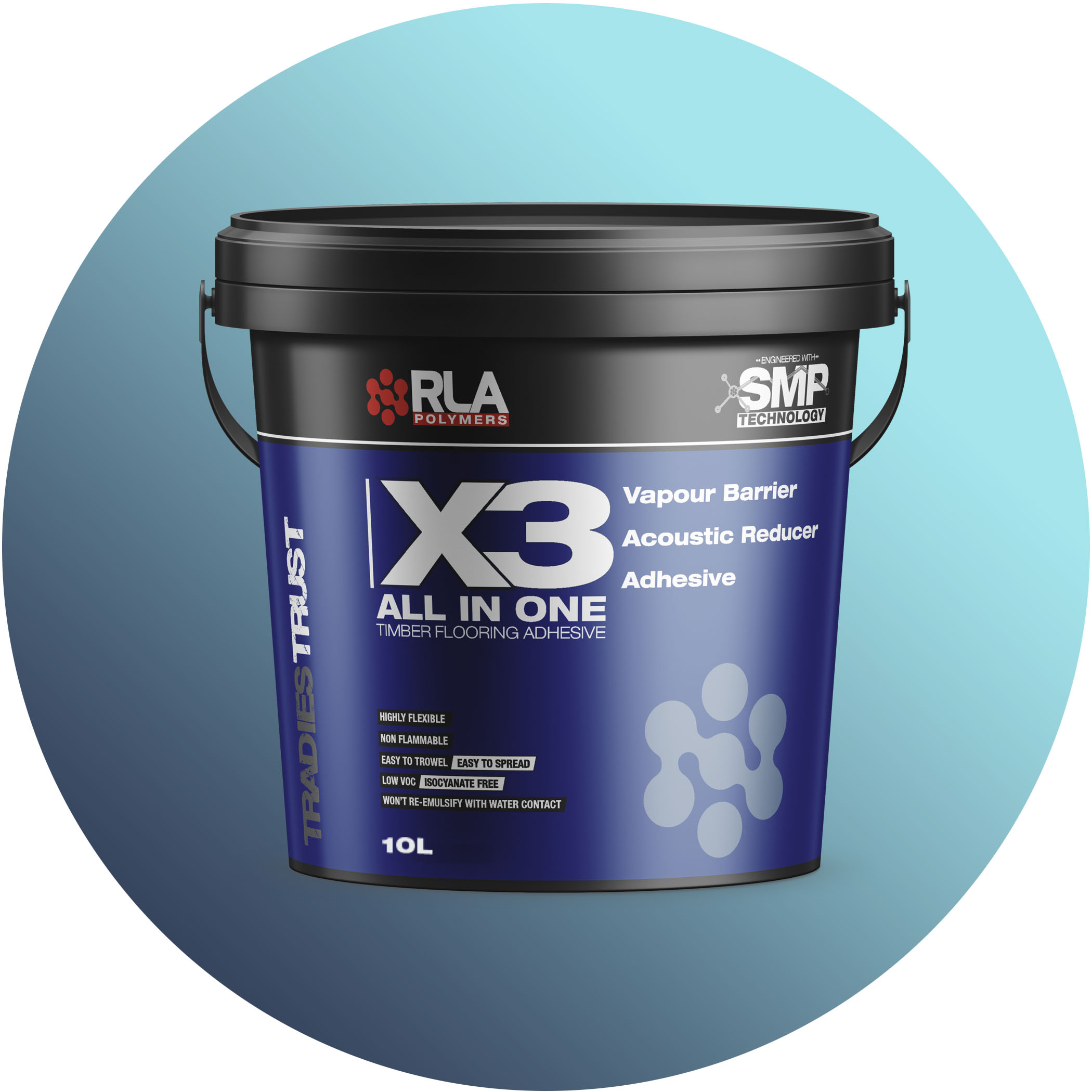
RLA X3 SMP Timber Flooring Adhesive is a genuinely 3-in-1 product — adhesive, vapour barrier and membrane system in one single-part application — built for bonding solid and engineered timber flooring to concrete and timber substrates. Being isocyanate-free and low VOC, it’s a genuinely safer product to work with than older-generation timber flooring adhesives, without giving up the vapour-barrier performance those older systems relied on separate barrier products to achieve.
That vapour-barrier function depends on correct technique, not just the product itself: the trowelled adhesive must be flattened as the timber is pressed in, forming a continuous, homogenous film with 100% transfer contact between substrate and flooring. Get that step wrong and the moisture-barrier claim doesn’t hold, since gaps in the film let moisture through regardless of the adhesive’s rated performance.
Technical Specifications
| Vapour barrier rating | Up to 90% RH on concrete substrates (ASTM F2170) |
|---|---|
| Standard adhesive RH tolerance | Up to 85% RH before RLA Moisture Seal is recommended |
| Minimum subfloor temperature | 10°C |
| Trowel notch | 5mm x 5mm V5 |
| Skin formation / cure | Firm skin in 1 hour |
| Coverage | Approx. 1.1-1.3m² per litre (also stated as approx. 0.9m²/L) |
| Minimum sanding wait | 72 hours minimum after full cure |
Where to Use
- Bonding solid and engineered timber flooring to concrete and timber substrates
- Concrete substrates with underfloor heating
- Substrates with residual moisture up to 90% RH, functioning as a vapour barrier
How to Apply
- Test moisture — confirm subfloor RH per ASTM F2170; use RLA Moisture Seal first if above 90% RH.
- Prepare the substrate — ensure it’s dry, sound, smooth and clean, mechanically prepared if required.
- Apply adhesive evenly — spread with a 5mm x 5mm V5 notched trowel.
- Press and flatten — press timber into the adhesive and flatten the trowel ridges for 100% transfer contact, forming the vapour-barrier film.
- Fix flooring as required — nail or secretly fix per the timber manufacturer’s recommendations.
- Allow to cure — minimum 72 hours before sanding.
Important Notes
- If using RLA Moisture Seal first, the timber adhesive must be applied within four days of the barrier curing.
- For temperatures below 10°C or above 30°C, contact RLA Technical for guidance.
- Do not use solvents or acid etching to clean the subfloor.
< Getting that flattening step right at application is really the difference between a genuine vapour barrier and an adhesive that merely claims the rating without delivering it on a real subfloor. Being isocyanate-free also matters for installer health over a career of regular exposure, since isocyanate-based adhesives have historically been linked to occupational respiratory sensitisation with repeated contact. Testing a small area for correct transfer and film formation before committing to the full room is a worthwhile check, particularly on a job where the vapour-barrier function is genuinely relied on rather than just the adhesive bond.
The distinction between RLA X3’s standard 85% RH adhesive tolerance and its 90% RH vapour-barrier rating is worth understanding clearly before specifying it: below 85% RH, it functions as a normal high-performance timber adhesive; between 85% and 90%, correct trowel-flattening technique becomes essential to actually achieve the vapour-barrier film; and above 90%, a separate RLA Moisture Seal treatment is required first regardless of how carefully the adhesive itself is applied.