Description
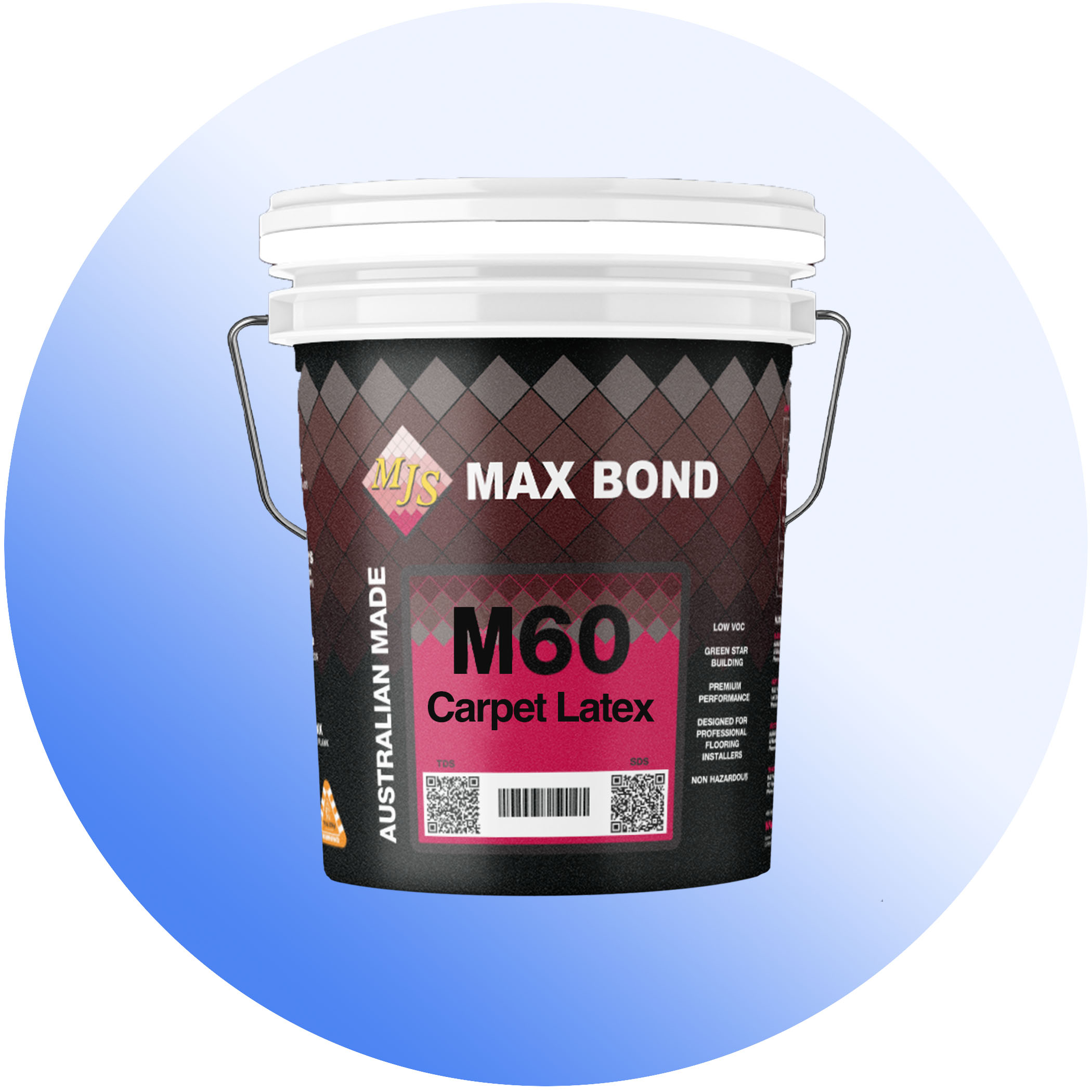
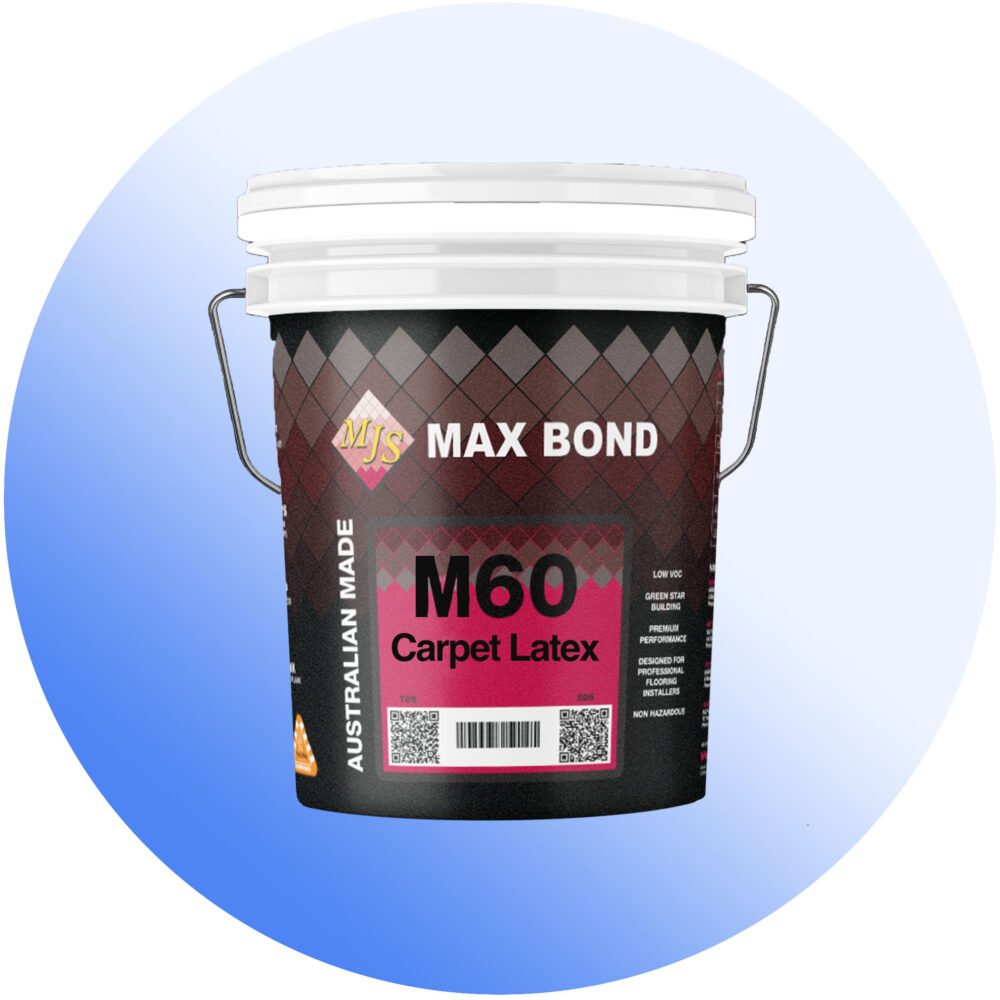
Carpet latex is the consumable that decides whether a seam holds or frays. Max Bond M60 is a natural rubber latex for carpet installation, used to seal raw cut edges before seaming, strengthen worn backing and bond underlay to the subfloor.
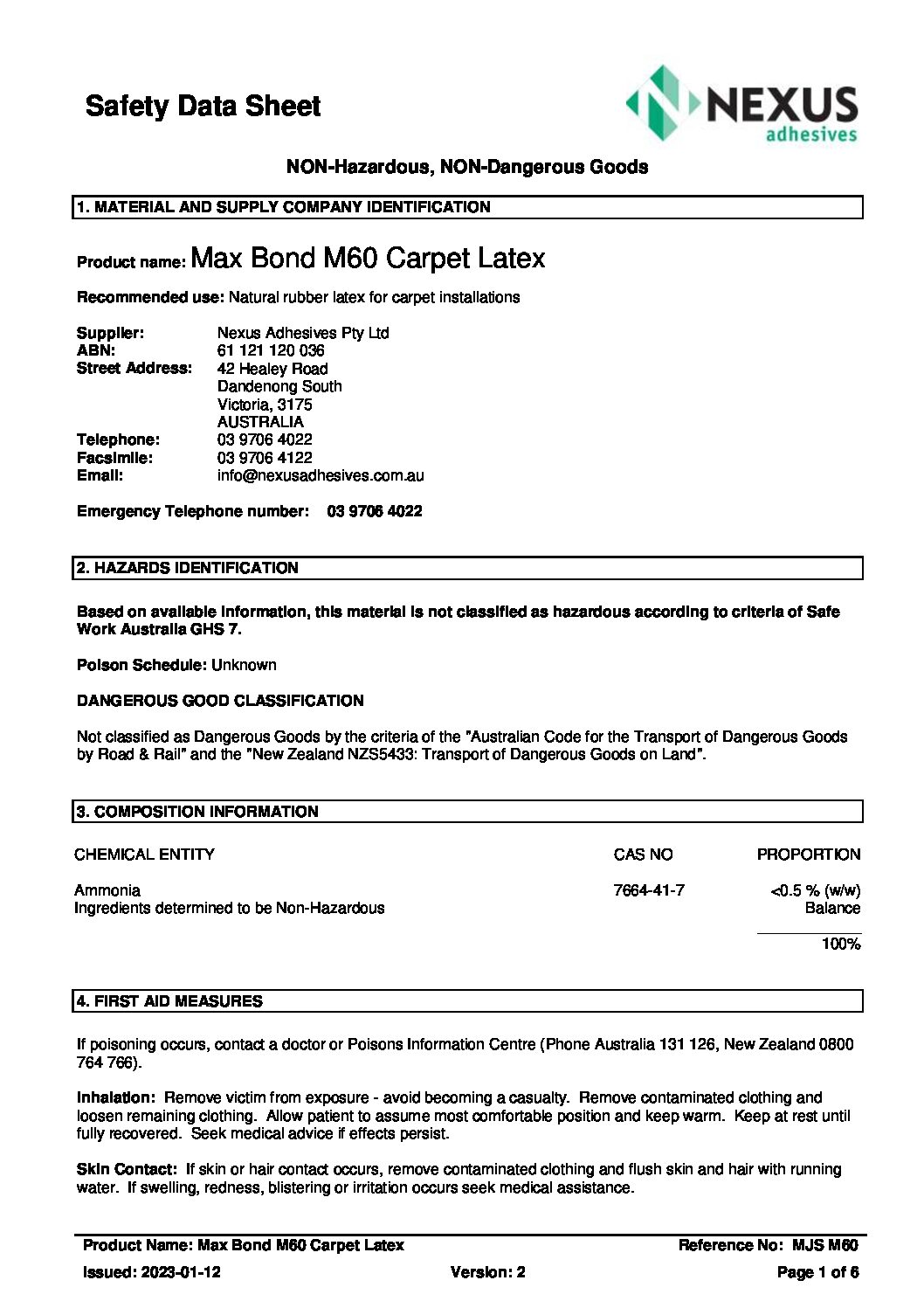
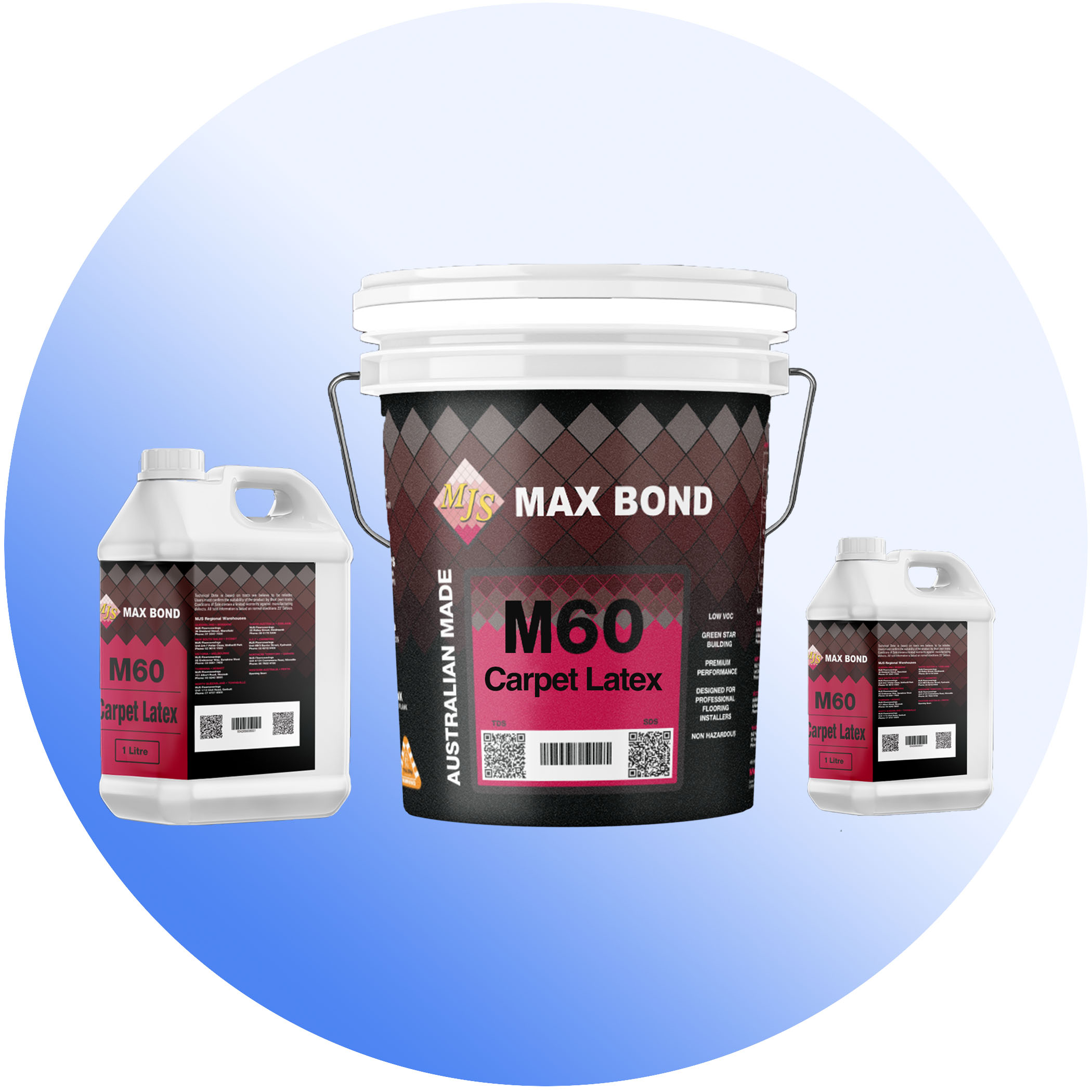
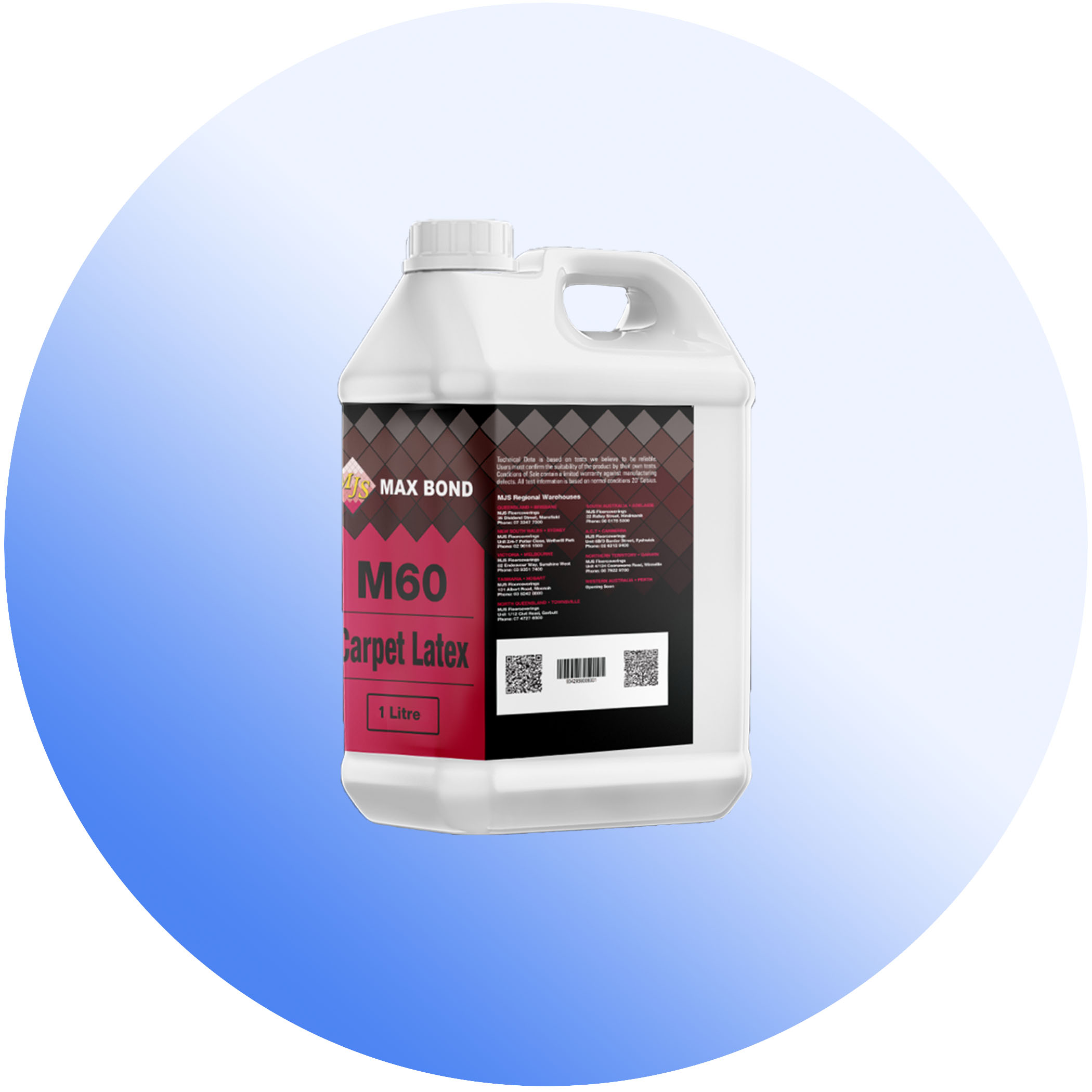
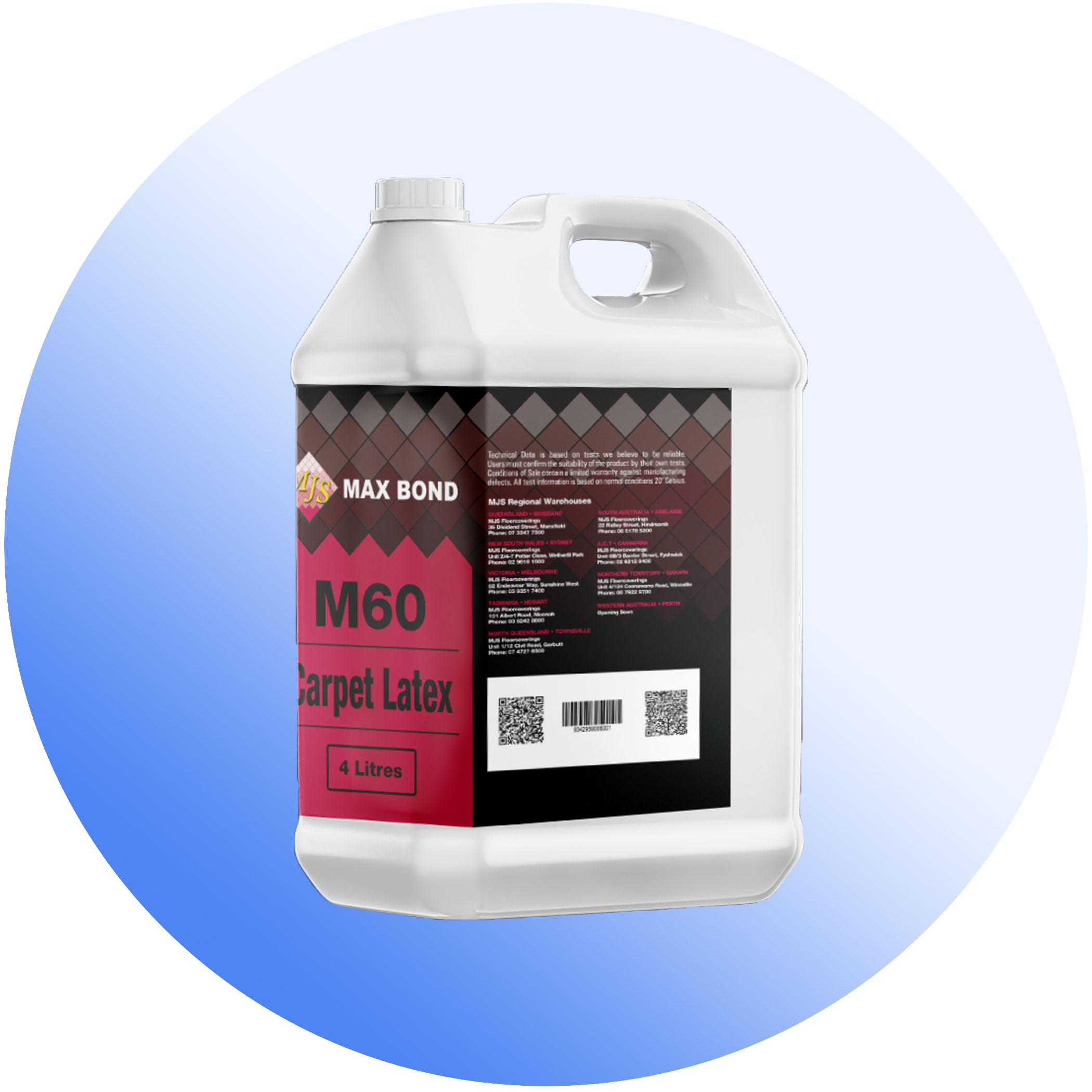
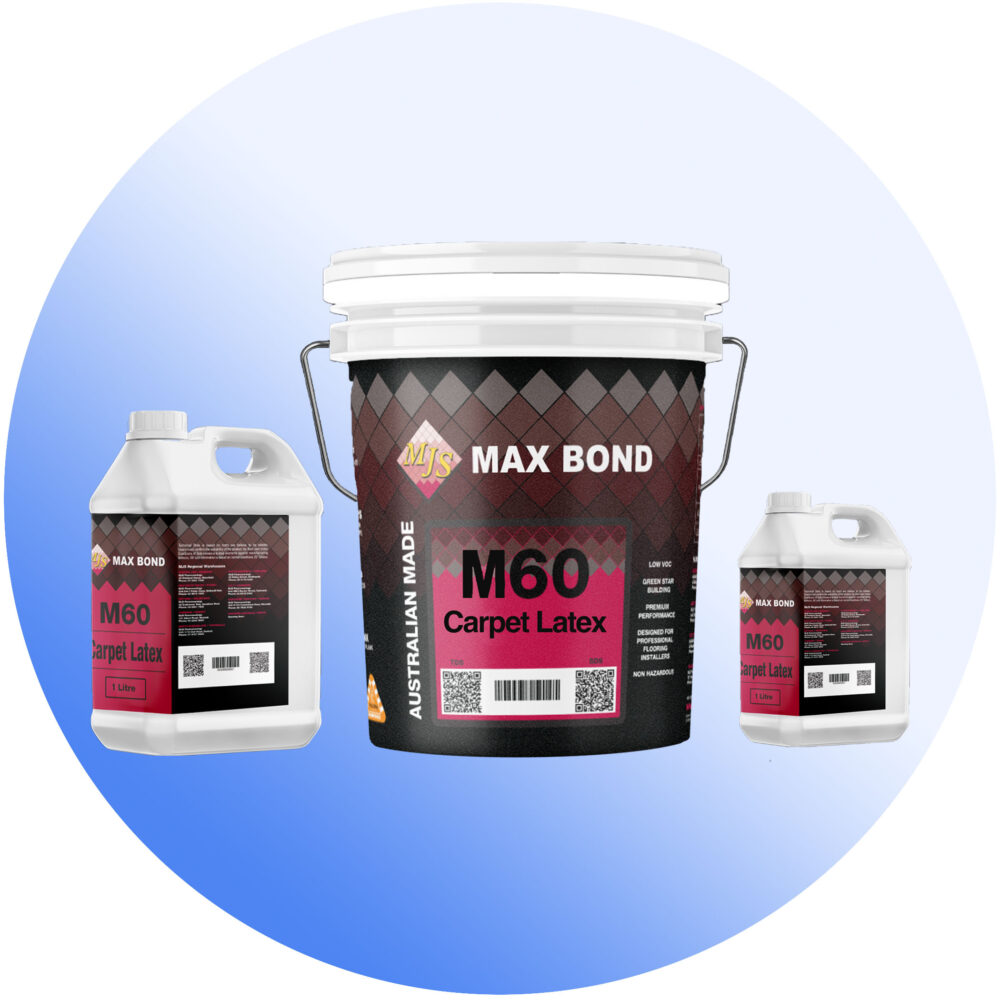
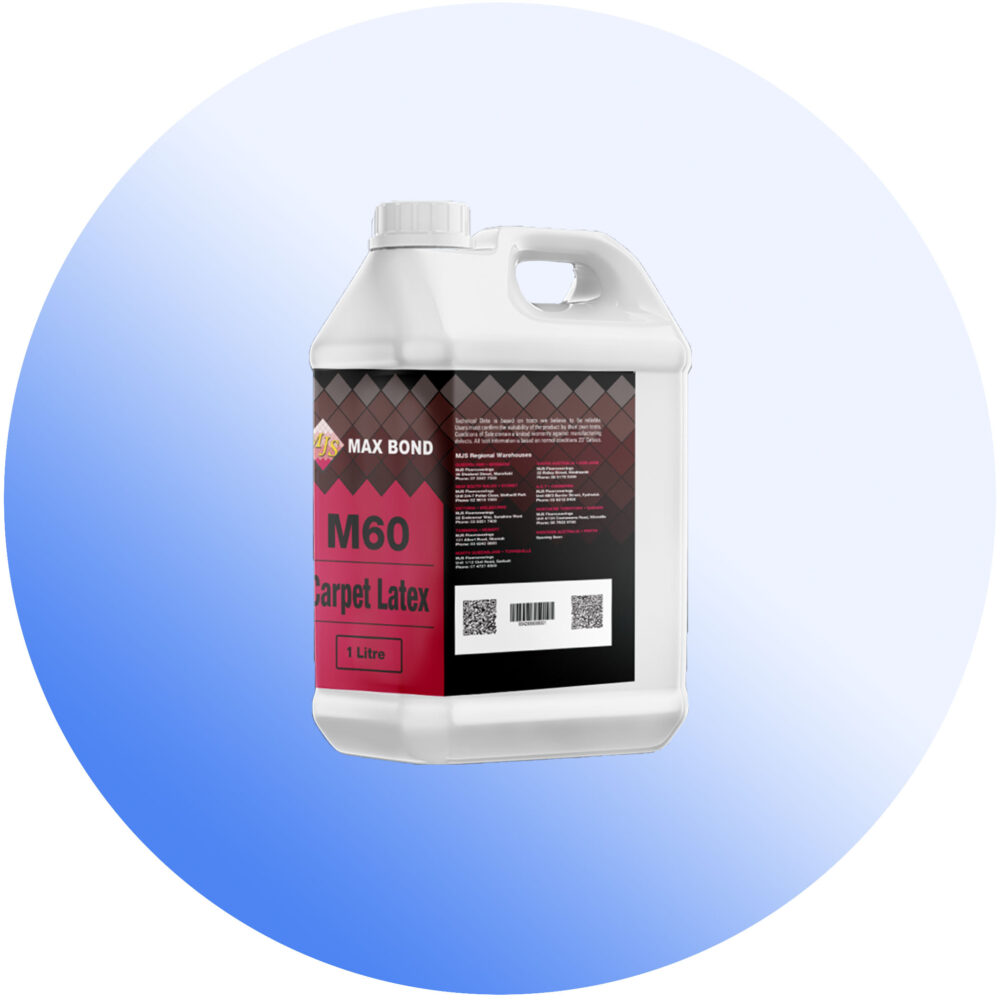
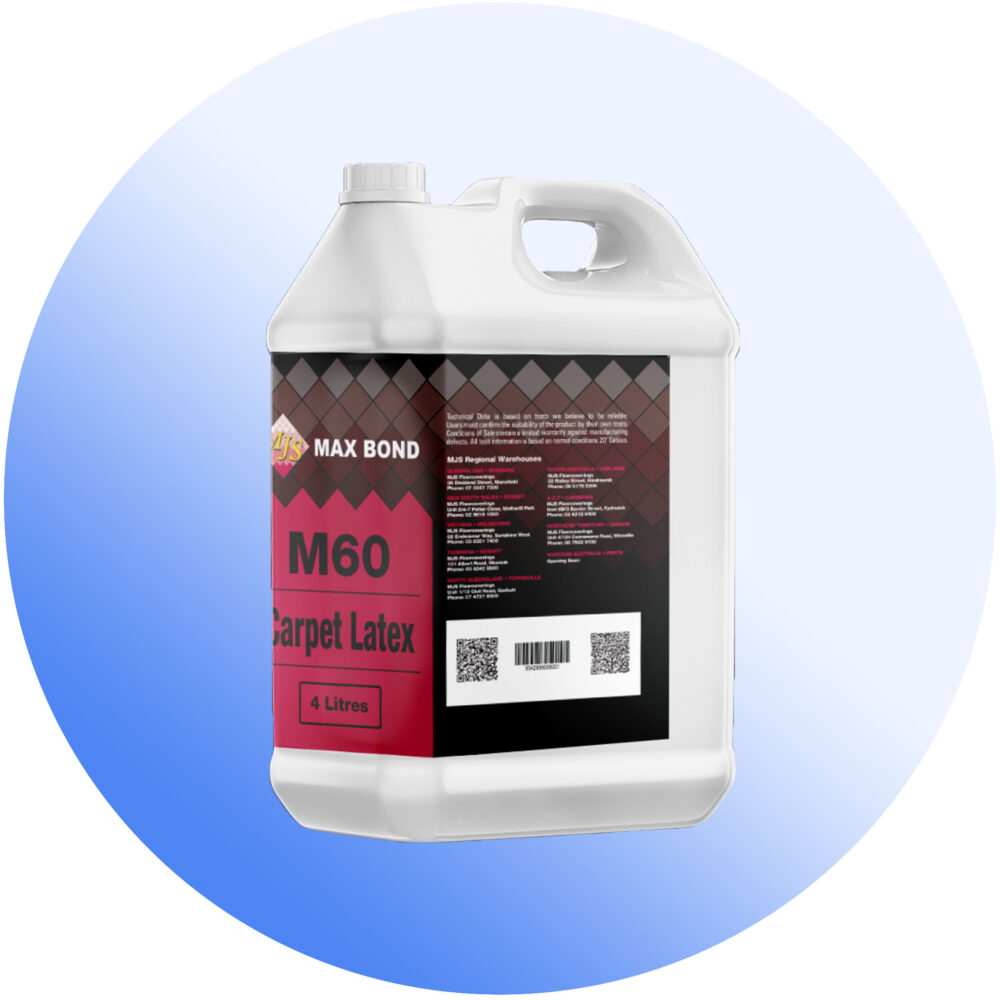
It is classified non-hazardous and is not dangerous goods for road or rail transport, which makes it straightforward to carry and store on a van. It comes in 1 and 4 litre containers and a 15 litre pail.
Technical Specifications
| Product type | Natural rubber latex for carpet installations |
|---|---|
| Hazard classification | Not classified as hazardous under Safe Work Australia GHS 7 |
| Transport | Not classified as Dangerous Goods for road or rail |
| Composition | Natural rubber latex, ammonia less than 0.5% w/w |
| Clean up | Water, immediately after use |
| Storage | Avoid freezing |
| Pack sizes | 1 litre, 4 litres, 15 litre pail |
Where Carpet Latex Fits
Carpet latex is not a full-spread adhesive and does not replace one. It is the consumable a carpet fitter uses at the edges and seams, where the cut face of a tufted or woven carpet will otherwise shed and fray.
Used on a seam edge it binds the backing before heat bonding. Used on worn backing it restores enough integrity to relay a carpet rather than replace it. Used under pad underlay it holds the underlay to the subfloor so it cannot creep. All three jobs need the latex dry before the next step.
Where to Use
- Sealing raw carpet edges before seaming
- Strengthening worn or damaged carpet backing
- Bonding underlay to the subfloor
- General carpet installation repair work
How to Apply
- Prepare the surface: The subfloor or carpet backing must be dry, clean and sound before the latex goes on.
- Apply: Work the latex into the edge or backing with a brush or spreader.
- Let it dry: Allow it to dry before seaming. Seaming into wet latex is the common mistake.
- Clean tools: Wash tools with water straight after use, before the latex cures.
Important Notes
- Avoid freezing in storage. Once frozen the latex does not recover.
- Allow the latex to dry fully before heat bonding a seam over it.
- Cured latex needs a dedicated remover, so clean up immediately.
Pack Sizes and Which to Buy
Three sizes cover very different jobs. The 1 litre container suits seam sealing and edge work on a single installation. The 4 litre is the general van stock size for a fitter doing regular repair and relay work.
The 15 litre pail is for bonding pad underlay across whole floors, where the latex is being spread rather than brushed onto edges. Buying the pail for seam work alone risks it curing in the container before it is used, so match the size to the job.
See the full flooring adhesives range for related products.