Description
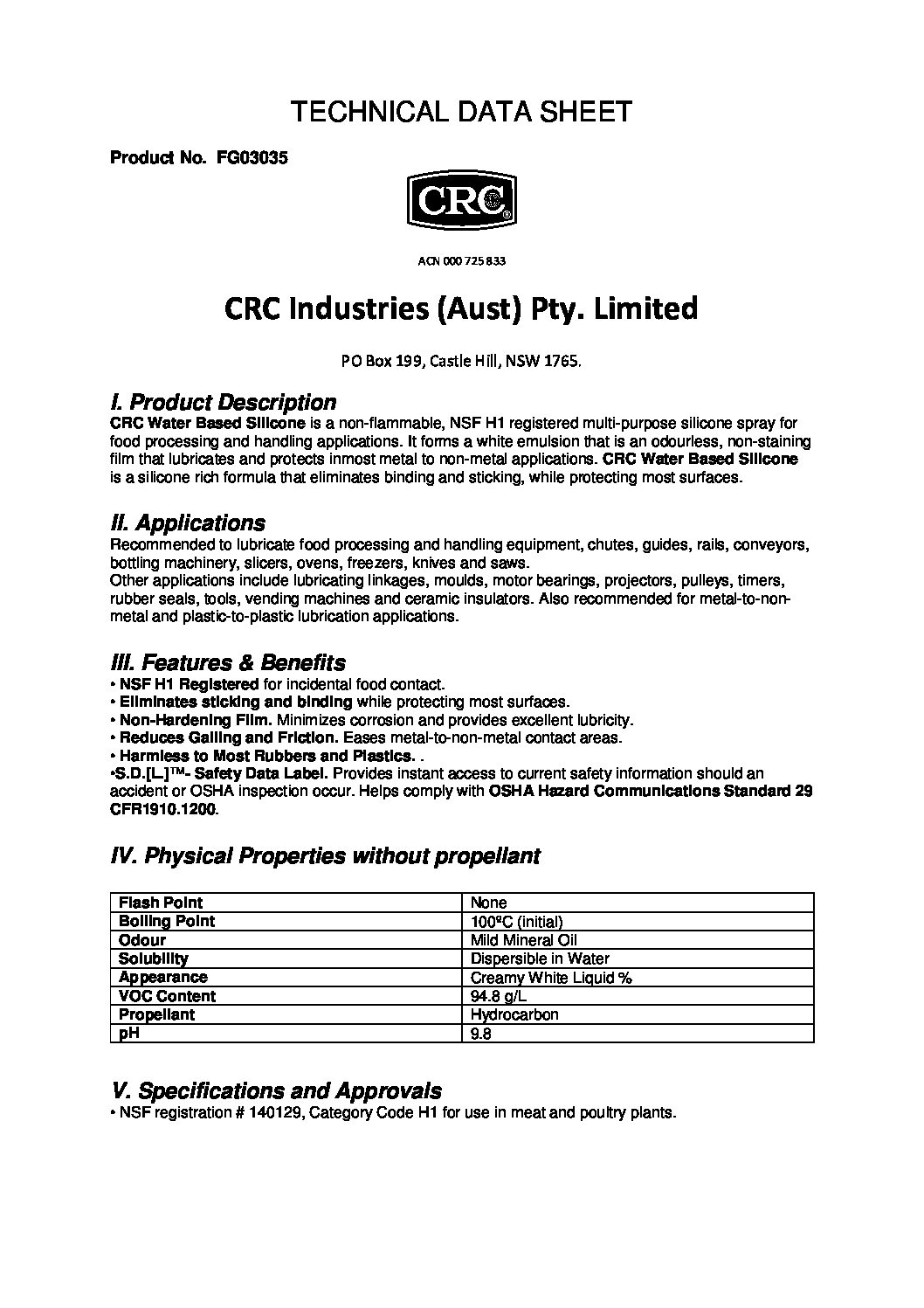
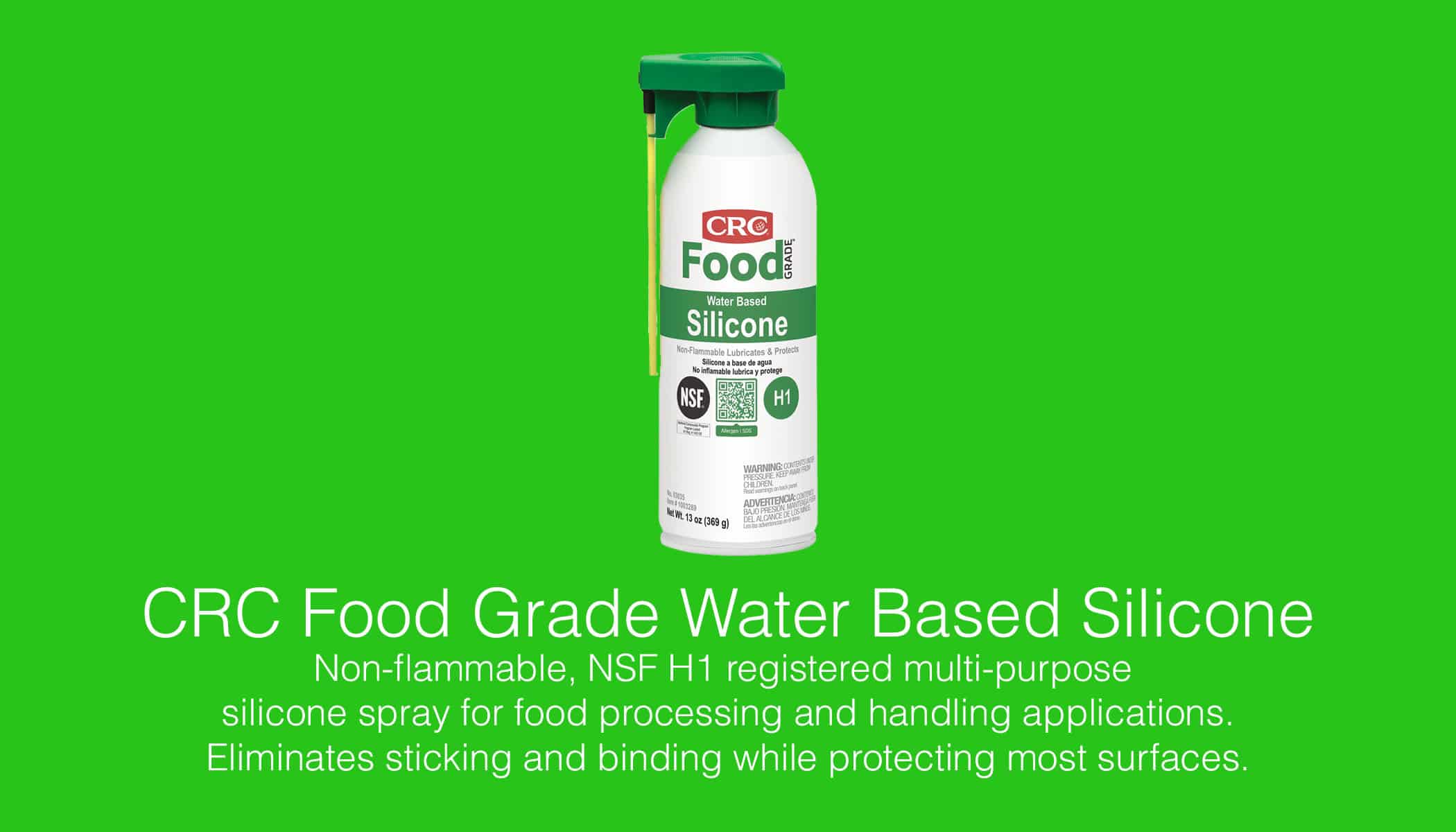
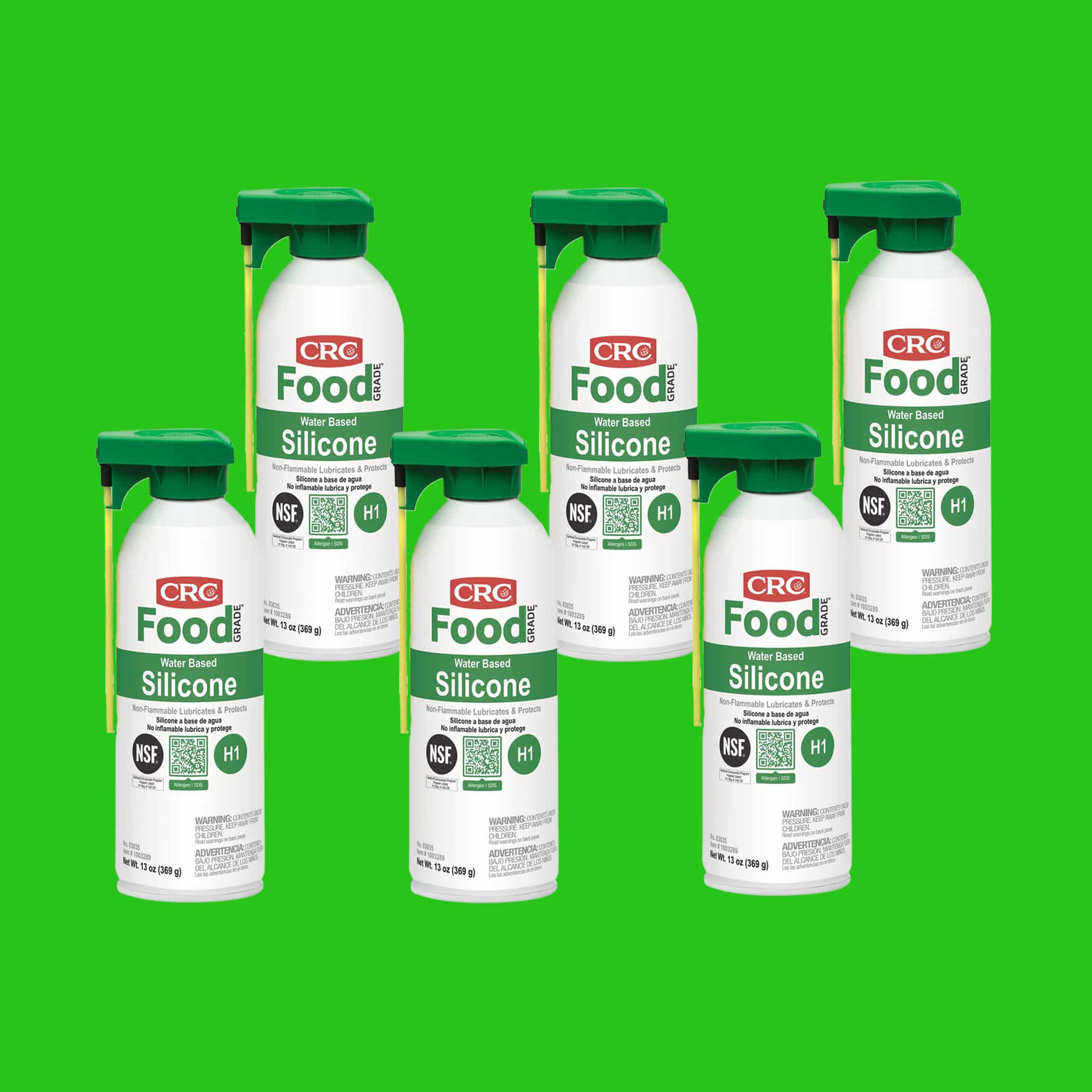
CRC Food Grade Water Based Silicone is an NSF H1 registered lubricant spray built for food processing and handling environments, where an incidental food-contact rating is a real requirement rather than a marketing claim. It forms an odourless, non-staining white emulsion film that lubricates and protects most metal-to-non-metal contact points without introducing a petroleum-based lubricant risk into a food area.
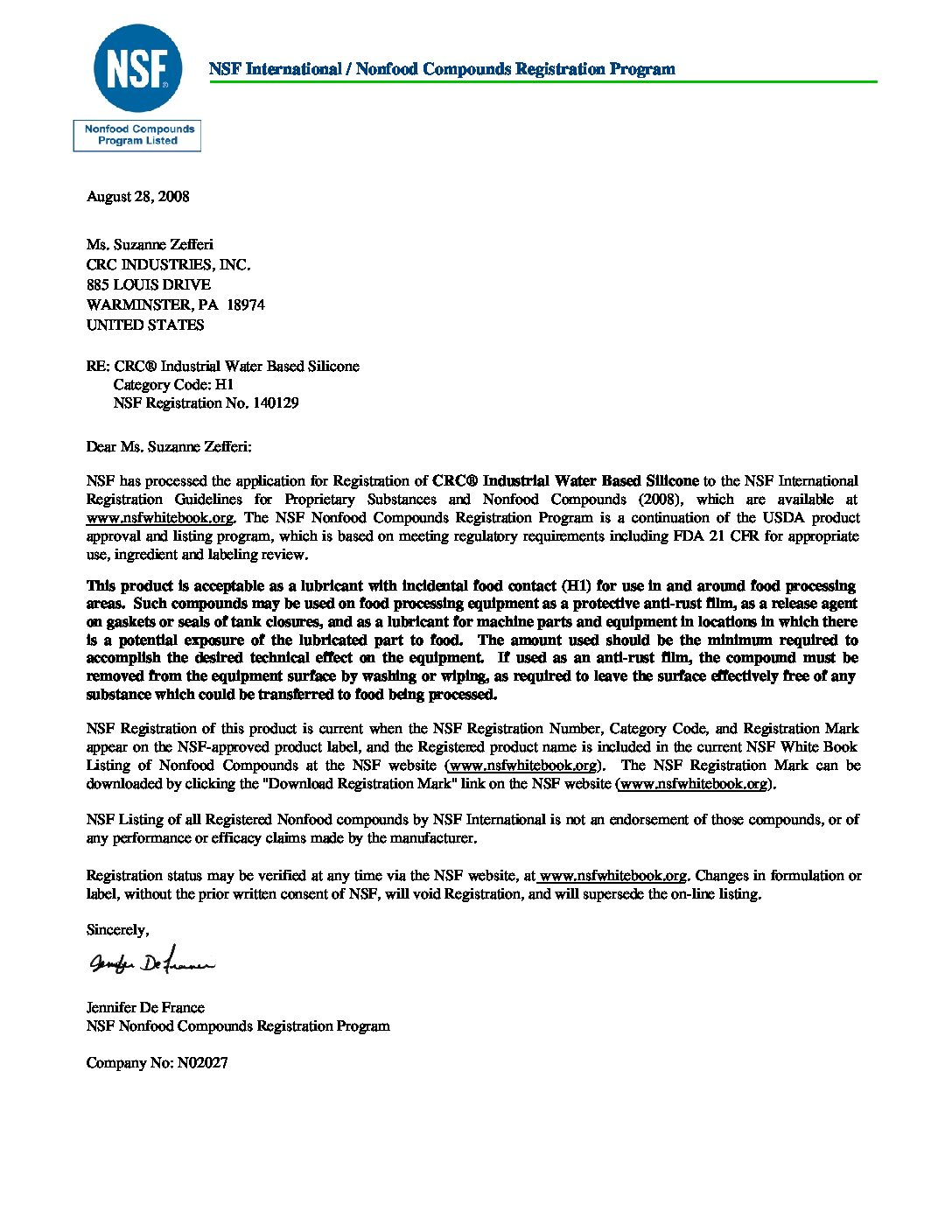
The NSF registration — #140129, Category Code H1 — specifically covers use in meat and poultry plants, one of the more tightly regulated food-processing environments, which is a useful benchmark for what the product is rated to handle elsewhere.
Technical Specifications
| Product type | NSF H1 registered water-based silicone lubricant spray |
|---|---|
| Appearance | White emulsion film, odourless, non-staining |
| Registration | NSF H1, registration #140129, Category Code H1 (meat and poultry plants) |
| Pack size | 369g aerosol |
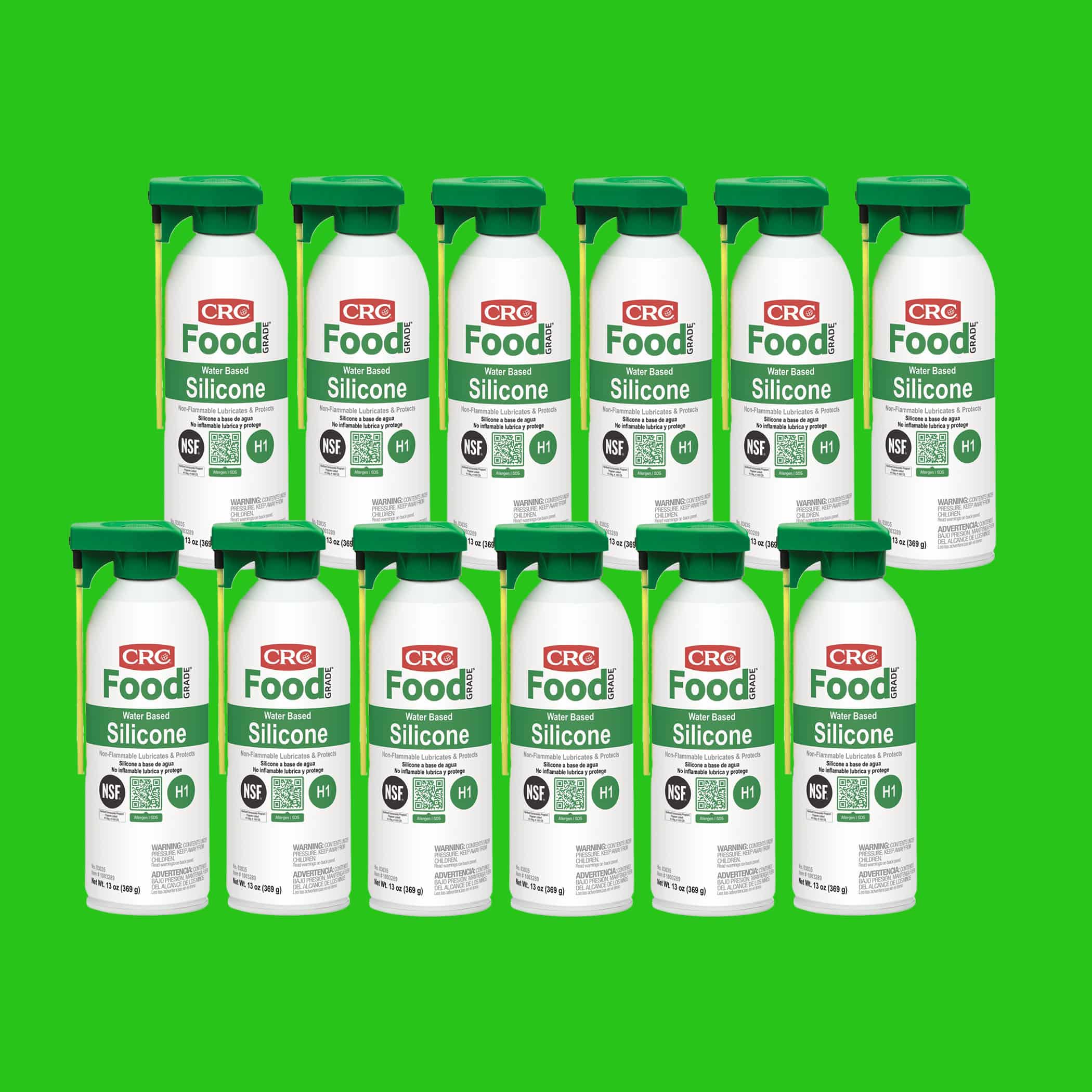
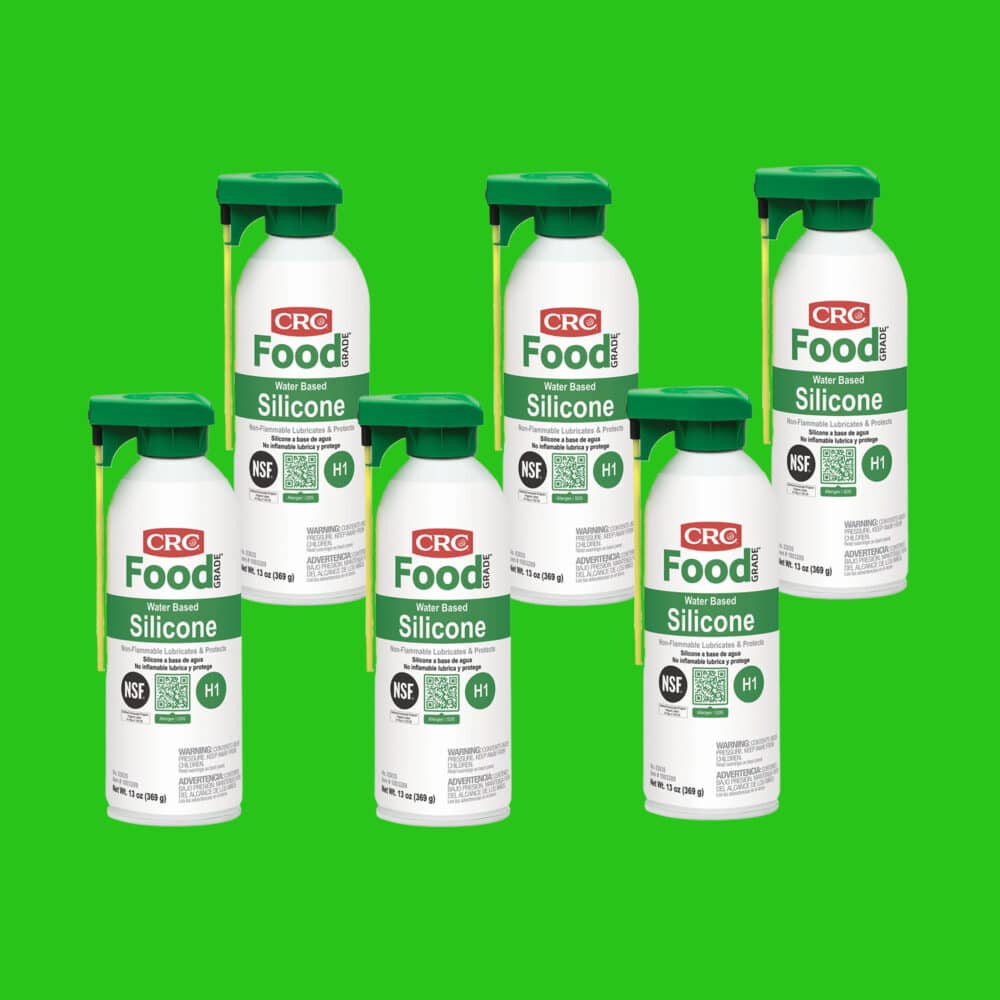
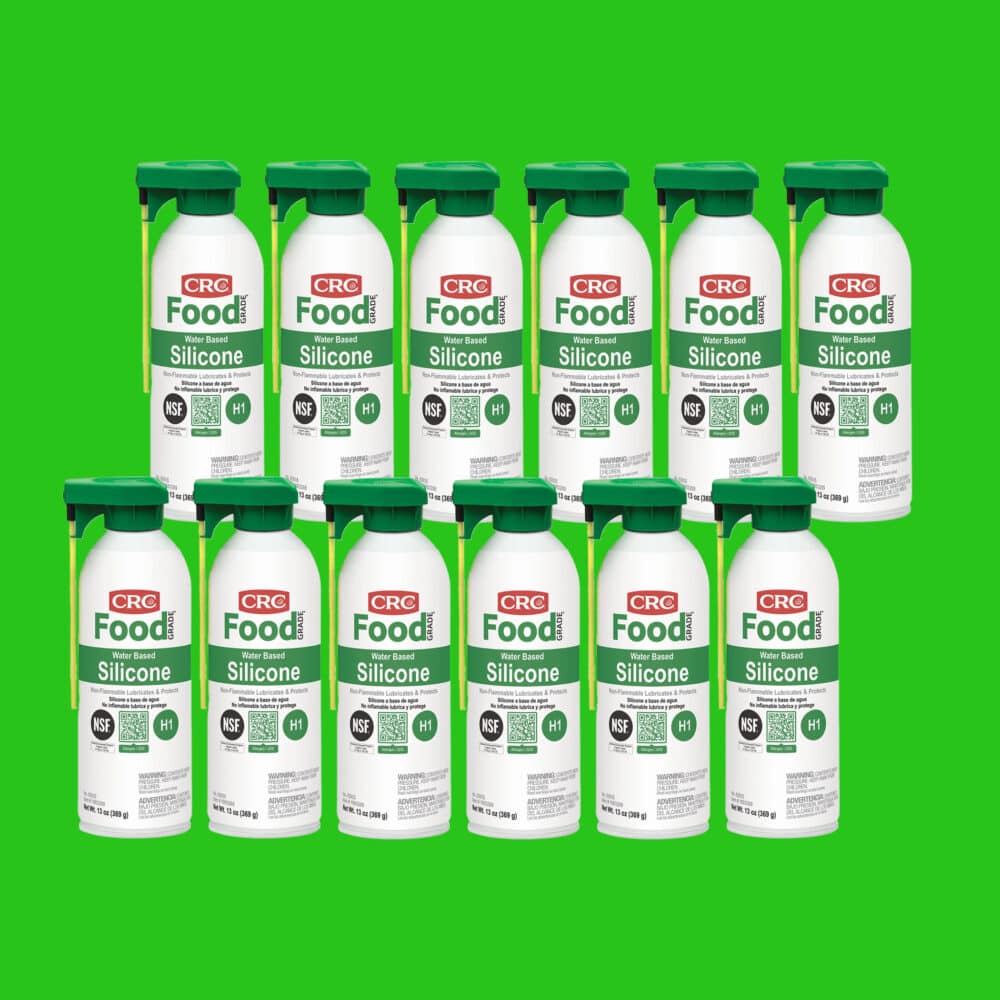
| Pack options | Individual, 6 pack, 12 pack |
Where to Use
- Food processing and handling equipment requiring incidental food-contact-rated lubrication
- Linkages, moulds, motor bearings, projectors, pulleys and timers
- Metal-to-non-metal and metal-to-plastic lubrication points
- Meat and poultry plants, and similarly regulated food environments
How to Apply
- Identify the contact point — the mechanism or fitting needing lubrication or protection.
- Apply a light, even spray — use only the amount necessary for adequate lubrication or protection.
- Repeat as needed — reapply until adequate lubrication or protection is achieved, rather than applying one heavy coat.
- Ventilate — use in a well-ventilated area, improving ventilation by opening a window or door where needed.
Important Notes
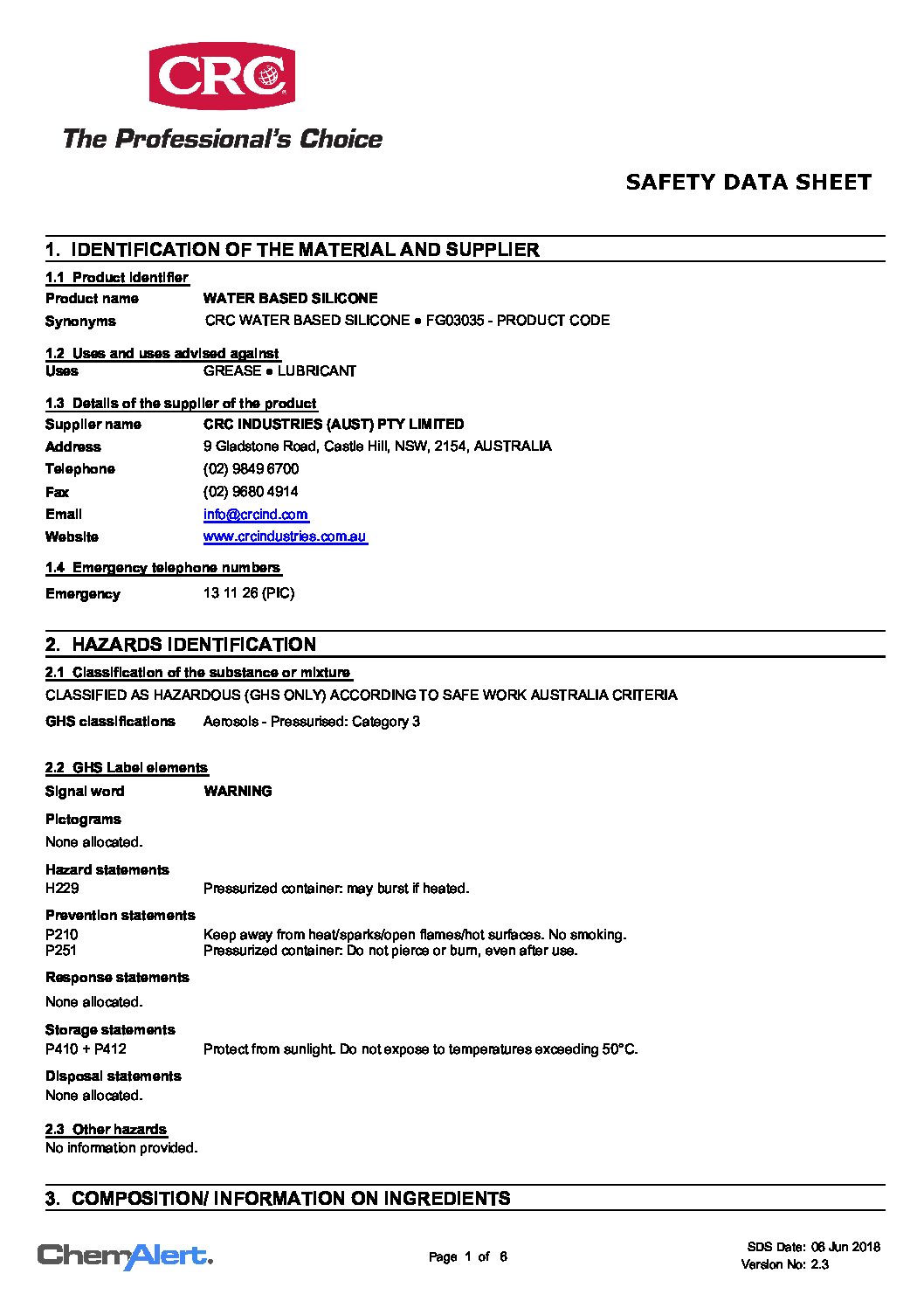
- Do not puncture, incinerate or store the aerosol above 50°C.
- Use only the necessary amount per application; this is a food-environment product, not a general-purpose heavy lubricant.
- Disposal requirements for used and unused product vary by state and local jurisdiction.
Being water-based rather than solvent- or petroleum-based is what makes the NSF H1 rating possible in the first place — a solvent carrier would leave residues that aren’t acceptable near food-contact surfaces, even at incidental-contact level. The white emulsion dries down to a thin, non-staining film rather than an oily residue, which matters on equipment that’s visually inspected for cleanliness between shifts. It’s also why the spray is specified for mechanisms like linkages, timers and motor bearings rather than direct food-contact surfaces themselves: the H1 rating covers the possibility of incidental contact during normal operation, not deliberate application to surfaces food will touch directly.