Description
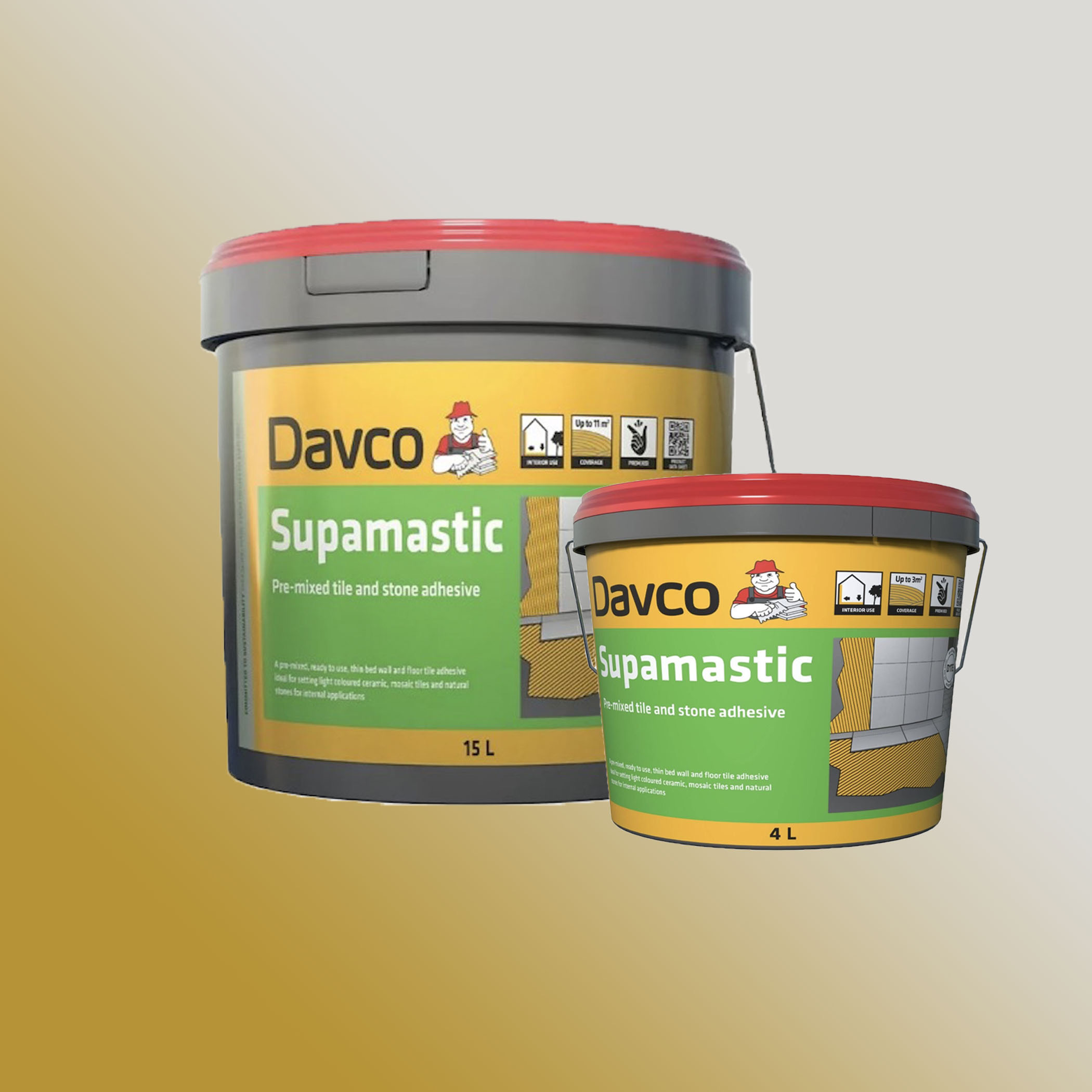
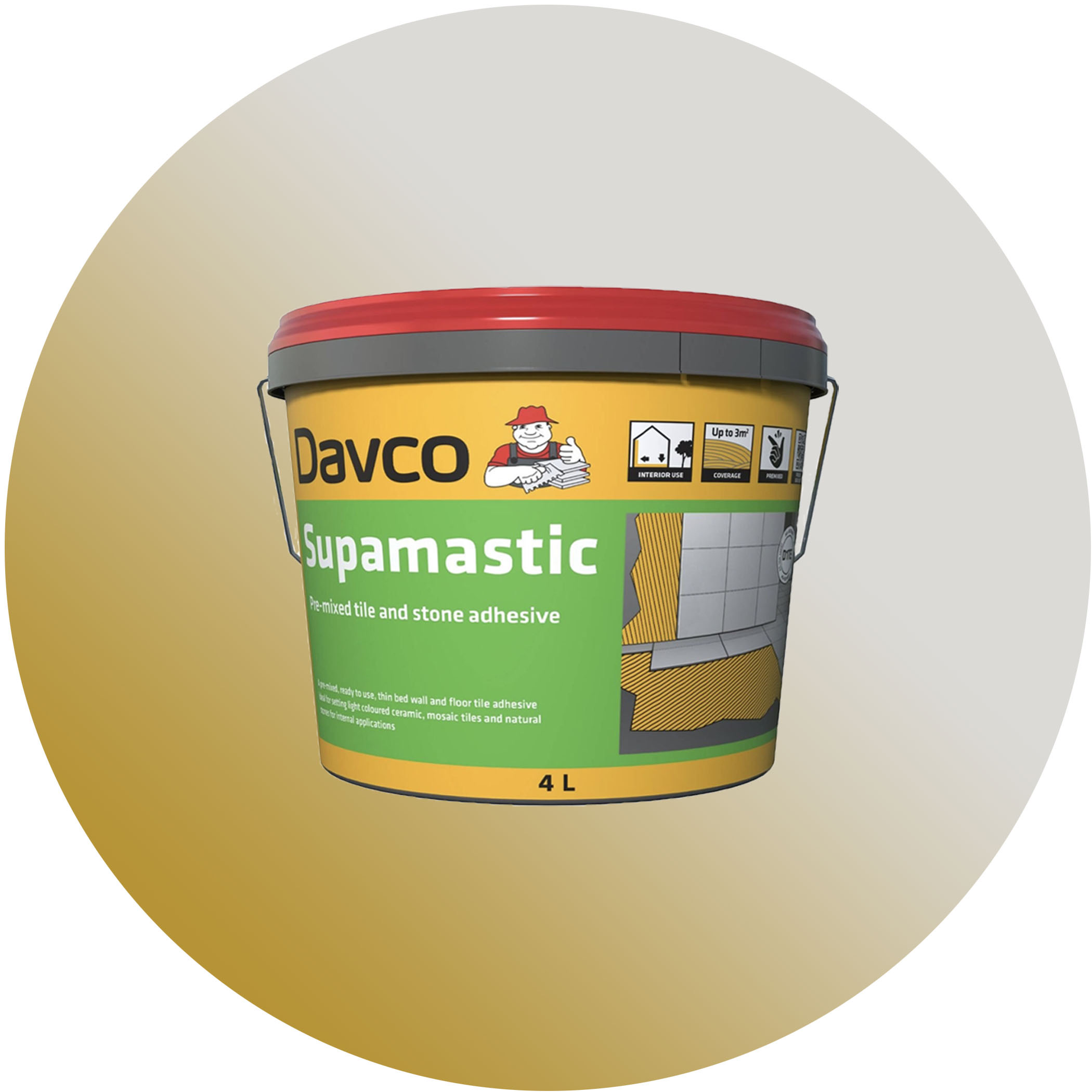
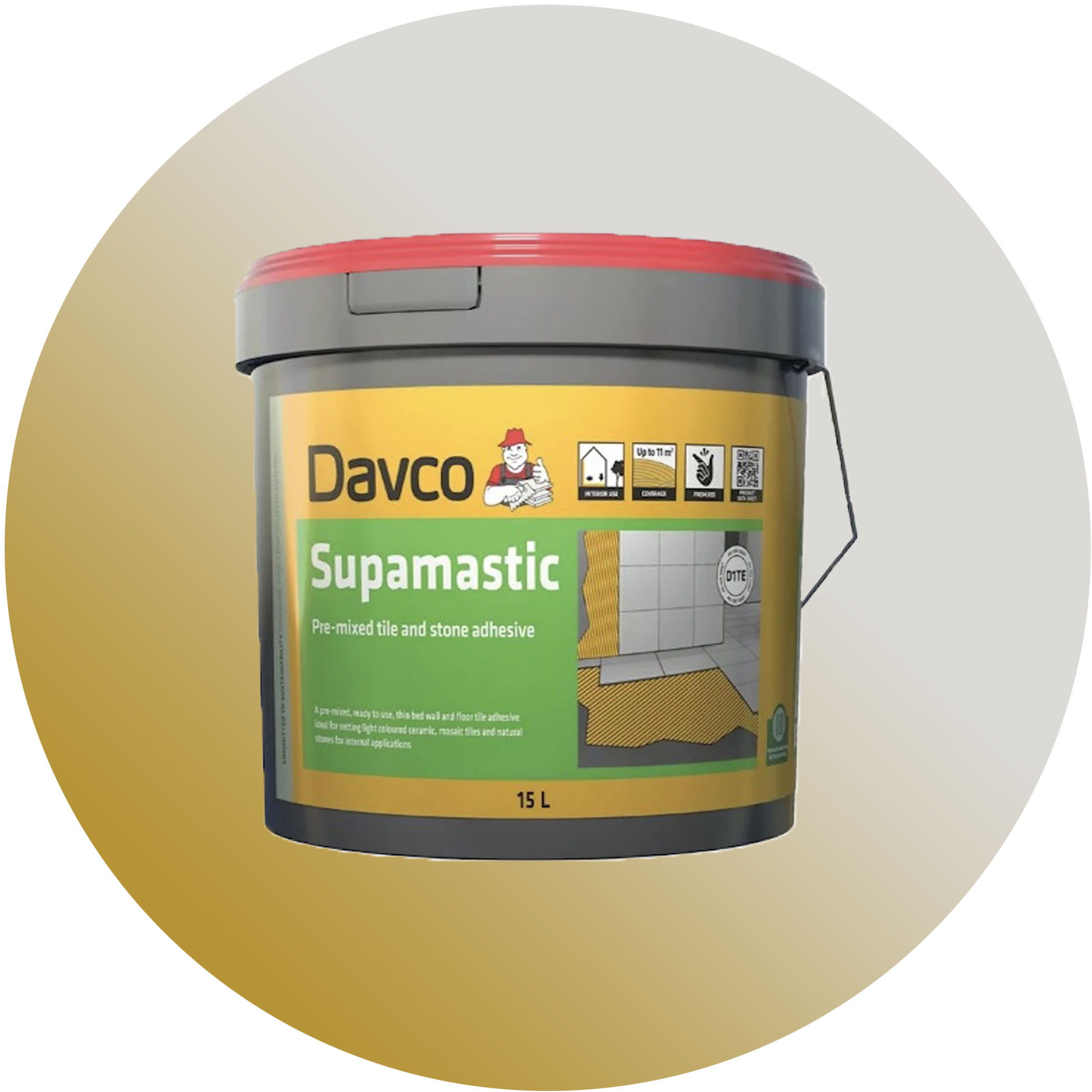
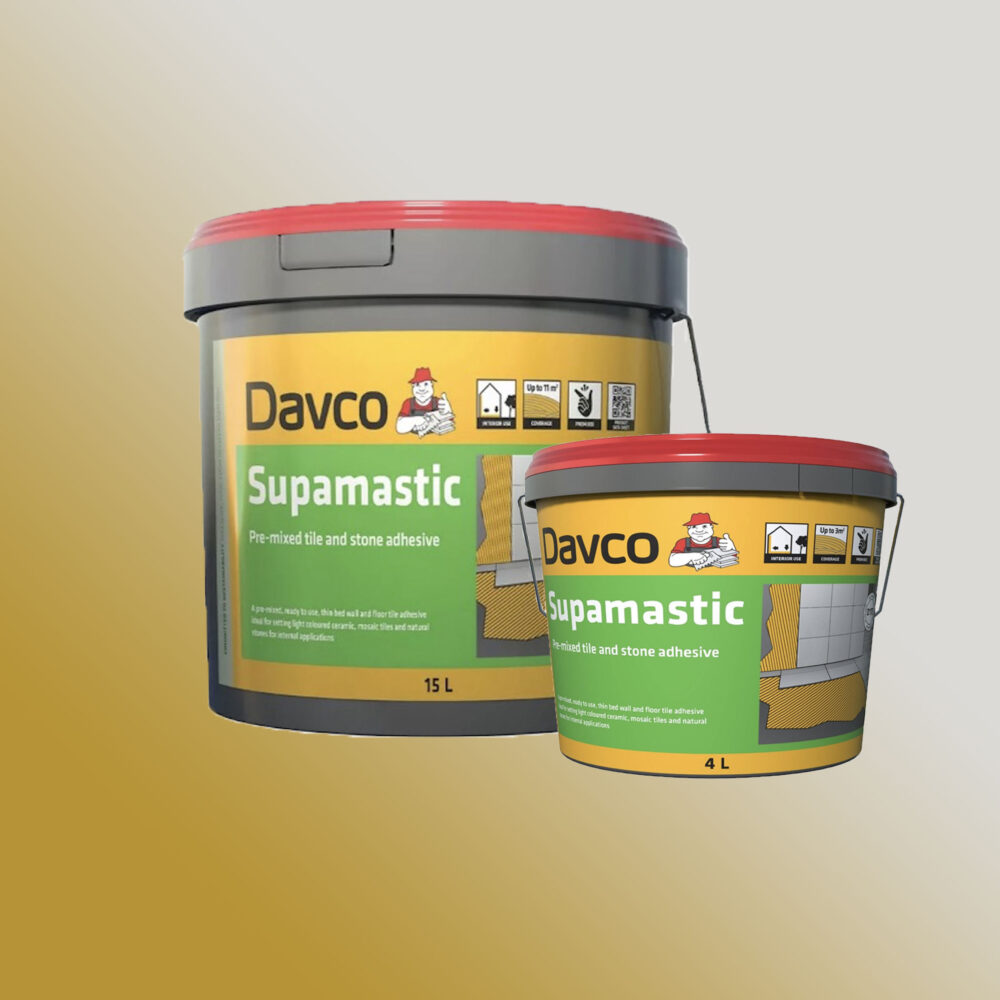
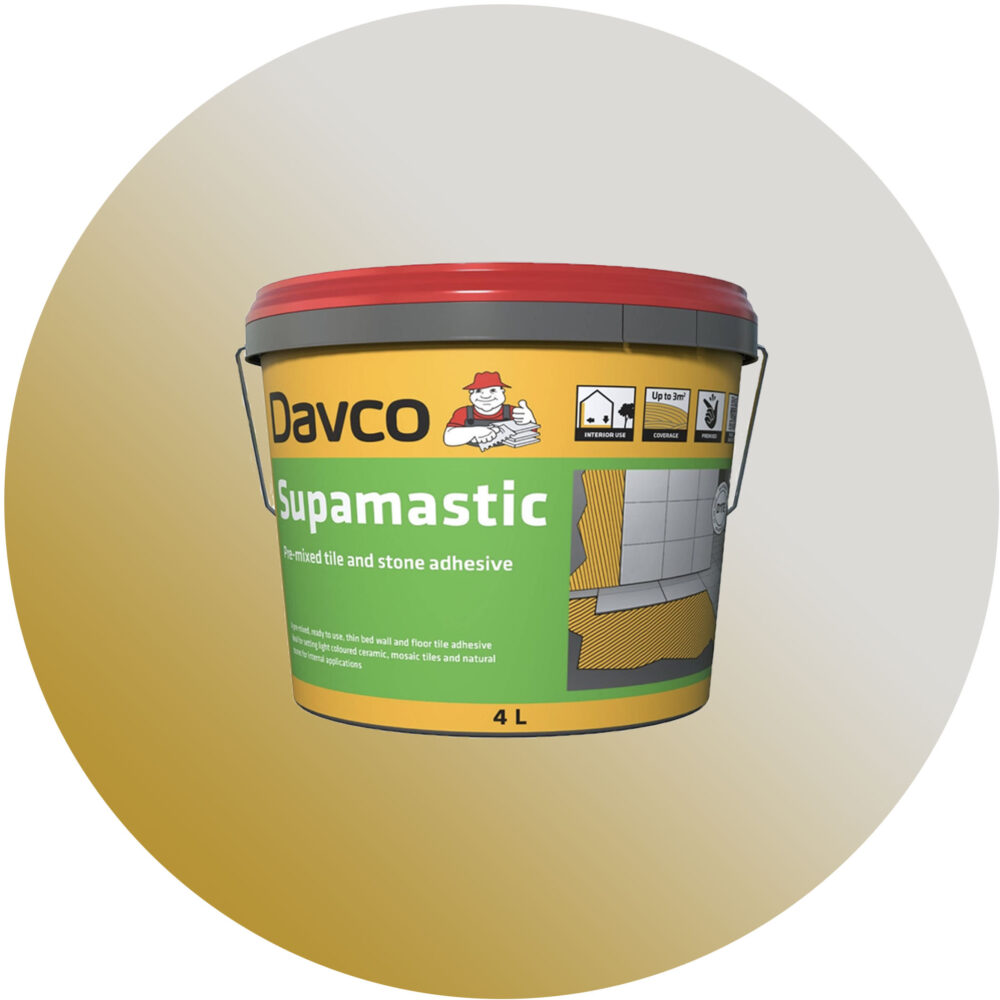
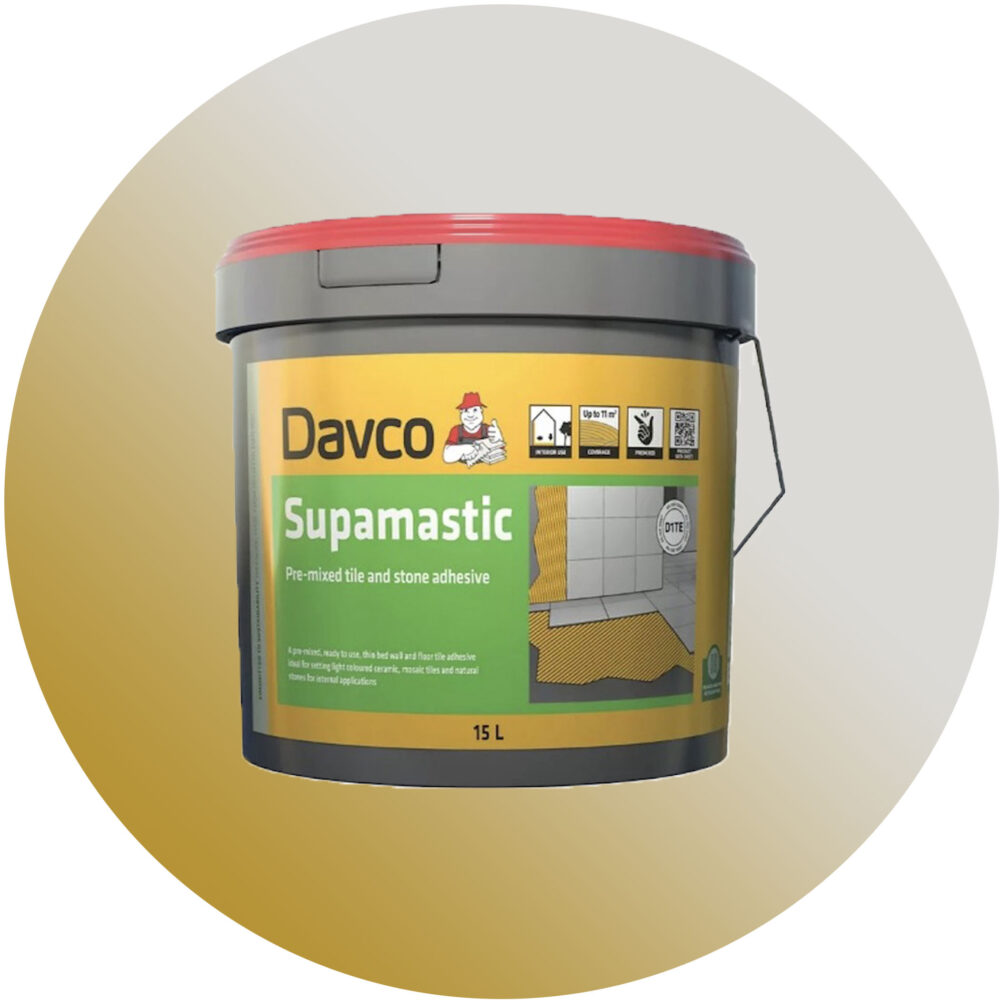
Davco Supamastic is a ready to use, premixed thin bed adhesive from the Sika Australia Davco range: white, non slump, and described by the data sheet as ideal for light coloured tiles.
The data sheet covers residential internal thin bed wall tiling with porous tiles (more than 3% absorption) on porous substrates, and residential internal dry area floor tiling with porous backed tiles (more than 3% absorption) on primed cement sheet or ceramic tile underlay.
Technical Specifications
| Classification | D1TE (AS ISO 13007) |
|---|---|
| Maximum layer thickness | 4 mm |
| Air and substrate temperature | 5 degrees C to 35 degrees C |
| Open time | 30 minutes |
| Adjustability time | 45 minutes |
| Set time before grouting | 24 hours |
| Set time before dry area service | 48 hours |
| Set time before wet area service | 7 days |
| Shelf life | 12 months from date of manufacture, stored dry and cool out of direct sunshine |
Set times are measured at 22 degrees C and 50% relative humidity and vary with site conditions.
Coverage
| Pail | Approximate coverage (6 mm notch trowel) |
|---|---|
| 4 litre | 3 m² |
| 15 litre | 11 m² |
Where to Use
Suitable tile types listed: ceramic, mosaic and natural stone not sensitive to moisture. It is not suitable for porcelain tiles larger than 200 x 200; the sheet points to Davco SMP Evo adhesive.
Suitable substrates listed, primed with Davco Ultraprime or Davco Primex for rendered block or brickwork, fibre cement sheet and plasterboard:
- Fibre cement sheet and plasterboard
- Ceramic tile underlay
- Rendered blockwork and brickwork
- Over Davco K10 Plus, Dampfast, K10 Rapid and K12 waterproof membranes, for walls only and with porous tiles (drying times are greatly extended)
How to Apply
- Prepare: surfaces must be structurally sound, dry, clean and free from movement, oil, grease, wax, curing compounds, release agents and any other loose material or bond inhibitor. On painted surfaces, expose at least 80% of the original substrate. Substrates must meet minimum deflection standards of L/360 for tiles or L/720 for natural stone.
- Spread: place the adhesive onto the primed surface, only as much as can be tiled within the open time (usually one tile to 1 m²). Hold the notched trowel at 60 degrees or greater and comb in one direction.
- Back butter where required: for the 400 x 400 and 600 x 300 tiles in the trowel table (12 mm notch), and where needed to reach minimum coverage, use the flat side of the notched trowel to apply a thin layer of about 1 to 2 mm to the back of the tile.
- Set the tile: press firmly, then move it forward and back at 90 degrees across the combed lines. Occasionally lift a tile to check for 90 to 100% coverage.
- Clean up: remove excess adhesive from joints and tile faces with a sponge and water while wet, and clean tools with water before the adhesive dries.
Important Notes
- Not suitable over concrete substrates; use a suitable Davco cement based adhesive.
- Not suitable for moisture sensitive stone, or for porcelain tiles larger than 200 x 200.
- Test in an inconspicuous area first. If the adhesive skins before tiling, remove and replace it.
- Apply in accordance with AS3958:2023, with movement joints installed.
- Safety and handling: the data sheet gives no hazard statements or protective equipment requirements. It directs users to the most recent Safety Data Sheet for safe handling, storage and disposal information.