Description
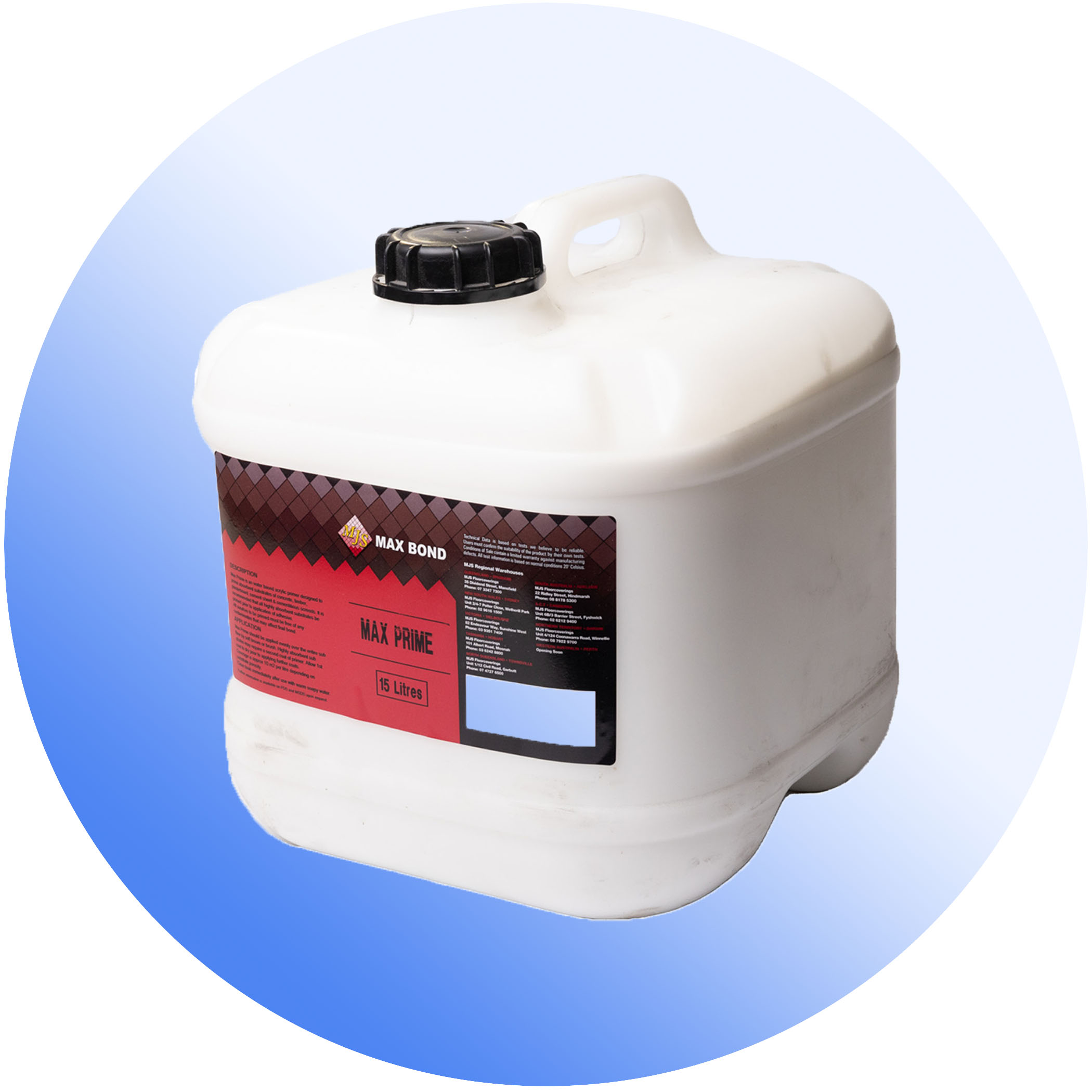
An absorbent slab drinks the water out of a water-based adhesive before the adhesive can develop its bond. Max Prime exists to stop that: a water-based acrylic primer applied to absorbent substrates before water-based adhesives go down.
It suits most highly absorbent substrates, including concrete, timber, solid plaster, plasterboard, cement sheet and cementitious screeds, and is applied simply with a soft broom or brush.
Technical Specifications
| Product type | Water-based acrylic primer |
|---|---|
| Appearance | White liquid |
| For priming | Concrete, timber, solid plaster, plasterboard, cement sheet, cementitious screeds |
| Application | Soft broom or brush, evenly over the whole subfloor |
| Second coat | Highly absorbent subfloors may need one, applied after the first has dried |
| Minimum subfloor temperature | 10°C |
| Standard | AS/NZS 2455.1 |
| Clean up | Warm soapy water immediately after use |
| Shelf life | Up to 12 months |
| Pack size | 15 litre flask |
How to Tell if a Slab Needs Priming
The simplest test is water. Drop a small amount onto the prepared slab and watch. If it soaks in within a minute or two the substrate is absorbent and will pull water out of an adhesive before that adhesive can develop its bond. If it beads and sits, the slab is sealed or power-floated and has a different problem.
Highly absorbent floors may need a second coat, applied once the first has dried. The aim is to control the absorption rather than eliminate it, because the substrate still has to be absorbent enough for the adhesive to dry and cure afterwards.
Where to Use
- Priming absorbent concrete before a water-based adhesive
- Timber, plasterboard and cement sheet substrates
- Cementitious screeds and solid plaster
- Any absorbent subfloor ahead of adhesive or levelling
How to Apply
- Check the substrate: It must be dry, smooth and free of contaminants that would affect the final bond.
- Apply evenly: Spread the primer over the entire subfloor with a soft broom or brush.
- Second coat if needed: Highly absorbent subfloors take a second coat. Let the first dry before applying it.
- Let it dry: Allow the primer to dry before the adhesive goes down.
- Clean up: Wash tools immediately with warm soapy water.
Important Notes
- Minimum subfloor temperature before preparation or priming is 10 degrees.
- Priming an absorbent subfloor is strongly recommended before any water-based adhesive.
- The substrate still needs to be absorbent enough for the adhesive to dry and cure afterwards.
See the full flooring adhesives range for related products.