Description
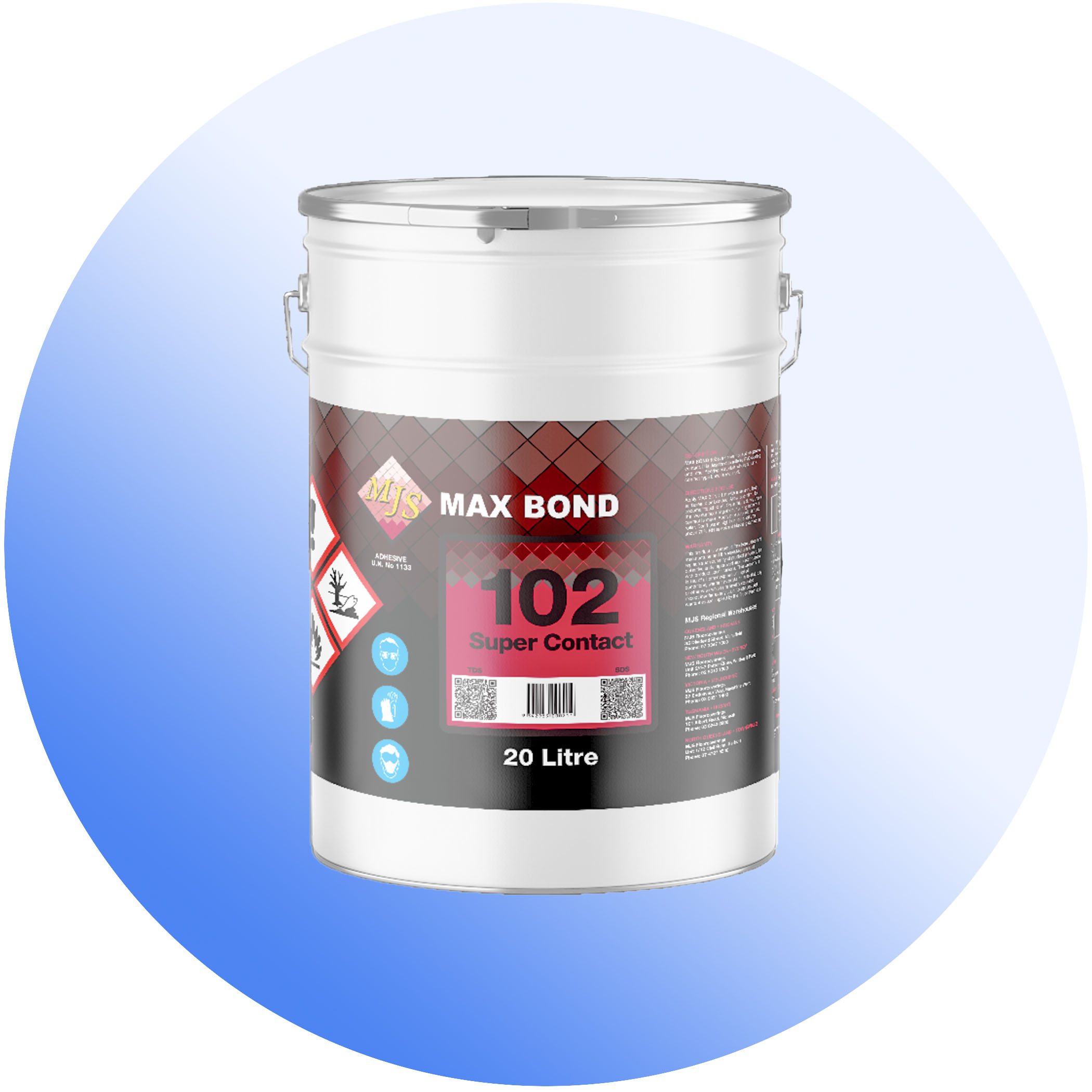
Max Bond 102 Super Contact Adhesive is a solvent based neoprene contact adhesive used for fixing vinyl skirting and other common flooring materials where a quick contact bond is required to plaster, timber and metal substrates. As a genuine contact adhesive, it works differently to a wet-lay adhesive — both surfaces are coated, allowed to become tacky, and then pressed together for an immediate, strong bond rather than a slower curing process.
Because the bond forms the moment the two tacky surfaces meet, no adjustment is possible once contact is made, so correct positioning beforehand is essential to a clean result. Tack-up time runs approximately 10-15 minutes at 20°C, with an open time of around 45 minutes, giving a reasonable but genuinely limited window to complete the join before the adhesive becomes too dry to bond effectively.
It’s not recommended for exterior application, being formulated specifically for interior fixing work such as vinyl skirting installation. On porous surfaces, a second application of adhesive may be needed to achieve a fully reliable bond, and firm hand-roller pressure across both surfaces ensures sufficient contact is achieved for the adhesive to perform as intended.
Because Max Bond 102 is a genuine contact adhesive rather than a wet-lay type, correct technique matters more than with a standard trowel-applied adhesive — both surfaces need an even coat, the right tack-up wait, and accurate first-time positioning since no repositioning is possible once contact is made. That technique, once mastered, gives a fast, reliable bond well suited to vinyl skirting and similar trim-level flooring work.
Technical Specifications
| Appearance | Light yellow liquid |
|---|---|
| Viscosity | Brushable liquid |
| Coverage | 3-4 m² per litre |
| Tack-up time | Approx. 10-15 minutes at 20°C |
| Open time | Approx. 45 minutes |
| Packaging | 1L, 4L cans, 20L pails |
| Shelf life | 12 months in sealed container at 20°C |
Where to Use
- Vinyl skirting installation
- Common flooring materials requiring a quick contact bond
- Plaster, timber and metal substrates, interior use only
How to Apply
- Prepare surfaces — dry, clean and free of dust, grit, oil and grease.
- Apply an even coat — to both surfaces by brush or roller, with a second coat on porous surfaces if needed.
- Allow to become tacky — approximately 10-15 minutes at 20°C.
- Position accurately and press together — no adjustment is possible once contact is made.
- Apply firm roller pressure — to ensure full surface contact.
Important Notes
- Not recommended for exterior application.
- Always carry out your own test to confirm suitability for the specific application.
- Refer to current AS2455 and AS1884 for further preparation and installation requirements.