
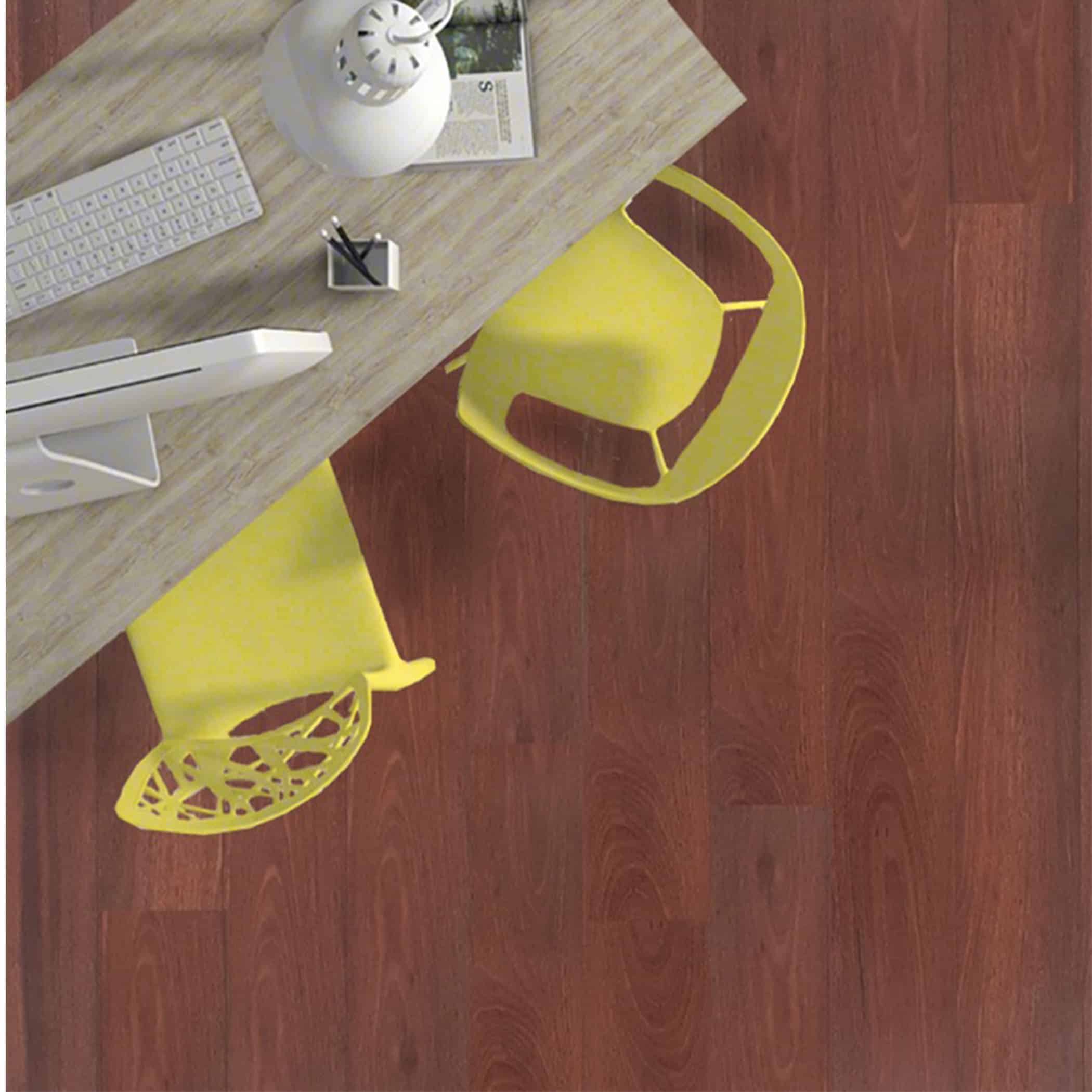
Laminate flooring is a multi-layer synthetic floor: a dense fibreboard core, a photographic layer that gives it the look of real timber, and a clear melamine resin wear layer on top that does the actual work of resisting scratches and everyday wear. It’s one of the most affordable ways to get a genuine timber look, and it’s worth understanding exactly what you’re buying before you choose it.
What laminate flooring is actually made of
The core is made from high-density fibreboard, pressed from wood fibres — this is what gives laminate its solid, hardwood-like feel underfoot, and its thickness (commonly around 8mm) affects both durability and how well it insulates sound. The photographic decor layer sits above the core, and on higher-quality ranges like Aussie Forest, the print doesn’t repeat as obviously across boards, which is what separates a convincing laminate from an obviously fake one. The wear layer on top is what you’re actually walking on, and its quality determines how well the floor resists scratches over years of use.
Is laminate flooring waterproof? No — and that matters for where you use it
This is the most common misunderstanding about laminate. It’s moisture-resistant enough to handle everyday spills if they’re wiped up promptly, but it’s not waterproof, and it’s not a suitable choice for bathrooms, laundries, or anywhere with a real risk of standing water. Water that gets underneath the boards or into the joins can cause the fibreboard core to swell and warp, and that damage isn’t reversible.
If you want the timber look in a wet area, hybrid flooring is the better choice — it uses a waterproof core instead of timber fibre, so it can handle bathrooms and laundries where laminate can’t.
Why laminate is a popular choice
Outside of wet areas, laminate has real practical advantages. It’s significantly more affordable than solid hardwood or timber veneer, since it uses a fraction of the actual timber. It installs as a floating floor over most subfloors, including concrete, without needing nails, staples or glue, which makes it genuinely achievable as a DIY project. And the wear layer holds up well against scratches and scuffs from pets, kids and everyday foot traffic — better than most natural timber floors manage without regular maintenance.
Choosing between laminate ranges
Multifors stocks laminate across a few different tiers, and the main differences are in board thickness, print quality and finish depth. The Aussie Oak Series is the widest range, with eight different oak tones from natural through to charcoal, all at the same specification — a good starting point if you want a specific colour match without paying for a premium finish. Aussie Bushland is an 8mm option in blackbutt and spotted gum finishes. Aussie Forest sits at the premium end with a more realistic, less-repetitive print. The Avalin range offers another set of oak-toned finishes at a mid-range price point.
Laminate vs. hybrid: the real difference
Both give you a timber look at a lower cost than real timber, and both are floated rather than nailed or glued down, but the core material is the key difference. Laminate uses a timber-fibre core, which gives it a firmer, more solid feel underfoot and generally a lower price — but it isn’t waterproof. Hybrid uses a stone-composite or waterproof core, which costs more but can go anywhere in the home, wet areas included. If every room you’re flooring is dry, laminate is the more cost-effective choice for the same timber look.
Browse the full laminate flooring range at Multifors to compare finishes and thicknesses.