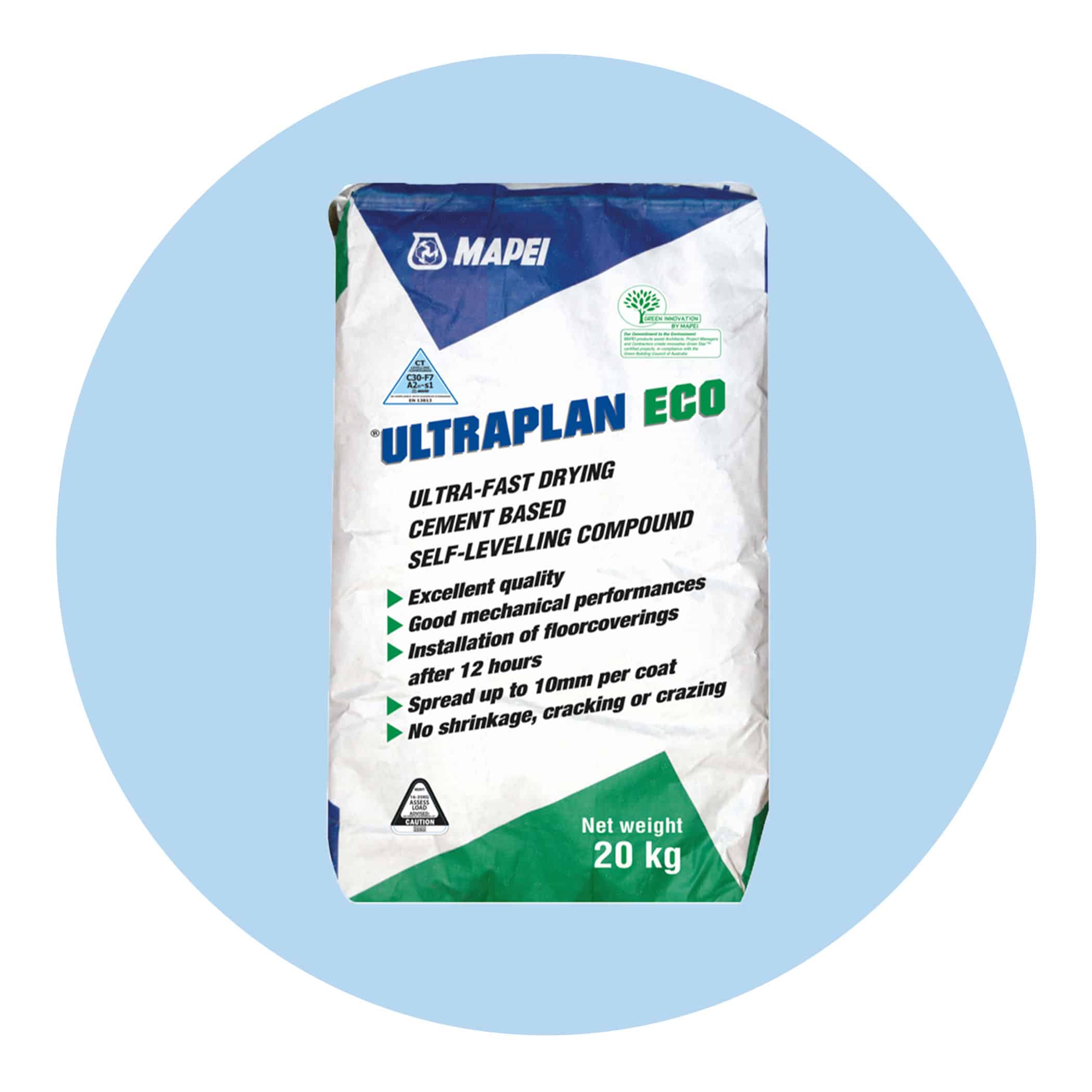
Description
Ultraplan ECO Self Leveller is an ultra-fast hardening smoothing compound for levelling new and existing interior substrates, applied up to 10mm thick per layer by trowel or pump. Its very low VOC content is a genuine point of difference for indoor air quality during and shortly after installation, without giving up the high resistance to loads and traffic the compound needs once cured.
On existing floors, it can be used for levelling provided the substrate is solid, dry, clean and not subject to moisture — it’s a repair and smoothing product, not a moisture barrier. For timber flooring installations specifically, a minimum 3mm application thickness is required, since a thinner skim won’t reliably create the stable, even base solid or engineered timber flooring needs.
Technical Specifications
| Application thickness | Up to 10mm per layer |
|---|---|
| Minimum thickness for timber flooring | 3mm |
| VOC content | Very low |
| Application method | Trowel or pump |
Where to Use
- Levelling new interior substrates ahead of flooring installation
- Levelling existing floors that are solid, dry and clean, but not subject to moisture
- Preparing a base for timber flooring (minimum 3mm application)
- Areas requiring high resistance to loads and traffic
How to Apply
- Assess the substrate — confirm it is solid, dry and clean, and not subject to moisture.
- Mix — combine the powder with water to a self-levelling, pourable consistency.
- Apply by trowel or pump — spread to the required thickness, up to 10mm per layer, or a minimum of 3mm for timber flooring preparation.
- Allow to harden — take advantage of the ultra-fast hardening formulation, but confirm readiness before installing flooring.
Important Notes
- Not intended for use where moisture is present in the substrate — it’s a levelling compound, not a waterproofing or moisture-barrier product.
- The 3mm minimum thickness for timber flooring preparation should not be reduced, even on an already-flat substrate.
- For professional use.
Ultra-fast hardening matters most on a tight installation schedule: a levelling compound that takes days to reach a workable hardness can become the bottleneck on an otherwise fast job, while a fast-hardening formulation lets tiling, timber or resilient flooring follow on within the same trade visit in many cases. That speed doesn’t come at the cost of load resistance either, since the finished compound is rated for the same high-traffic performance expected of a standard-cure self-leveller once fully hardened.
Choosing between Ultraplan ECO and a slower-curing standard leveller ultimately comes down to how the site is scheduled: a job with same-day or next-day follow-on trades benefits most from the faster hardening, while a job with more schedule slack may not need to pay for that speed at all.