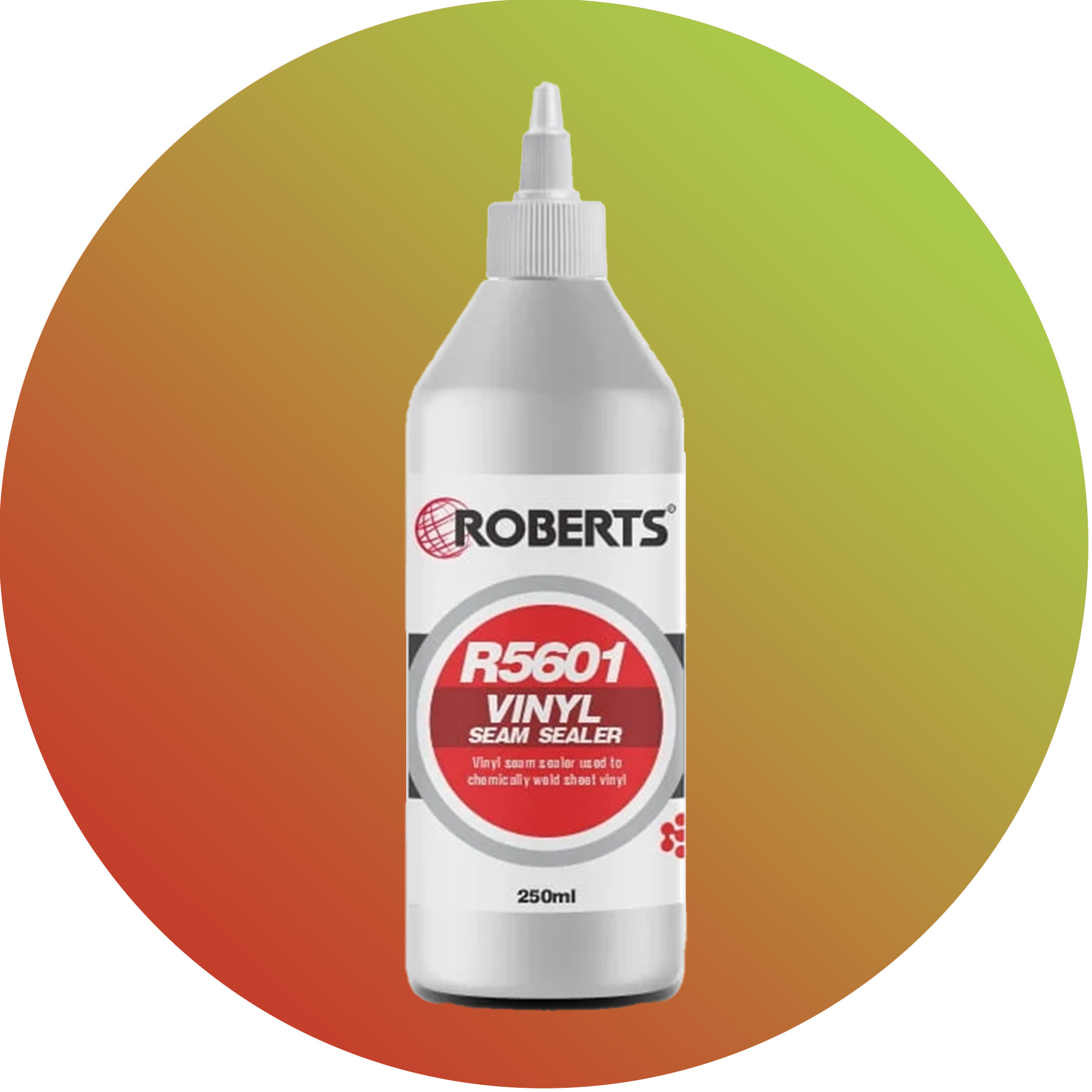
Description
Roberts R5601 Vinyl Seam Adhesive is a chemical seaming solution purpose-built for welding the seams of PVC vinyl sheet flooring, vinyl composite tiles and plank flooring, rather than simply gluing them down. Chemical seaming melts the two edges of adjacent sheets slightly and fuses them together, giving a genuinely seamless join that a mechanical or adhesive-only seam can’t match — which is why it’s specified separately from the main flooring adhesive rather than treated as an optional extra.
It’s not suitable for every vinyl type: sheet flooring with a urethane wear surface is specifically excluded, since the chemistry that welds a standard PVC seam won’t bond a urethane-finished edge the same way. Being a highly flammable, solvent-based product, it also demands real care in storage and use — well away from heat sources and ignition points, in a well-ventilated area.
Technical Specifications
| Appearance | Clear liquid |
|---|---|
| Base | Synthetic resins |
| Solids content | Approx. 21% |
| Viscosity | Thin syrup |
| Coverage | Approx. 125 lineal metres per 250ml |
| Shelf life | 6 months, sealed container at 20°C |
| Packaging | 250ml |
Where to Use
- Seams in PVC commercial and domestic vinyl sheeting
- Vinyl composite tiles, PVC vinyl tiles and plank flooring
- Not recommended for urethane-wear-surface vinyl sheet flooring
How to Apply
- Prepare the seam — ensure it is dry and free of adhesive.
- Clean the seam area — wipe with a clean cloth dampened with water, then allow to dry fully.
- Apply R5601 — apply along the prepared, dry seam.
- Clean up — use Roberts R900 Cleaner for tools and equipment; note R900 is not recommended for removing adhesive from vinyl, carpet or painted surfaces.
Important Notes
- Highly flammable — keep away from heat, sparks and open flames, and use explosion-proof electrical and ventilation equipment where required.
- Wear suitable respiratory protection and use only in well-ventilated areas.
- Refer to the separate Safety Data Sheet for full handling and first-aid information.
A chemically welded seam behaves differently to an adhesive-only join over the life of the floor: because the solvent in R5601 softens and fuses the two vinyl edges together rather than just gluing them side by side, the seam becomes part of the sheet itself rather than a joint that can eventually separate under traffic or moisture. That’s the real reason it’s specified as a separate product from the main flooring adhesive on commercial vinyl jobs, where a visible or failing seam line is one of the most common callback complaints on an otherwise well-installed floor.