Description
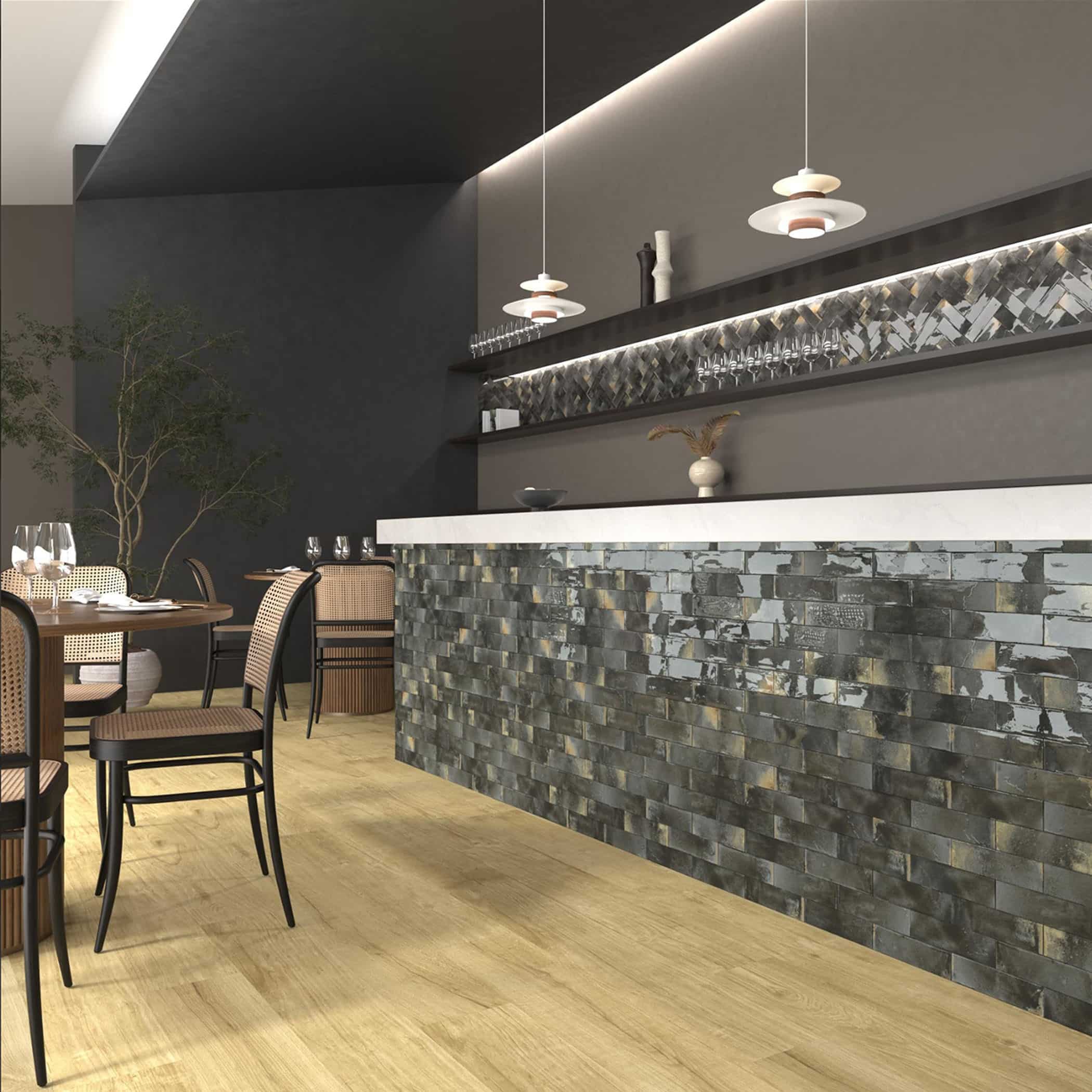
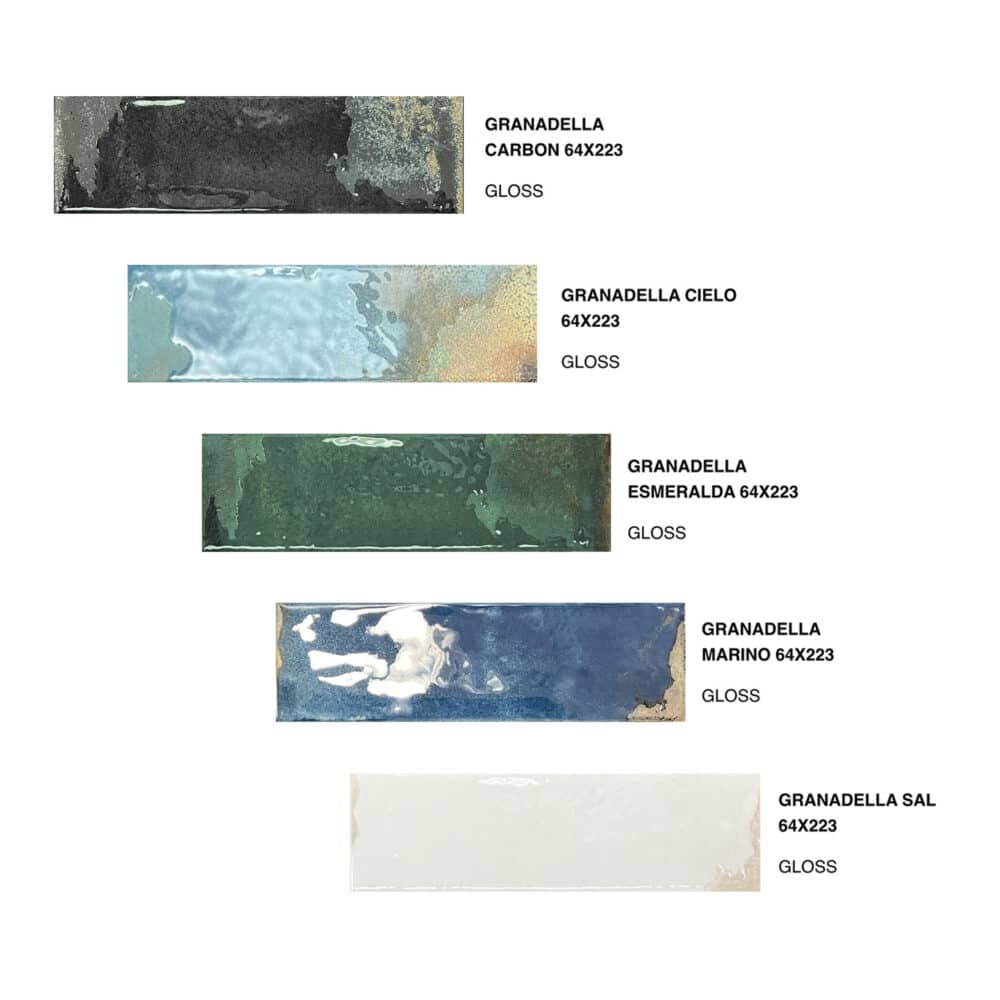
A dark wall needs movement in the glaze or it reads as a flat block. Granadella Carbon gets that movement from a charcoal to near black gloss, broken by silvery grey and ochre patches, over an irregular texture, spread across 12 different faces. Dune makes it in Spain as 9mm porcelain in a 64x223mm subway format.
Test results include water absorption of E ≤ 0.5%, breaking strength beyond 35 N/mm², a stain score of 5 and compliant frost and crazing tests. At Class 0 for slip under UNE-EN 16165 Annex C, plan it for vertical surfaces rather than wet floors.
Technical Specifications
| Format | 64x223mm (6.4×22.3cm) |
|---|---|
| Thickness | 9mm |
| Finish | Gloss |
| Material | Porcelain |
| Faces (graphic variation) | 12 |
| Water absorption (UNE EN ISO 10545-3) | E ≤ 0.5% |
| Flatness (UNE EN ISO 10545-2) | ± 0.5% |
| Scratch hardness (UNE EN 67-101) | 5 |
| Crazing resistance (UNE EN ISO 10545-11) | Complies |
| Resistance to stains (UNE EN ISO 10545-14) | 5 |
| Chemical resistance, swimming pool (UNE EN ISO 10545-13) | A |
| Breaking strength (UNE EN ISO 10545-4:9) | >35 N/mm² |
| Frost resistance (UNE EN ISO 10545-12) | Complies |
| Slip resistance (UNE-EN 16165 Annex C) | Class 0 |
| Pieces per m² | 70.07 |
| Pieces per box | 32 |
| Coverage per box (m²) | 0.46 |
| Weight per box (kg) | 7.3 |
Where to Use
- Feature walls in living, dining and hospitality spaces
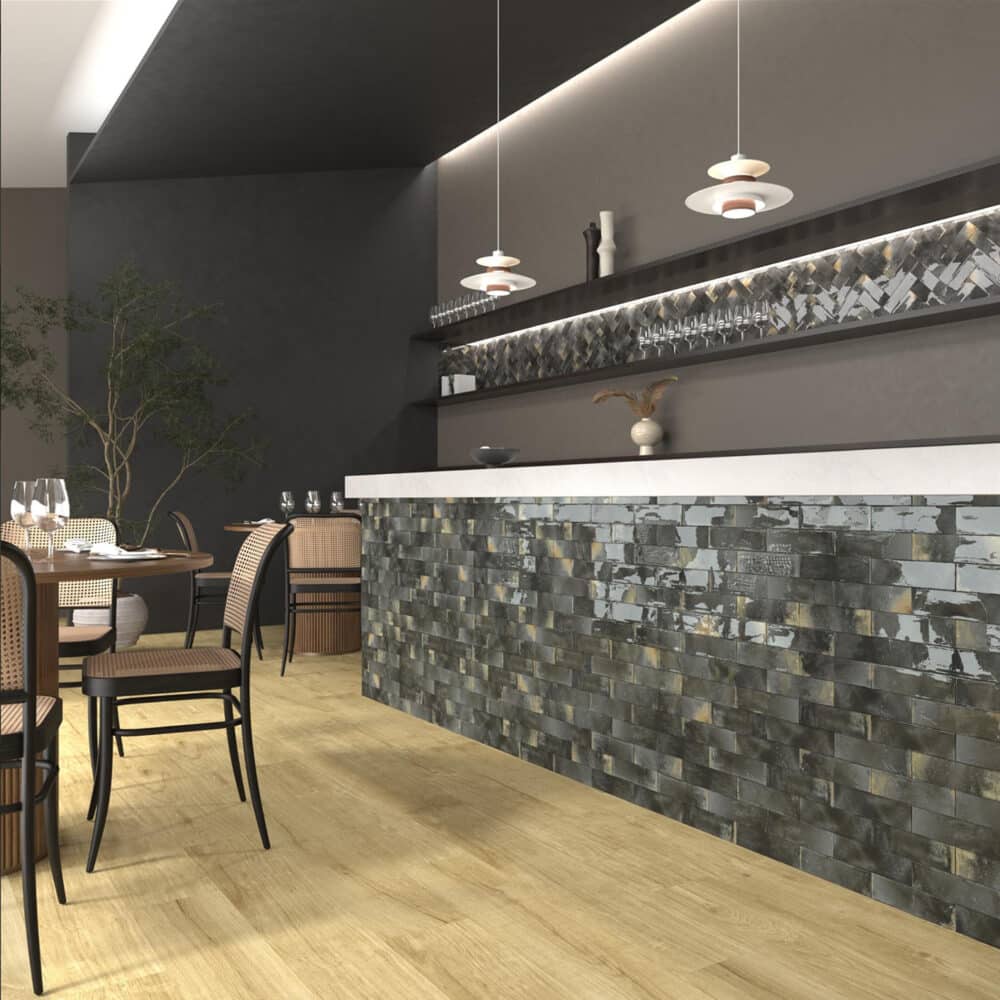
- Bar fronts and kitchen splashbacks
- Shower and bathroom walls; Dune excludes shower floors
- High condensation walls, a use Dune ticks for this tile
- Courtyard and alfresco walls, with frost resistance to suit (outdoor floors are excluded)
How to Apply
- Check the substrate: solid, flat, dust free and dry, with dips over 2mm filled and moisture below 2%.
- Use C2 adhesive: Dune’s sheet names C2 cementitious adhesive for porcelain; lay a trial of two tiles before the full area.
- Bed each tile: fix from the bottom up on roughly 3mm of adhesive ribbed with a no. 3 notched trowel, pressing tiles home before it skins over; no dabs or spot fixing.
- Set the spacing: joints of 2mm or more, 3mm over plasterboard or severe thermal movement, self levelling spacers, and brick offsets kept within 25%.
- Finish the joints: grout clean, dry joints with a flat rubber float and clear the surplus straight away with a damp sponge or neutral pH cleaner; epoxy grout adds waterproofing near water.
Colour and Finish
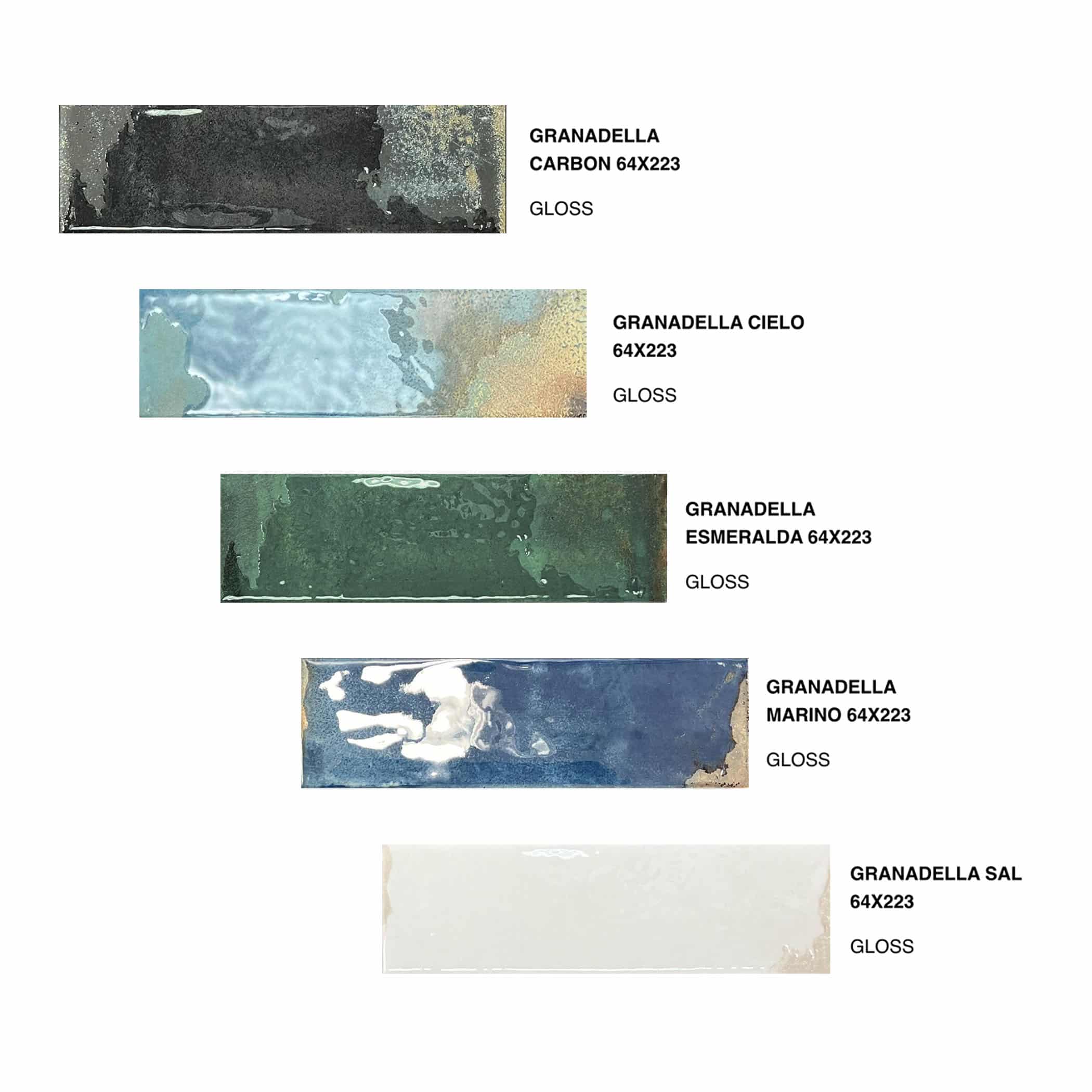
Dune tags Carbon with shade variation, graphic variation and an irregular texture, so some bricks run almost black while others show more silver grey or ochre. Blend tiles from several open boxes while laying. Grout matters on a dark tile: a pale joint outlines each brick while a dark one lets the wall read as one surface, so test first. Other Granadella colours include Sal, Cielo, Marino and Esmeralda.
Important Notes
- Buy the whole area plus cuts from a single batch, as shade can differ between batches.
- Results quoted are Dune’s datasheet values dated 15-09-2026.
- Inspect colour, finish and thickness before installation; Dune takes no claims or returns on installed material.
- Keep it off wet floors, shower floors, ramps and pool steps. Dune limits pool steps and floors under 1.5m depth to Class 3 tiles, and the A result for pool chemicals is not a floor rating.
Frequently Asked Questions
What is the slip rating of Granadella Carbon?
Class 0 under UNE-EN 16165 Annex C. It is not slip rated for wet floors, so treat Carbon as a wall tile.
Can Granadella Carbon be used outdoors?
Yes, on outdoor walls. It complies with the frost resistance test under UNE EN ISO 10545-12, but Dune marks outdoor floors as unsuitable.
How much does a box of Granadella Carbon cover?
One box covers 0.46 m² with 32 tiles and weighs 7.3 kg.