Description
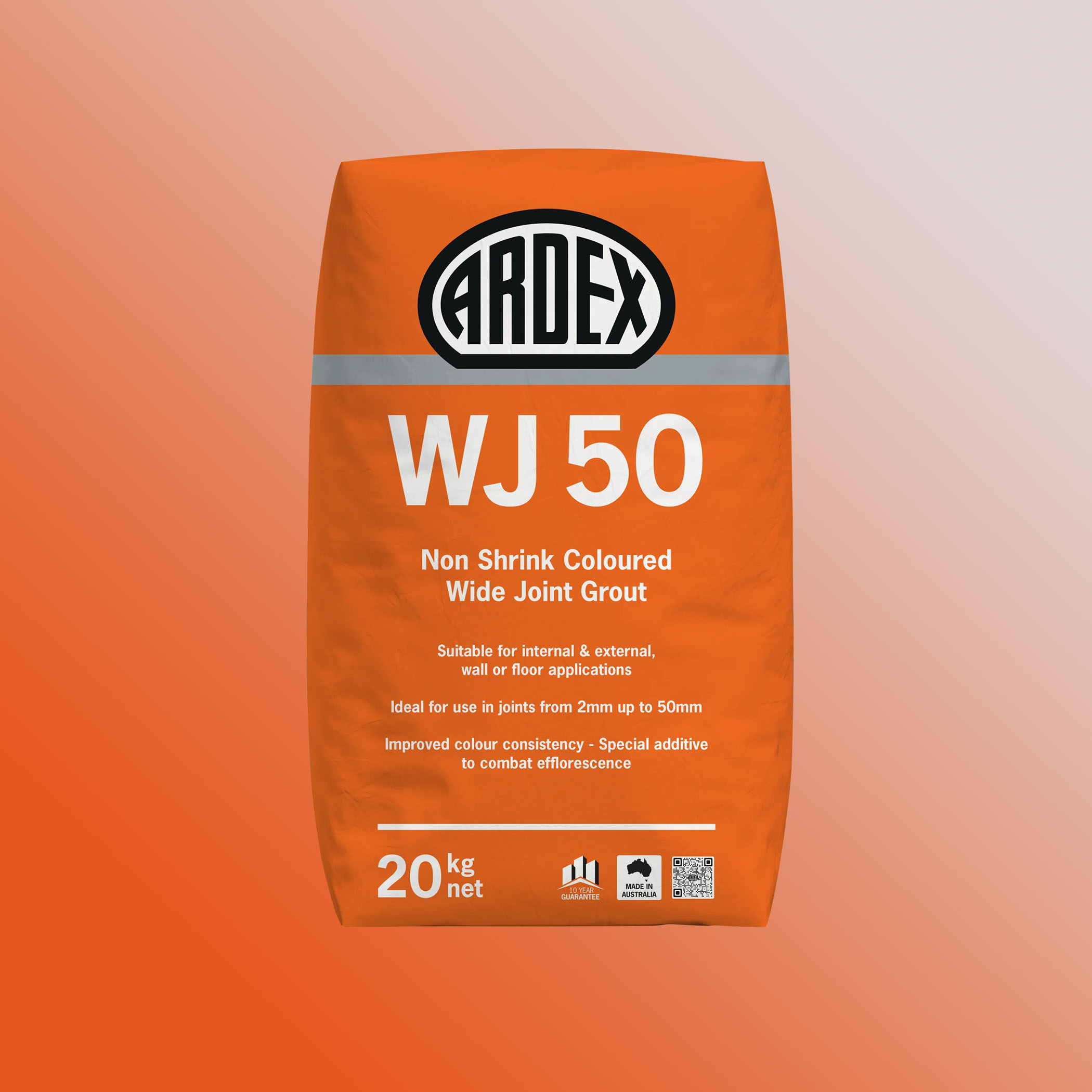
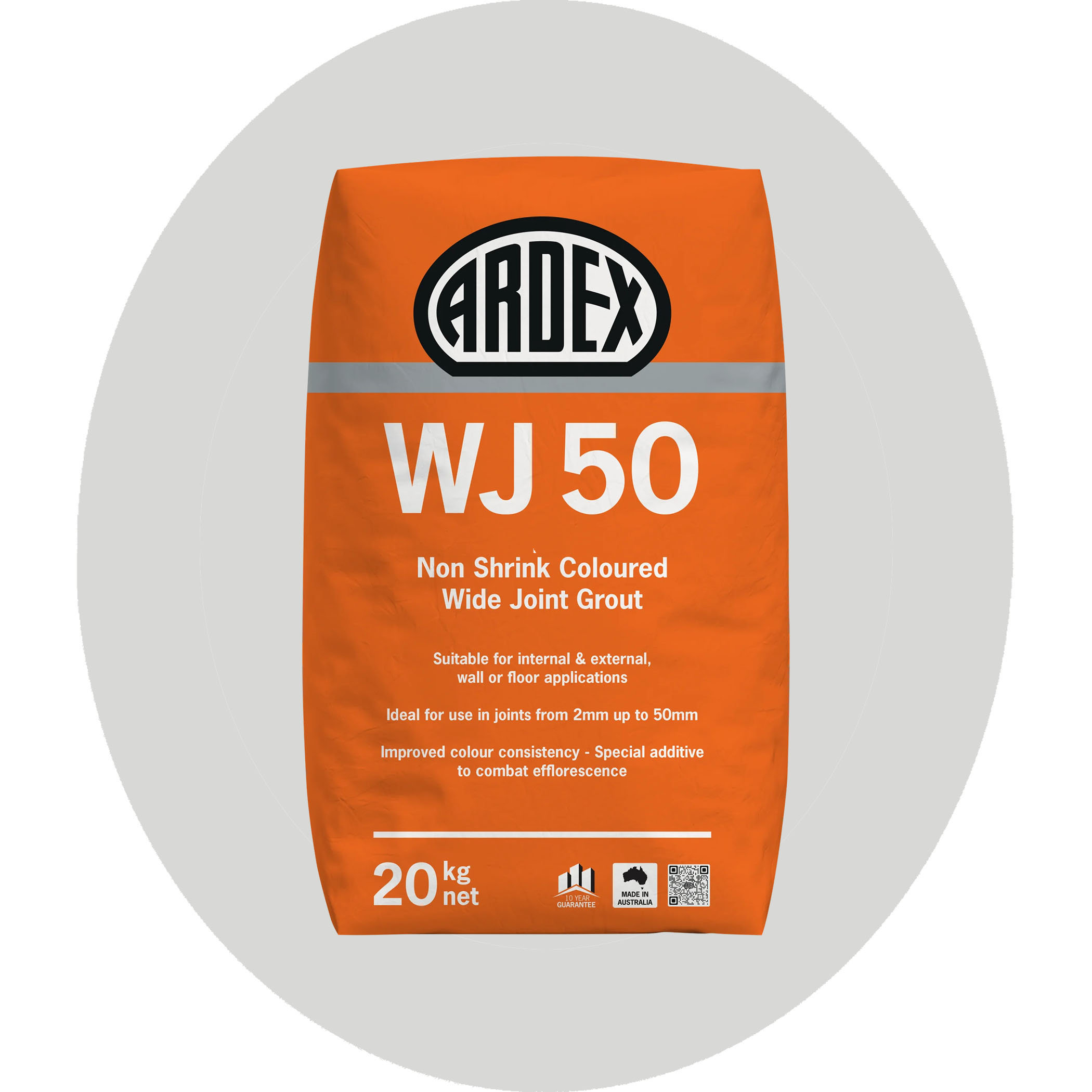
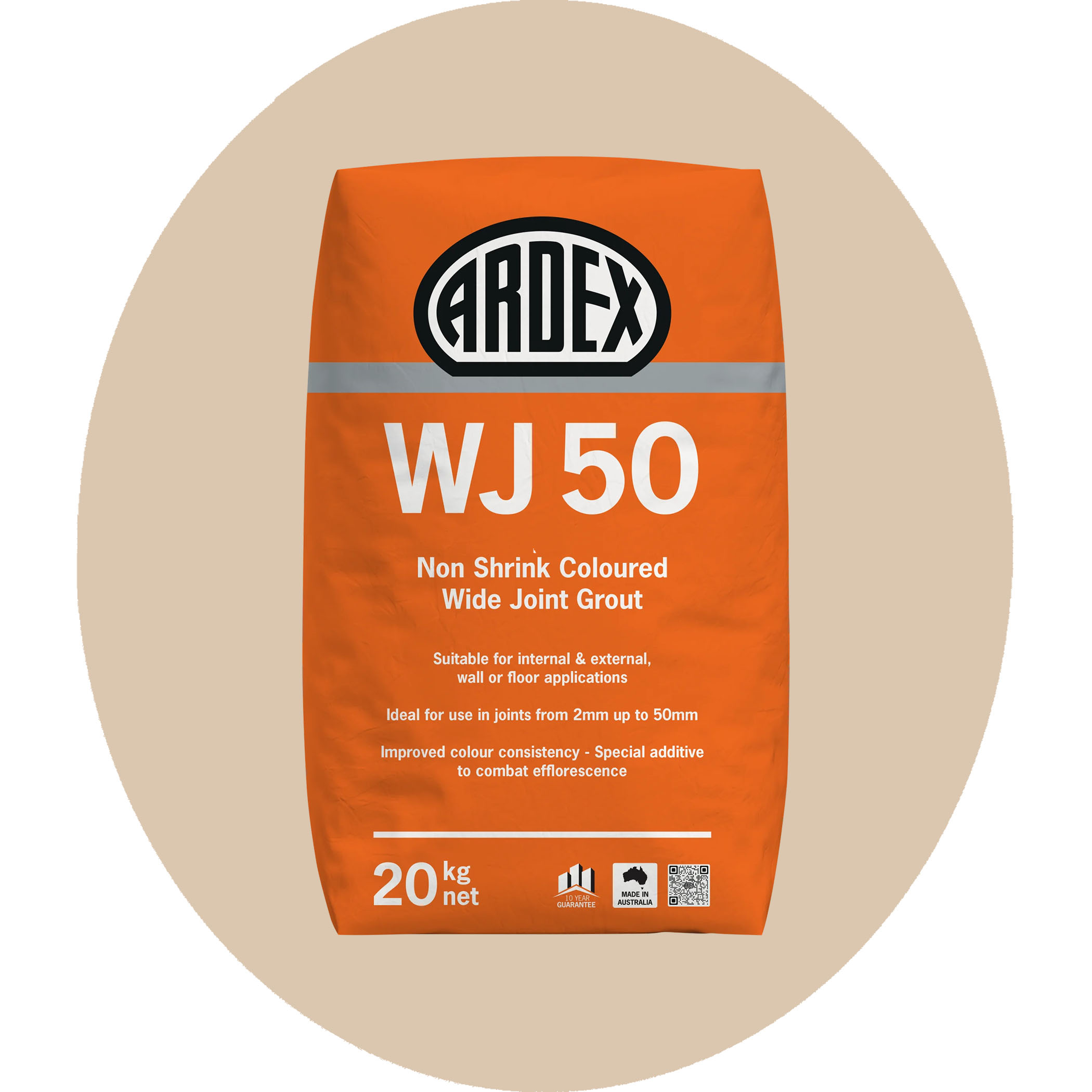
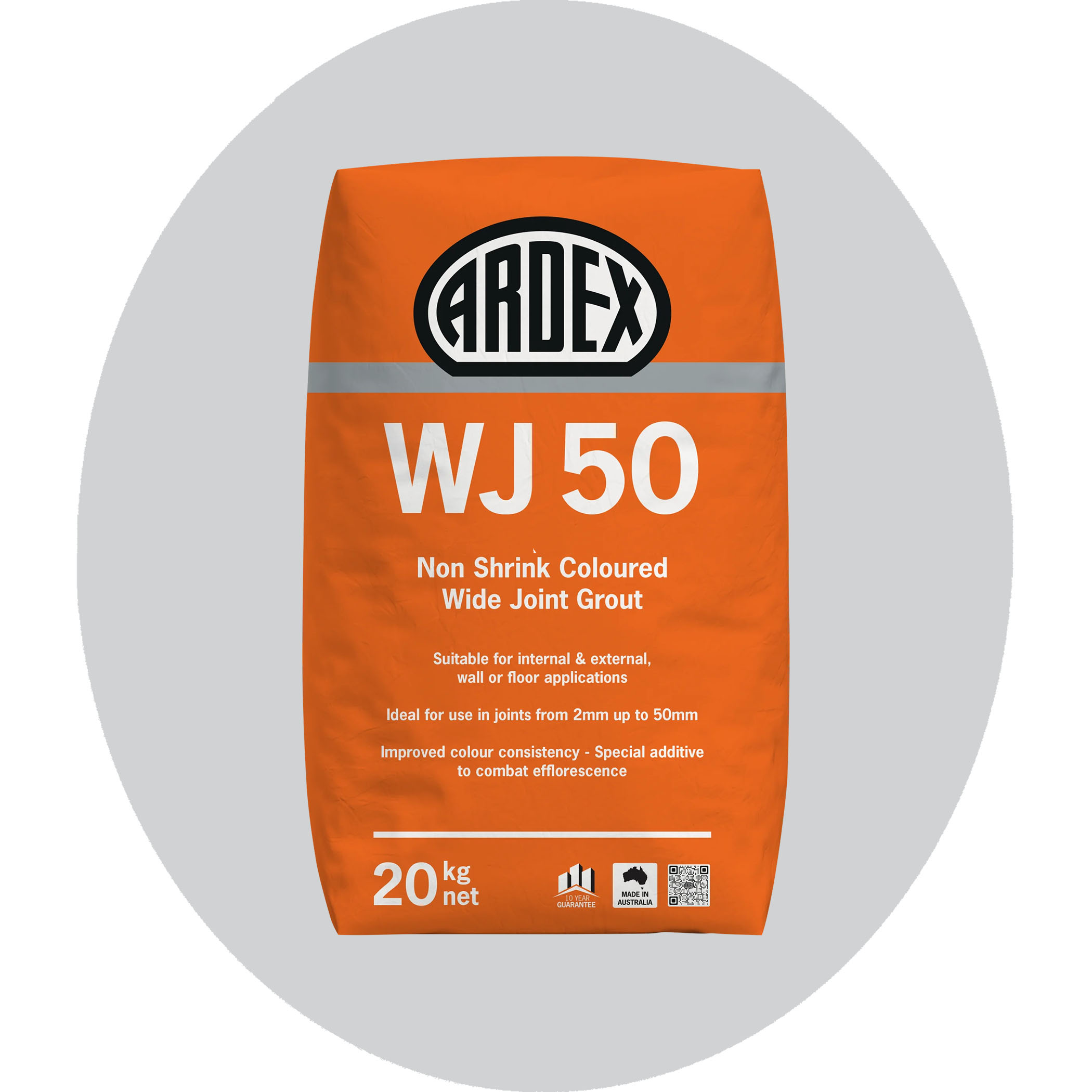
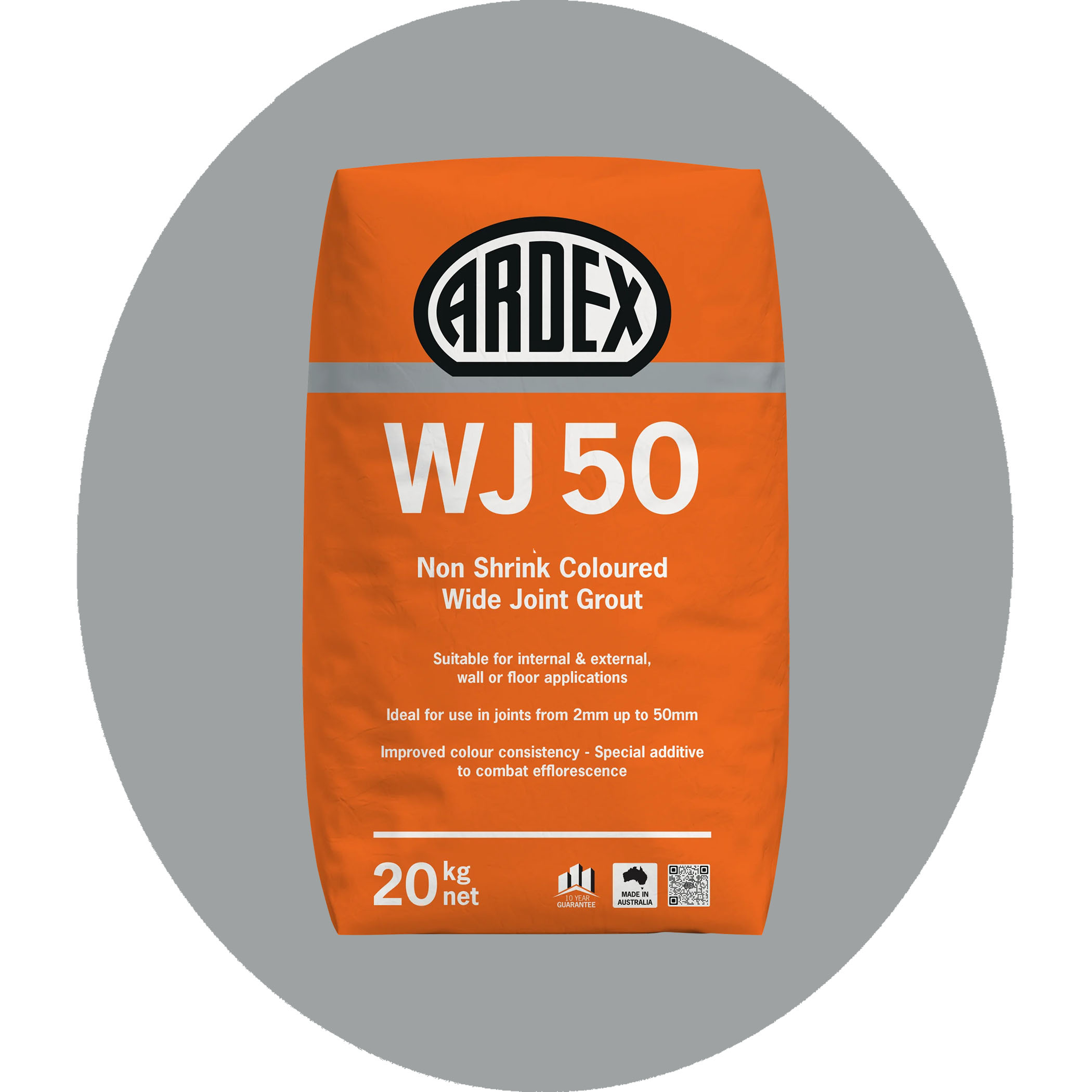
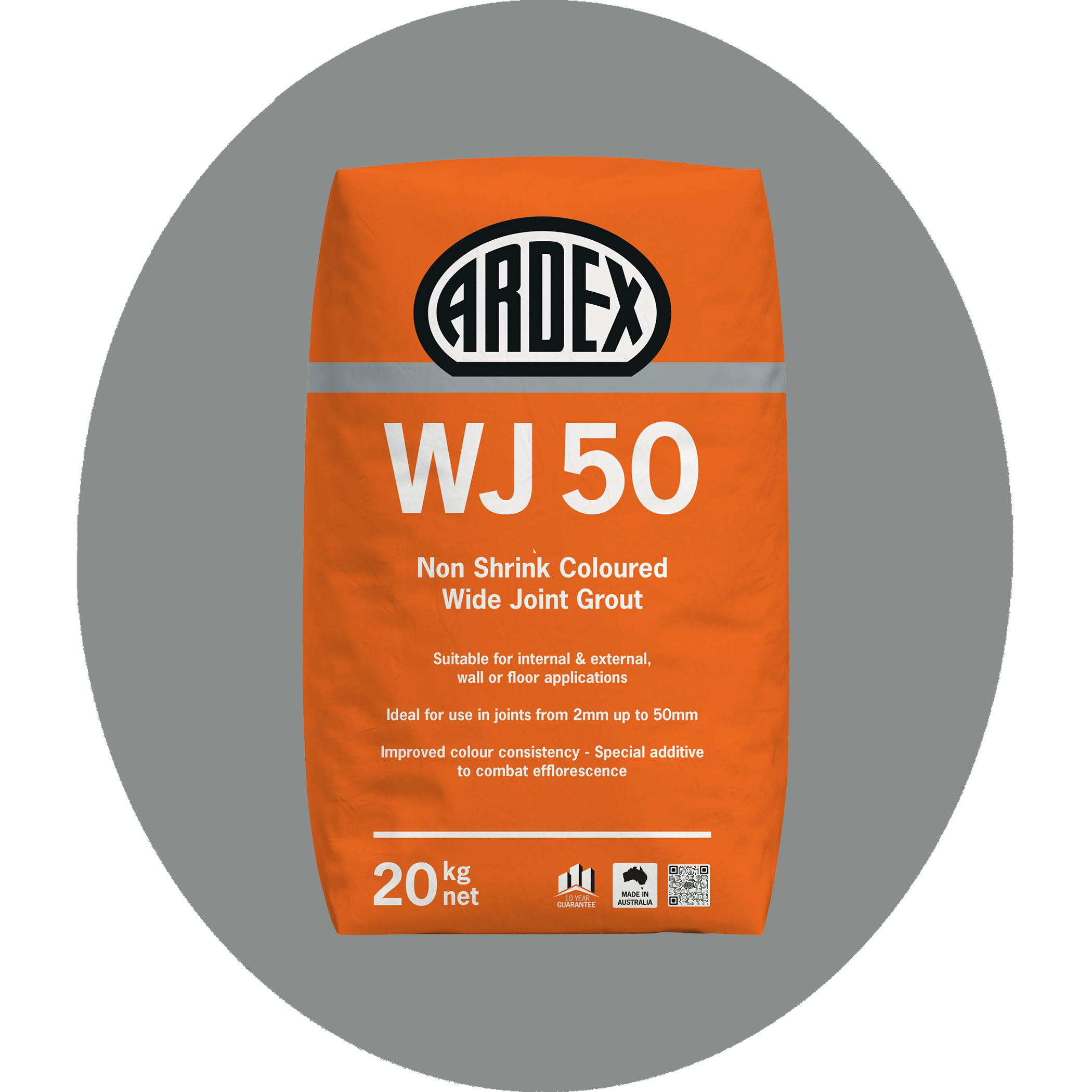
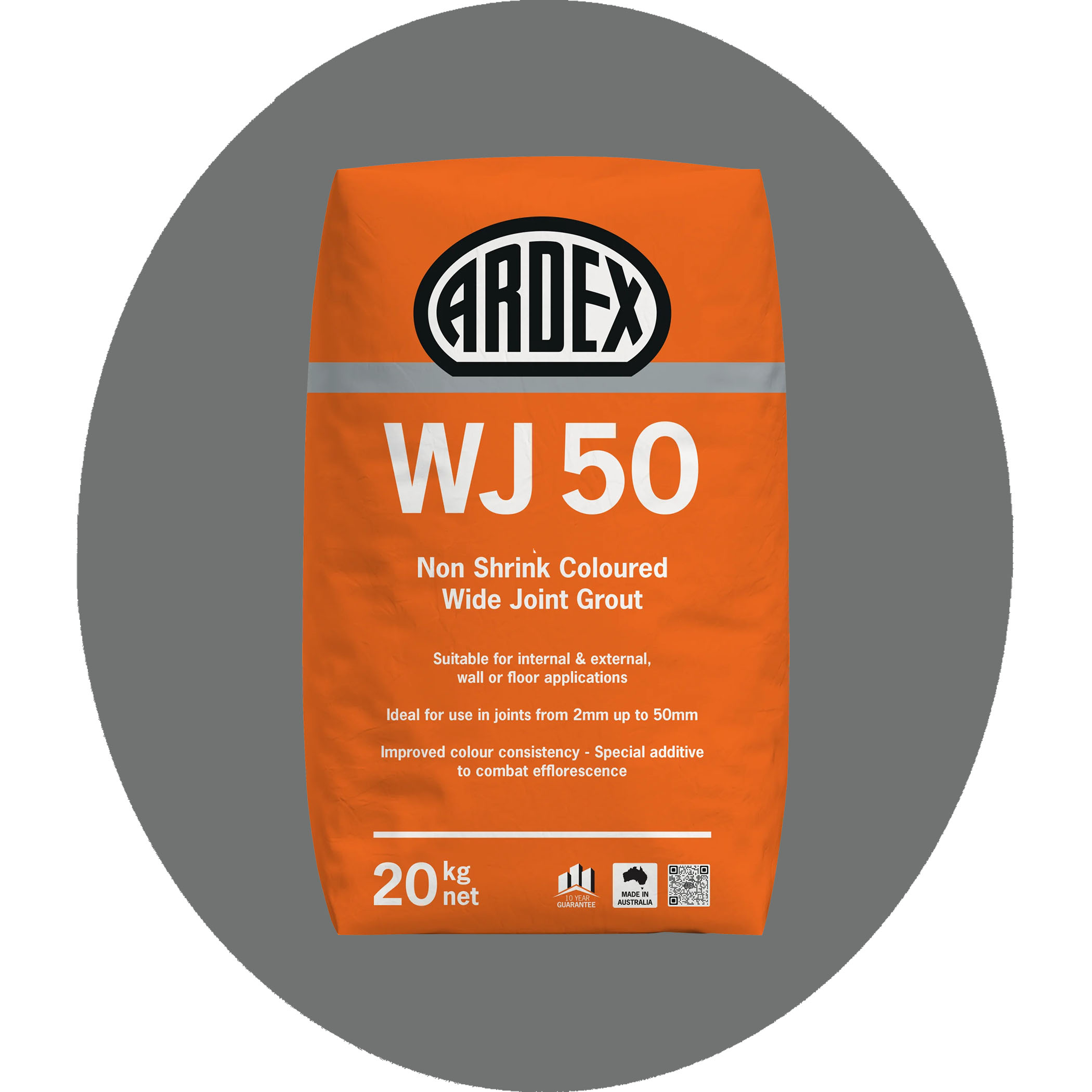
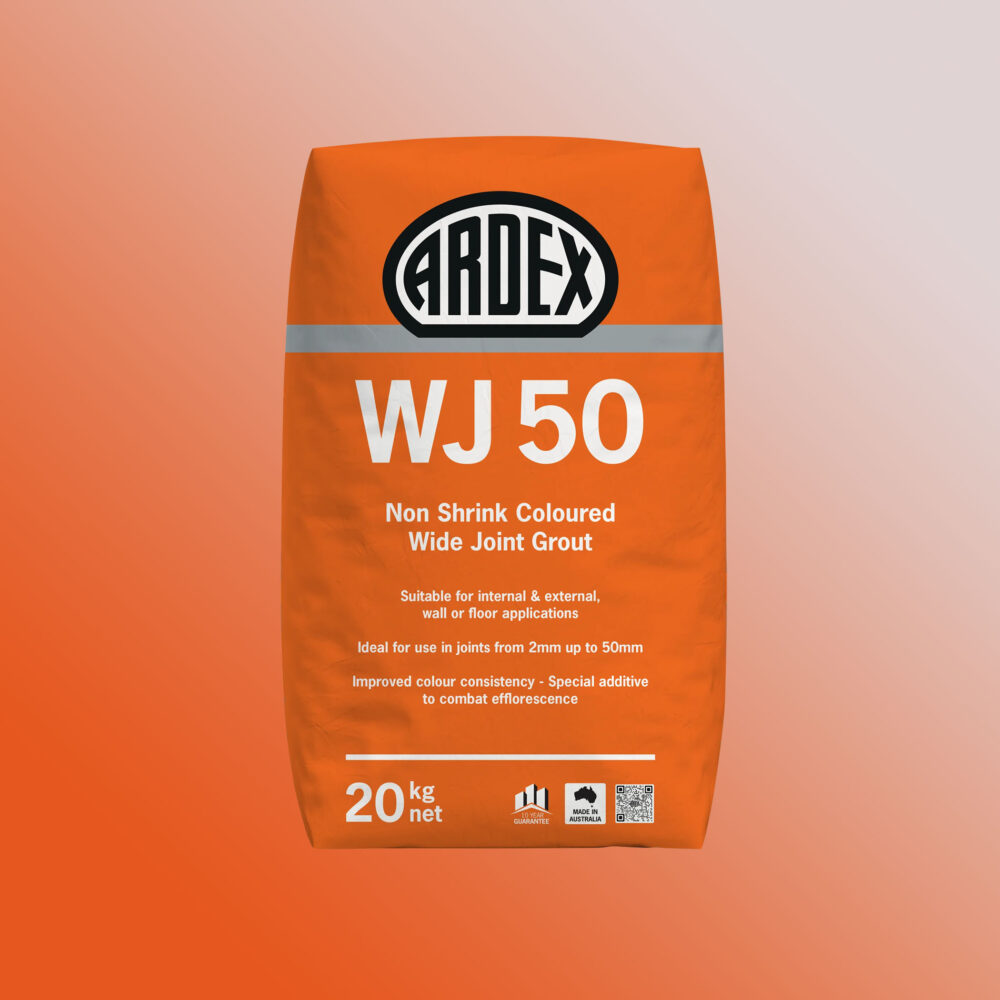
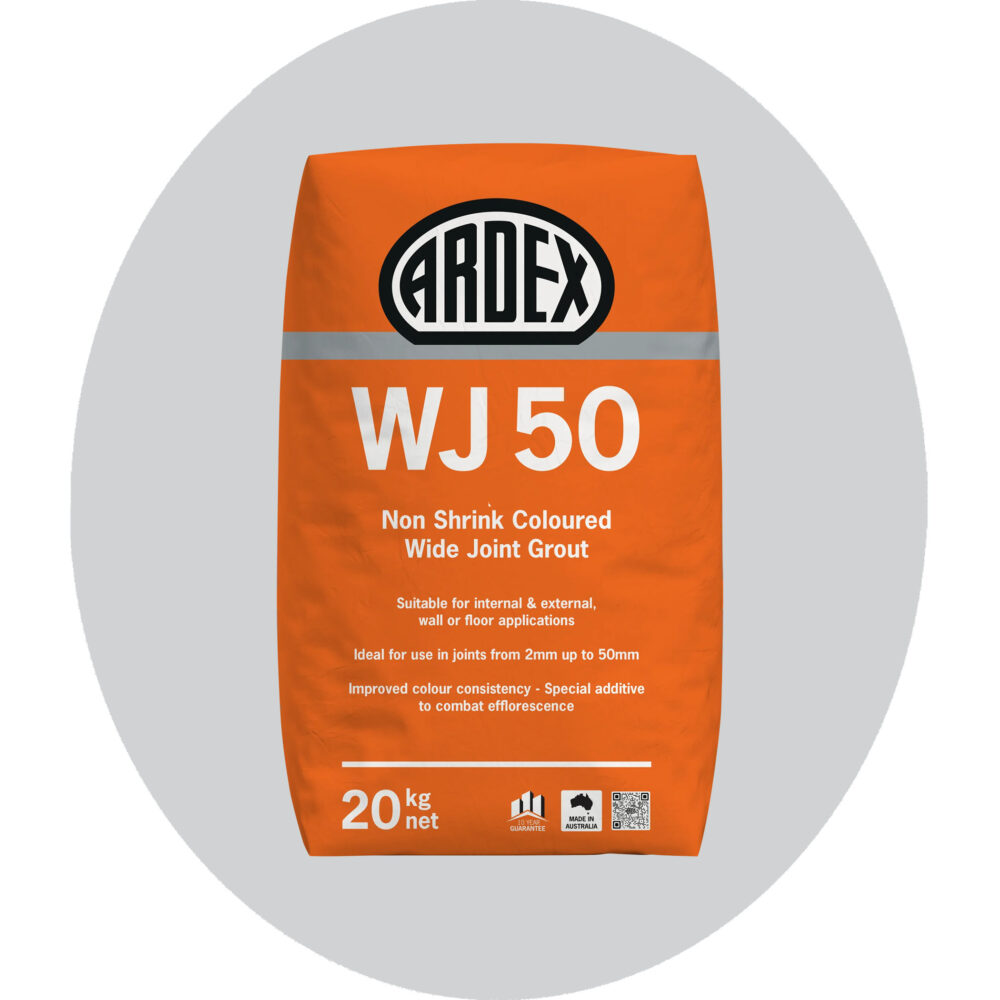
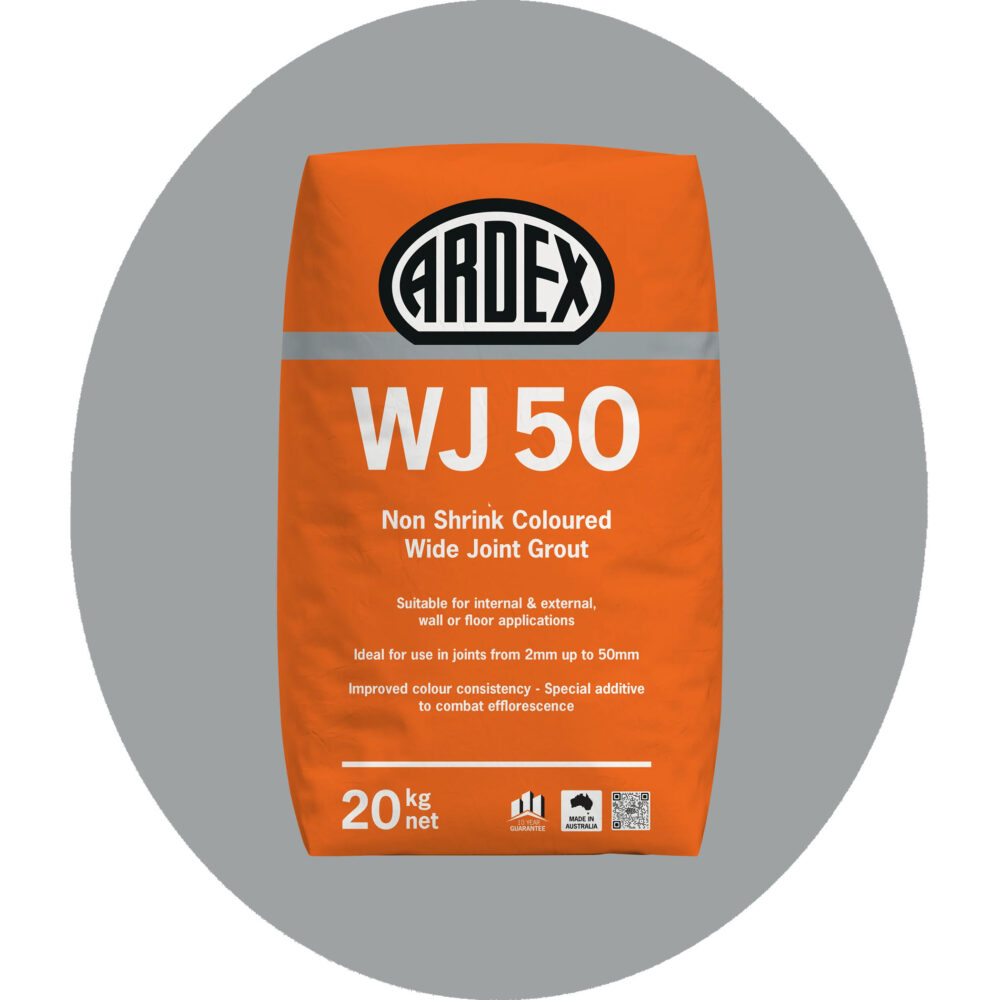
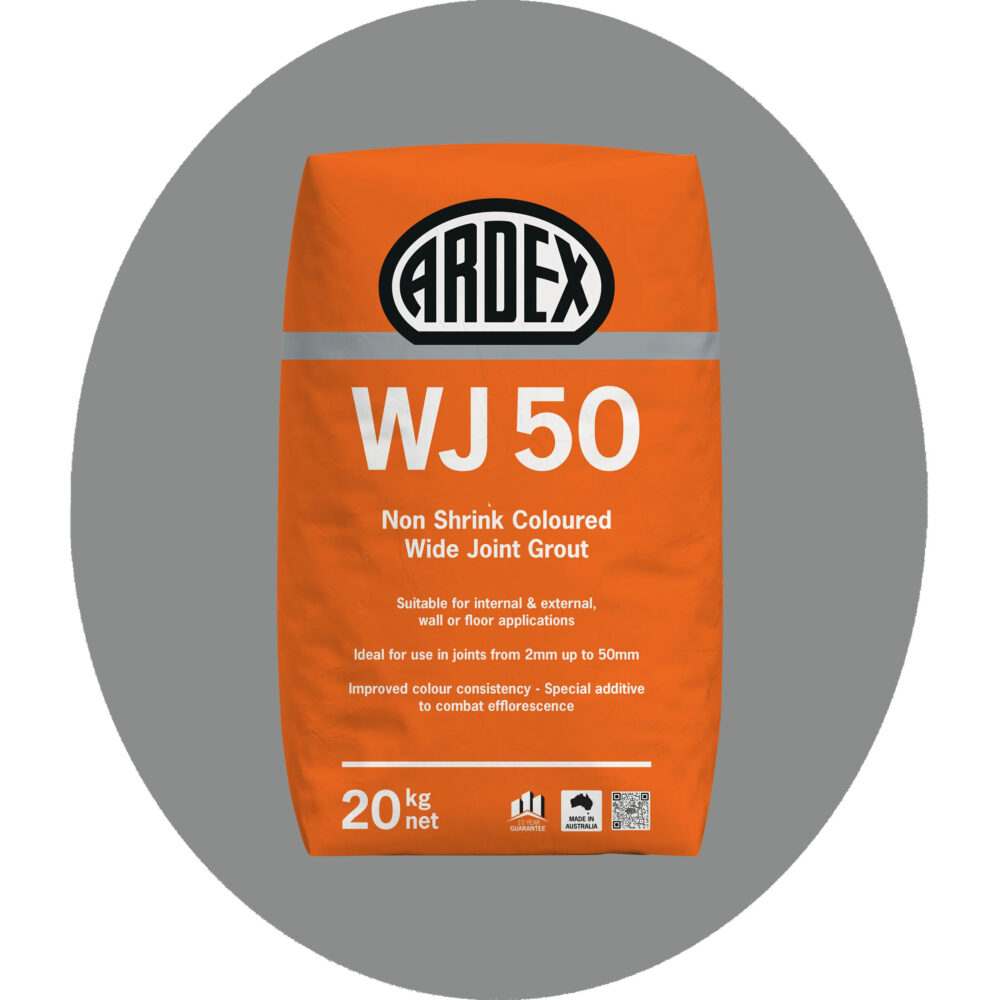
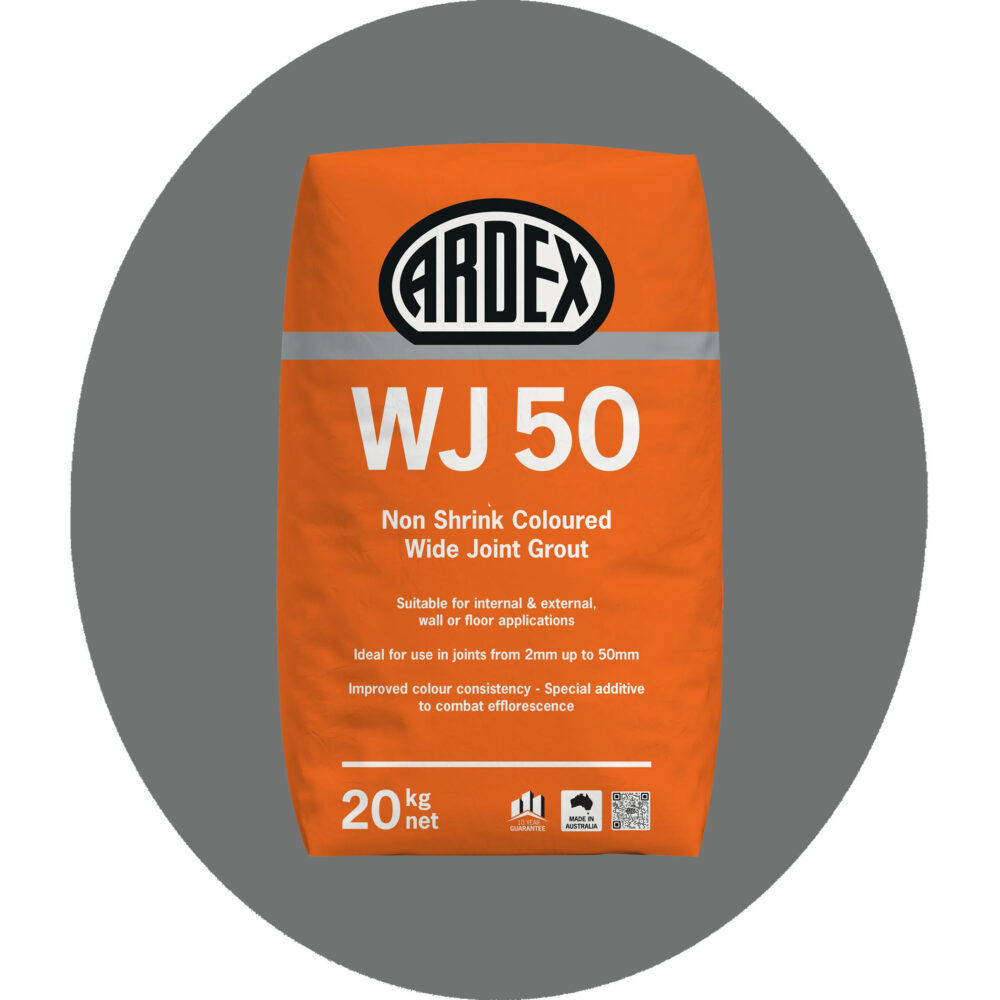
ARDEX WJ 50 is a sanded, cement-based grout for internal and external wall and floor tiling, formulated for joints from 2 mm to 50 mm wide without shrinking. A special additive combats efflorescence and achieves superior colour consistency, and it is classified CG1 to AS 4992. Manufactured by ARDEX Australia.
The wide-joint capability is the point of difference: most sanded grouts shrink and crack when packed into a joint beyond about 15 mm, which rules them out for the large-format and rustic tiling that needs a broad joint. WJ 50 holds to 50 mm. Also written ARDEX WJ50.
Technical Specifications
| Product type | Sanded, cement-based non-shrink grout |
|---|---|
| Joint width | 2 mm to 50 mm (minimum 5 mm recommended for porous tiles) |
| Location | Internal and external, walls and floors |
| Suitable tiles | Ceramic, terrazzo, slate, quarry tile and natural stone (excluding dimensionally unstable or moisture-sensitive stone) |
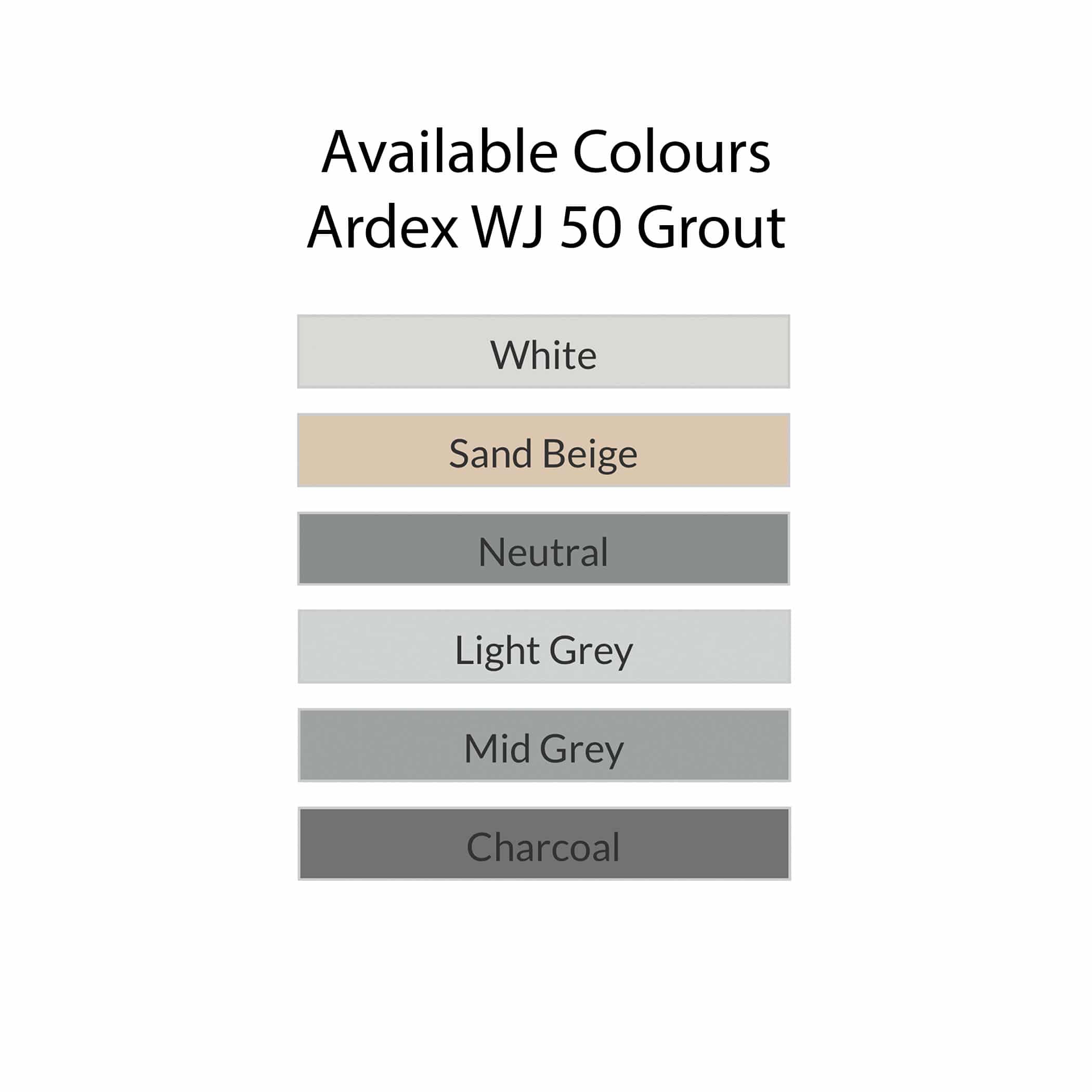
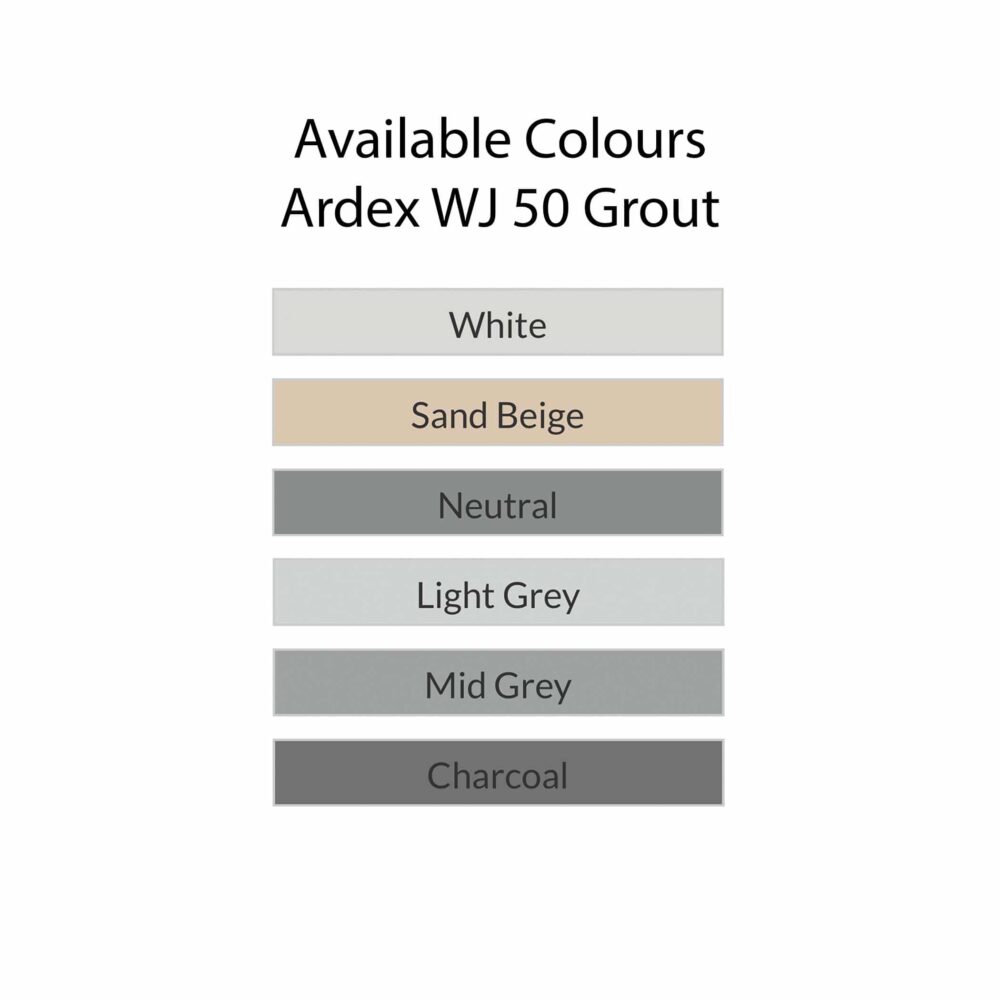
| Colours | Off White, Mid Grey, Light Grey, Charcoal, Sand Beige, Neutral |
| Mixing ratio | Approx. 3.6 litres of water per 20 kg powder |
| Pot life | Approx. 1 hour at 23 degrees C and 50% relative humidity |
| Drying time | Approx. 24 hours at 23 degrees C and 50% relative humidity |
| Compressive strength (28 days) | Over 15 MPa (AS 4992) |
| Flexural strength (28 days) | Over 4 MPa (AS 4992) |
| Classification | CG1 to AS 4992 |
| Underfloor heating | Suitable |
| Packaging | 5 kg and 20 kg |
| Shelf life | Not less than 12 months (20 kg) or 24 months (5 kg), unopened at 23 degrees C and 50% relative humidity |
Coverage Rates
Coverage in kilograms per square metre, by tile size and joint width, for tiles 10 mm deep. Allow an additional 15 to 20 per cent for wastage.
| Tile size (mm) | 8 mm joint | 10 mm joint | 15 mm joint | 20 mm joint |
|---|---|---|---|---|
| 200 x 200 x 10 | 1.6 | 2.0 | 2.9 | 3.9 |
| 300 x 300 x 10 | 1.0 | 1.3 | 2.0 | 2.6 |
| 400 x 400 x 10 | 0.8 | 1.0 | 1.5 | 2.0 |
| 500 x 500 x 10 | 0.6 | 0.8 | 1.2 | 1.6 |
| 600 x 600 x 10 | 0.5 | 0.7 | 1.0 | 1.3 |
Coverage varies with tile size, joint width and depth, the method of application and site conditions.
Where to Use
- Wide-joint tiling, internal and external, walls and floors
- Ceramic tiles, terrazzo, slate and quarry tiles
- Natural stone, excluding dimensionally unstable or moisture-sensitive stone
- Floors over underfloor heating
- Swimming pools, using Off White mixed with ARDEX Grout Booster
- Commercial and domestic applications
How to Apply
- Prepare the joints – ensure they are clean and free of dust, excess adhesive and bedding mortar. Remove all spacers. With porous tiles or in hot conditions, dampen the joint and tile edges but leave no standing water. Do not grout until the adhesive has set firmly.
- Mix – add the powder to clean water in a clean container, stirring thoroughly to a lump-free, firm, low-slump mortar. A 20 kg bag takes approximately 3.6 litres. Allow to stand for 2 minutes, then re-stir. Do not add additional water.
- Apply – work the grout into the joints with a rubber trowel, compacting firmly so joints are completely filled, and remove the amount left on the tile surface.
- Clean off – allow the grout to firm up in the joint, then wipe the tile surface with a damp dense sponge, working diagonally across the joints. Use a minimum amount of water to avoid water float, shade variation, efflorescence and shrinkage.
- Polish – remove any dry film remaining on the tile surface once the grout has hardened, using a dry cloth, making sure no smears are left. In warm conditions keep the joints damp with clean water after hardening begins, to ensure correct hydration.
- Protect – in exterior conditions, protect from extremes of climate throughout fixing and grouting and for as long as possible afterwards. Clean all tools with water immediately after use.
Important Notes
- Do not use ARDEX WJ 50 for chemical-resistant joints – use an ARDEX epoxy grout instead.
- For expansion or movement joints, use ARDEX silicone sealant, not grout.
- Porous face tiles such as terracotta should be sealed prior to grouting to prevent staining.
- Some polished and stone surfaces are prone to scratching – always conduct a trial application first.
- Efflorescence may still occur at low temperatures, in wet conditions, and in external applications. Keeping the amount of water used in mixing and cleaning to a minimum reduces it. The effect is more noticeable in dark colours and as discolouration in lighter ones.
- ARDEX does not guarantee against shade variation or efflorescence caused by factors beyond its control, including the nature of cement, job site conditions, finishing technique and uneven drying.
- In swimming pool applications colours may bleach over time. Use Off White mixed with undiluted ARDEX Grout Booster. Full cure and readiness for pool chemicals is 14 days. For public pools or spas, ARDEX epoxy grouts are recommended.